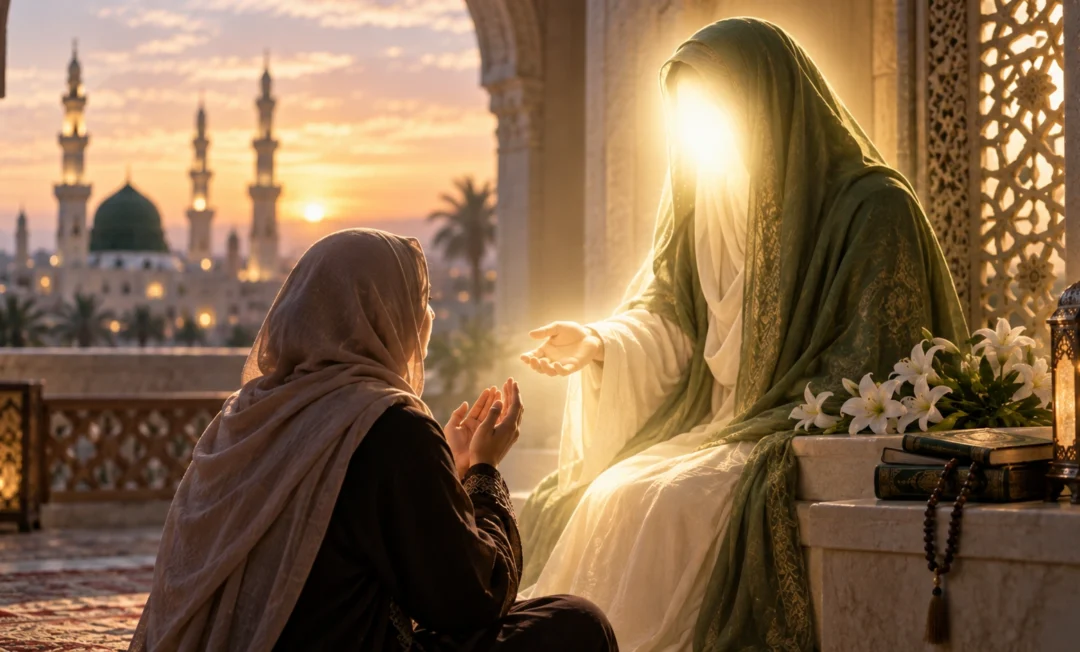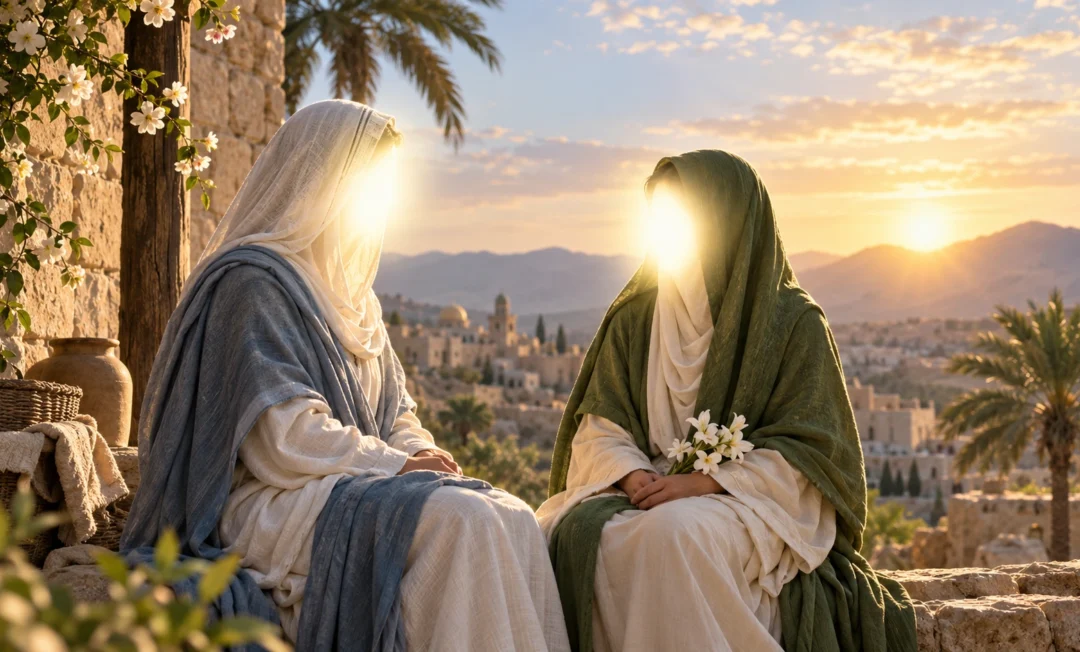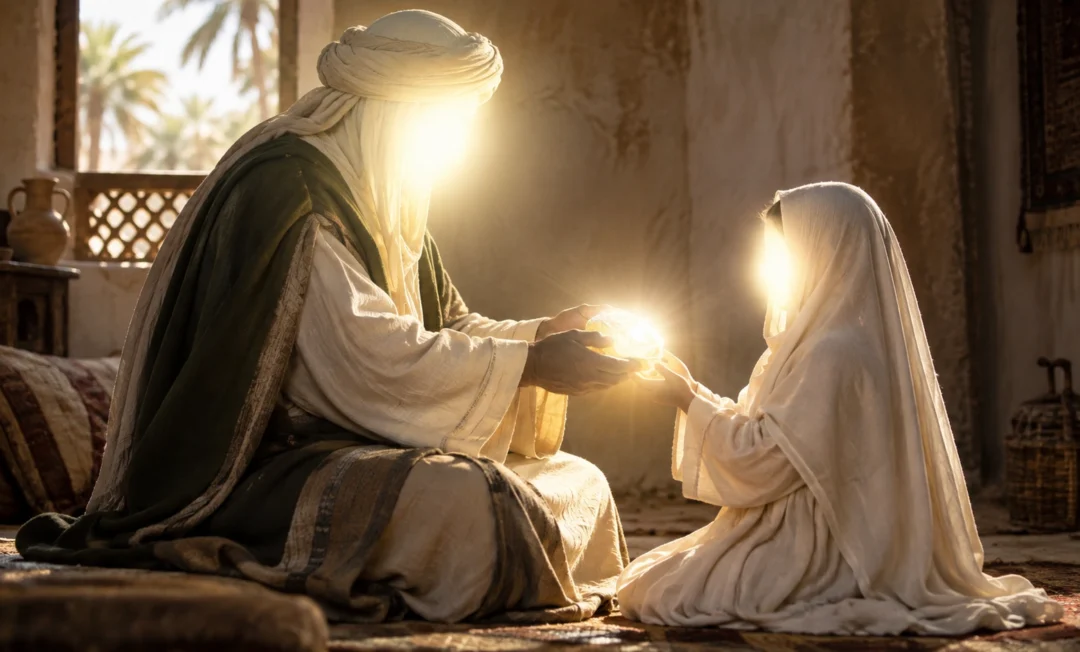

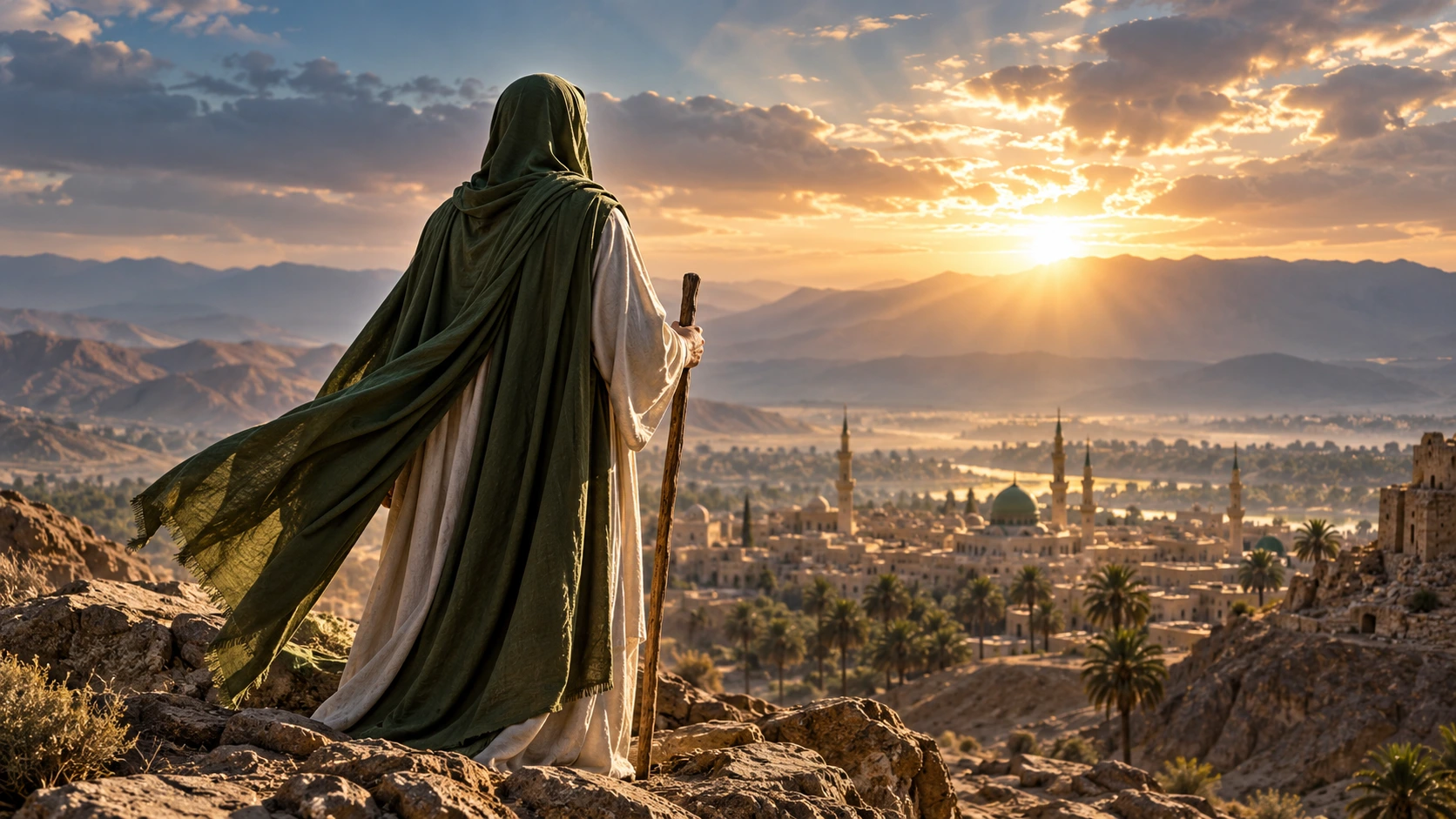
Throughout human history, people have long imagined a world in which injustice would finally come to an end.
What would happen if oppression no longer determined the fate of nations? What if power were no longer measured by wealth or military strength, but by justice? What if humanity could be united under a leadership devoted to truth, dignity, and righteousness?
For Twelver Shi’a Muslims, these questions are connected to the belief in Imam Muhammad al-Mahdi, the Twelfth and final Imam.
Imam Mahdi is regarded as the awaited leader who will emerge at the end of time and establish justice after the world has experienced widespread oppression and injustice. His story is not understood as an isolated event in the distant future. It forms the culmination of the line of Imams that begins with Imam Ali and continues through the descendants of Fatimah al-Zahra.
This connection gives Fatimah a remarkable place in the story.
She was the daughter of Prophet Muhammad ﷺ.
She was the wife of Imam Ali.
She was the mother of Imam Hasan and Imam Hussain.
And through Imam Hussain, she became the ancestor of the remaining Imams, ultimately reaching Imam Muhammad al-Mahdi.
The story of Imam Mahdi therefore brings the legacy of Fatimah al-Zahra from the earliest days of Islam into the future that Twelver Shi’a Muslims believe will witness the triumph of justice.
Who Is Imam Mahdi?
The word Mahdi means “the rightly guided one.” In Twelver Shi’a Islam, Imam Muhammad al-Mahdi is regarded as the Twelfth and final Imam.
His traditional full name is Abu al-Qasim Muhammad ibn Hasan al-Askari. He is regarded as the son of Imam Hasan al-Askari, the eleventh Imam, and as a descendant of Prophet Muhammad through Fatimah al-Zahra and Imam Hussain.
Encyclopaedia Iranica describes the Twelver doctrine as identifying him as the twelfth and final Imam, who entered occultation and is expected to reappear at the end of time as the Mahdi, or “Guided One.”
He is known by several titles, including:
- Al-Mahdi — the Guided One
- Al-Qa’im — the One Who Rises
- Al-Muntazar — the Awaited One
- Sahib al-Zaman — the Master of the Age
- Al-Gha’ib — the Hidden One
- Hujjat Allah — the Proof of God
These titles reflect different aspects of his role within Shi’a belief: he is the awaited Imam, the one who will rise against injustice, and the divinely appointed guide whose presence continues even during his occultation.
Why Is Imam Mahdi Called the Twelfth Imam?
Twelver Shi’a Islam holds that divine guidance after the Prophet Muhammad ﷺ continued through a specific line of twelve Imams.
The sequence begins with Imam Ali ibn Abi Talib and continues through Imam Hasan, Imam Hussain, and nine descendants of Imam Hussain.
The final member of this line is Imam Muhammad al-Mahdi.
The twelve are:
- Imam Ali ibn Abi Talib
- Imam Hasan ibn Ali
- Imam Hussain ibn Ali
- Imam Ali ibn al-Hussain al-Sajjad
- Imam Muhammad al-Baqir
- Imam Ja’far al-Sadiq
- Imam Musa al-Kazim
- Imam Ali al-Rida
- Imam Muhammad al-Taqi al-Jawad
- Imam Ali al-Naqi al-Hadi
- Imam Hasan al-Askari
- Imam Muhammad al-Mahdi
Within this understanding, Imam Mahdi is not a separate figure who appears outside the history of the Imamate. He is the culmination of the same line.
That is why his identity is inseparable from the previous eleven Imams.
The Connection Between Imam Mahdi and Fatimah al-Zahra
Perhaps the most important question for understanding Fatimah’s connection with Imam Mahdi is simple:
How are they related?
The answer is through an unbroken family line.
Fatimah al-Zahra was the daughter of Prophet Muhammad ﷺ and the wife of Imam Ali.
Her son Imam Hussain became the ancestor of the nine Imams who followed him.
Imam Hasan al-Askari, the eleventh Imam, was among those descendants.
And Imam Mahdi is regarded as the son of Imam Hasan al-Askari.
Therefore, Imam Mahdi is a direct descendant of Fatimah al-Zahra.
This relationship is also reflected in traditions attributed to the Prophet Muhammad ﷺ. Several reports describe the Mahdi as being from the descendants of Fatimah. Al-Islam.org records traditions explicitly identifying the Mahdi as being among the descendants of Fatimah, while Encyclopaedia Iranica describes the Twelver Mahdi as the final Imam in the line of the Ahl al-Bayt.
This means that Fatimah’s connection with Imam Mahdi is not merely symbolic.
It is genealogical, familial, and theological.
Fatimah’s Prophetic Connection to the Future
The connection becomes even more striking in traditions attributed directly to Fatimah al-Zahra.
One reported narration says that when Imam Hussain was born, Prophet Muhammad ﷺ told Fatimah that Hussain would be the father of nine Imams and that the ninth would be the Qa’im. In the Twelver tradition, that ninth descendant of Hussain is Imam Mahdi.
This tradition places Fatimah at a remarkable point in the story.
She was not merely the mother of two sons whose lives became important in early Islamic history.
Through Hussain, her descendants would continue through nine Imams, with the final Imam associated with the promised establishment of justice.
Thus, the story moves from:
Fatimah → Hussain → nine generations of Imams → Imam Mahdi.
Her motherhood therefore extends far beyond her own lifetime.
What Is the Occultation of Imam Mahdi?
One of the defining beliefs concerning Imam Mahdi is Ghaybah, or occultation.
According to Twelver Shi’a doctrine, Imam Mahdi entered a period in which he was hidden from ordinary public access.
The tradition distinguishes between two periods.
The Minor Occultation
The first period is known as the Minor Occultation.
According to Twelver sources, during this period the Imam communicated with his followers through four successive representatives. Encyclopaedia Iranica places this period approximately between 874 and 941 CE.
The Major Occultation
After the Minor Occultation came the Major Occultation, which Twelver Shi’a belief holds continues until the Imam’s eventual reappearance.
During this period, Imam Mahdi is believed to remain alive but hidden from ordinary human access.
This doctrine makes the Mahdi different from a historical ruler who simply waits for an opportunity to establish political authority.
His expected reappearance is understood as an event connected with the end of history and the fulfillment of divine justice.
Why Does Imam Mahdi Remain Hidden?
The question naturally arises:
Why would the final Imam be hidden for such a long period?
Twelver scholars have offered different explanations concerning the wisdom of the occultation.
One important explanation is that Imam Mahdi’s mission is connected with a future moment when the conditions for his universal mission are fulfilled.
The doctrine also developed in a historical environment in which the Abbasid authorities posed a serious threat to the descendants and supporters of the Imams. Encyclopaedia Iranica notes that traditions concerning the expected Savior developed alongside concerns about protecting him from Abbasid political power.
For believers, however, the occultation is not simply a historical hiding place.
It represents a period of waiting.
And waiting, in this religious understanding, is not passive.
It requires faith, moral responsibility, patience, and commitment to justice.
The Mission of Imam Mahdi
The central purpose associated with Imam Mahdi is justice.
Traditions about the Mahdi repeatedly describe his future rule in terms of restoring justice after injustice has spread throughout the world.
One well-known formulation describes him as filling the earth with justice and equity after it has been filled with oppression and injustice. This theme appears prominently in Shi’a traditions concerning his future appearance.
This description is important because it tells us what his mission is ultimately about.
It is not simply about gaining political power.
It is about transforming the conditions under which people live.
A World Transformed by Justice
Imagine a world in which political power could no longer be used to justify oppression.
A world in which the weak could not simply be ignored because they lacked wealth or influence.
A world in which truth was valued above propaganda, justice above privilege, and human dignity above domination.
This is the vision associated with the future rule of Imam Mahdi in Twelver Shi’a thought.
The traditions do not describe his mission as belonging to one particular ethnic group or geographical region.
Rather, his rule is presented as universal.
Encyclopaedia Iranica summarizes the broader Islamic Mahdi concept as that of a descendant of the Prophet whose expected return will restore justice, peace, and true religion, while noting that Twelver Shi’ism identifies this figure specifically with its Twelfth Imam.
Within the Twelver vision, therefore, the awaited Imam is not simply a leader for one community.
He represents the hope for a world transformed by justice.
Justice After Oppression
The contrast between oppression and justice is one of the strongest themes in Mahdist traditions.
The world before his appearance is portrayed as a place where injustice has become widespread.
His emergence represents the reversal of that condition.
Oppression is replaced by justice.
Falsehood is confronted by truth.
Disorder gives way to a righteous order.
The distinction matters because the promise is not merely that a good ruler will govern a small territory.
The promise is of a transformation extending across the earth.
Some Shi’a traditions describe the Mahdi’s authority as reaching both the East and the West, emphasizing the universal scope attributed to his mission.
The Restoration of Human Dignity
Justice is not simply a legal concept.
A society can have laws and still permit people to be treated unfairly.
The vision associated with Imam Mahdi goes deeper.
Justice means that human beings are no longer defined by their power, wealth, nationality, or social position.
The ruler is accountable to truth.
The strong cannot simply consume the rights of the weak.
Knowledge is not used to deceive.
Religion is not reduced to empty slogans.
And authority exists to serve justice rather than personal interest.
For believers, this is part of what makes the promise of Imam Mahdi so powerful.
His mission is ultimately about restoring the proper relationship between human beings, society, truth, and God.
Imam Mahdi and the Whole World
The universal nature of the Mahdi’s mission is another distinctive feature of the tradition.
He is not described merely as a local leader who will reform one community.
His rule is expected to encompass the earth.
This is why the Mahdi is often described as the awaited leader of humanity rather than merely the leader of a particular nation.
In one tradition cited in Shi’a literature, the Prophet is reported to have described the Mahdi as a member of his household who will fill the earth with justice after it has been filled with injustice.
The language is significant.
The goal is not simply political victory.
It is the establishment of justice on a global scale.
Knowledge and the Renewal of Civilization
The expected transformation associated with Imam Mahdi is also spiritual and intellectual.
A just civilization cannot be built through force alone.
People must also possess knowledge, moral awareness, and an understanding of their responsibilities toward one another.
Shi’a traditions about the Mahdi therefore connect his appearance with the revival of religious truth and the restoration of the proper order of society.
The Mahdi’s mission is consequently presented as both external and internal.
The external world changes through justice.
The internal life of humanity changes through truth and guidance.
The two are inseparable.
Why Is Imam Mahdi Called Al-Qa’im?
One of the important titles of Imam Mahdi is Al-Qa’im, often translated as “the One Who Rises.”
The title reflects his expected rise at the end of time.
Encyclopaedia Iranica notes that Qa’im became an important title for the expected Imam who would rise against unjust power.
The title therefore carries a powerful meaning.
He is the one who rises when injustice has reached its height.
He is the one who stands for truth.
He is the one whose mission is associated with restoring justice.
The title captures the active nature of his future mission.
Imam Mahdi and the Legacy of Imam Hussain
There is another important connection between Imam Mahdi and Fatimah al-Zahra: Imam Hussain.
Hussain was Fatimah’s son.
He became the third Imam.
And Imam Mahdi is regarded as a descendant of Hussain.
This creates a profound connection between two major themes in Shi’a religious thought.
Imam Hussain represents the ultimate stand against oppression, particularly through the events of Karbala.
Imam Mahdi represents the future completion of the struggle for justice.
One stands against tyranny in history.
The other is expected to establish justice on a global scale in the future.
In this way, the line from Hussain to Mahdi is not merely a genealogical line. Within Shi’a spirituality, it also represents a continuing commitment to truth and justice.
From Karbala to the Promise of Justice
The tragedy of Karbala left a permanent mark on Shi’a religious consciousness.
Imam Hussain was killed after refusing to legitimize what his followers understood to be an unjust political order.
His sacrifice became a symbol of resistance to oppression.
Centuries later, the awaited rise of Imam Mahdi represents the other side of that story.
Hussain’s stand asks humanity to refuse injustice even when justice appears powerless.
Mahdi’s promised rule represents the hope that justice will ultimately prevail.
The two stories are therefore connected through a common moral theme.
Karbala represents the sacrifice made for justice.
The rise of Imam Mahdi represents the promised triumph of justice.
And both are connected through Fatimah al-Zahra.
Fatimah al-Zahra: The Beginning of the Lineage
Fatimah’s place in this story is extraordinary.
She lived in the earliest generation of Islam.
Yet her descendants, according to Twelver belief, continued through generations until reaching the Twelfth Imam.
Her son Hussain became the ancestor of the remaining nine Imams.
The ninth descendant of Hussain is identified as Imam Mahdi.
Therefore, the woman who lived alongside the Prophet Muhammad ﷺ is directly connected, through her descendants, to the figure expected to appear at the end of time.
This creates a remarkable bridge across Islamic history:
Prophet Muhammad ﷺ → Fatimah al-Zahra → Imam Hussain → the line of the Imams → Imam Mahdi.
Fatimah is therefore not merely part of the beginning of this story.
She is the maternal link that carries the lineage toward its final Imam.
Why Fatimah’s Connection to Mahdi Matters
The connection between Fatimah and Imam Mahdi helps explain why Fatimah holds such a central place in Twelver Shi’a thought.
Her importance is not limited to being the Prophet’s daughter.
Her descendants became the line of Imamate.
Her son Hussain became the ancestor of nine Imams.
And the final Imam in that lineage is the awaited Mahdi.
This means that the story of Fatimah’s family extends from the Prophet’s lifetime into the eschatological future.
Her legacy is therefore simultaneously historical and future-oriented.
She belongs to the seventh century, but her lineage reaches toward the end of time.
Is the Mahdi Only a Shi’a Belief?
Belief in a future Mahdi is not limited to Twelver Shi’a Islam.
The concept of the Mahdi also appears in Sunni Islamic traditions, although Sunni and Twelver Shi’a understandings differ significantly regarding his identity, status, birth, and relationship to the doctrine of Imamate.
Encyclopaedia Iranica notes that the Mahdi is a broader Islamic eschatological concept, while Twelver Shi’ism specifically identifies the Mahdi with the Twelfth Imam who is believed to be in occultation.
There are also traditions recorded in Sunni sources identifying the Mahdi as being from the descendants of Fatimah.
The major distinction is that Twelver Shi’a Muslims identify this awaited figure with Muhammad al-Mahdi, the twelfth Imam, and connect his future appearance to the doctrine of Imamate and occultation.
Understanding this distinction is important when discussing Imam Mahdi with readers from different Islamic backgrounds.
Explore More:
Imam Mahdi (A.S.): Shia vs. Sunni Beliefs
What Makes Imam Mahdi Different From an Ordinary Leader?
The answer lies in the scale and nature of the mission attributed to him.
An ordinary political leader governs a particular society.
Imam Mahdi, according to Twelver belief, will have a universal mission.
An ordinary ruler inherits a political position.
The Mahdi is understood as divinely appointed.
An ordinary ruler’s authority eventually ends.
The Mahdi’s appearance is associated with the final stage of human history.
An ordinary reformer may correct particular injustices.
The Mahdi is expected to establish justice throughout the world.
This is why the title Imam is so important.
Within Twelver Shi’a theology, Imam Mahdi is not simply a future political figure. He is the final Imam in a divinely guided line that began with Imam Ali.
The Awaited Future
For believers, the doctrine of Imam Mahdi is ultimately a doctrine of hope.
It says that injustice does not have the final word.
Oppression may become powerful.
Truth may appear weak.
Righteous people may suffer.
But history is not believed to end with injustice.
There is a promised future in which justice will rise.
This belief has given the concept of Mahdi a powerful place in Shi’a religious consciousness. Encyclopaedia Iranica describes the manifestation of the Hidden Imam as part of the Twelver eschatological vision and connects it with the expectation of overcoming injustice.
The waiting for Mahdi therefore carries a moral dimension.
To await justice is also to value justice.
To await truth is also to stand with truth.
And to believe in the eventual defeat of oppression creates a responsibility not to become part of oppression oneself.
From Fatimah to Mahdi: A Legacy Across Time
The relationship between Fatimah al-Zahra and Imam Mahdi brings together two ends of Islamic history.
Fatimah belongs to the generation that witnessed the birth of the final Prophetic mission.
Mahdi belongs, according to Twelver belief, to the future in which that mission’s promise of justice reaches its ultimate manifestation.
Between them stands the entire line of the Imams.
Ali.
Hasan.
Hussain.
Ali ibn al-Hussain.
Muhammad al-Baqir.
Ja’far al-Sadiq.
Musa al-Kazim.
Ali al-Rida.
Muhammad al-Jawad.
Ali al-Hadi.
Hasan al-Askari.
And finally Muhammad al-Mahdi.
Fatimah is connected to this entire lineage through her family.
That is why the story of Imam Mahdi cannot be separated from the story of Fatimah al-Zahra.
She stands at the beginning of the maternal lineage.
He stands at its awaited culmination.
Conclusion: The Promise of a Just World
Imam Muhammad al-Mahdi occupies a unique position in Twelver Shi’a belief.
He is the Twelfth and final Imam, the awaited leader, and the figure whose future appearance is associated with the establishment of justice throughout the world.
His story is also deeply connected with Fatimah al-Zahra.
He is regarded as her descendant through Imam Hussain and the succeeding line of Imams. Traditions attributed to the Prophet and the Imams explicitly connect the Mahdi with Fatimah’s descendants.
This connection gives Fatimah’s legacy an extraordinary reach.
She was the daughter of the Prophet Muhammad ﷺ.
She was the wife of Imam Ali.
She was the mother of Imam Hasan and Imam Hussain.
Through Hussain, she became the maternal ancestor of the remaining Imams.
And through this lineage, her family reaches Imam Mahdi—the awaited Imam whom Twelver Shi’a Muslims believe will rise at the end of time and establish justice after oppression has spread across the earth.
The story therefore moves from revelation to guidance, from guidance to Imamate, and from Imamate to the promise of justice.
Fatimah al-Zahra stands at the heart of that story.
And Imam Mahdi represents its awaited future.