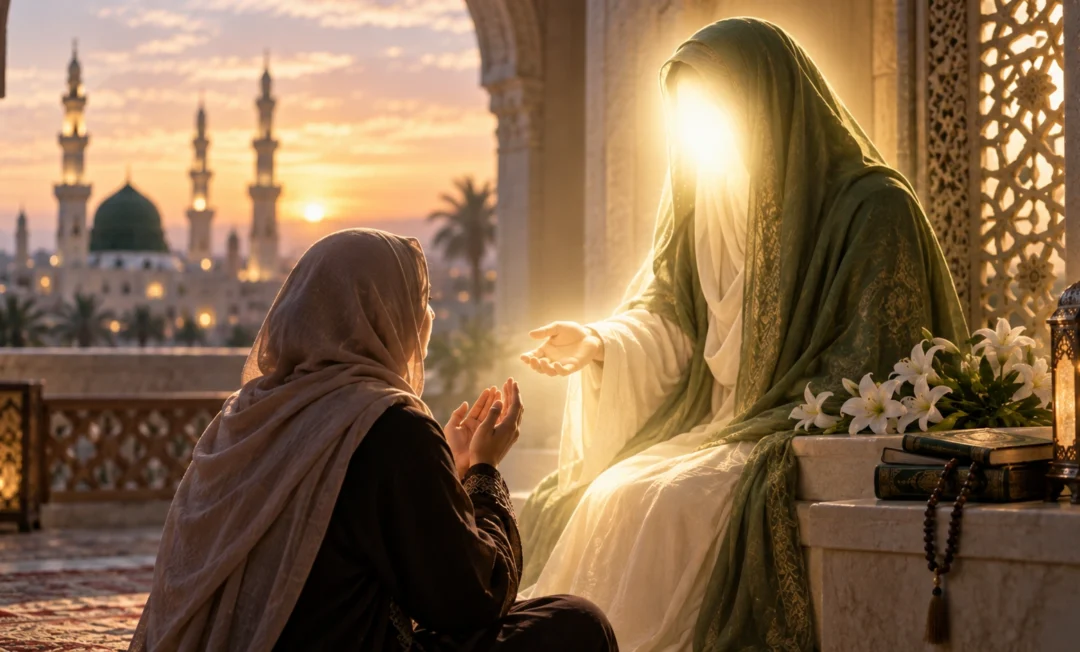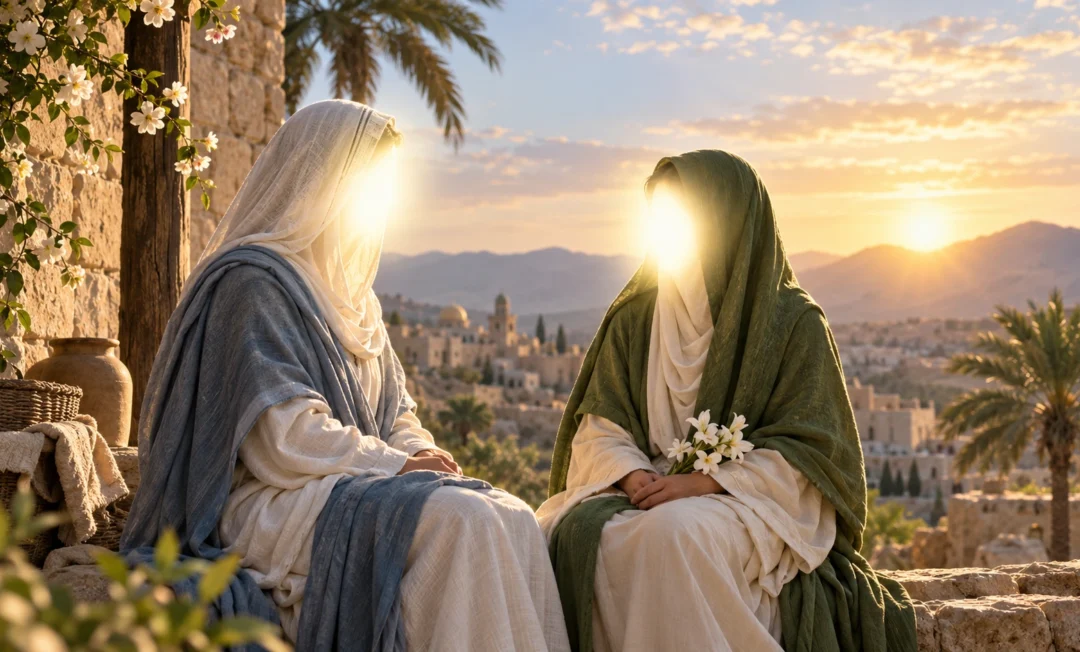

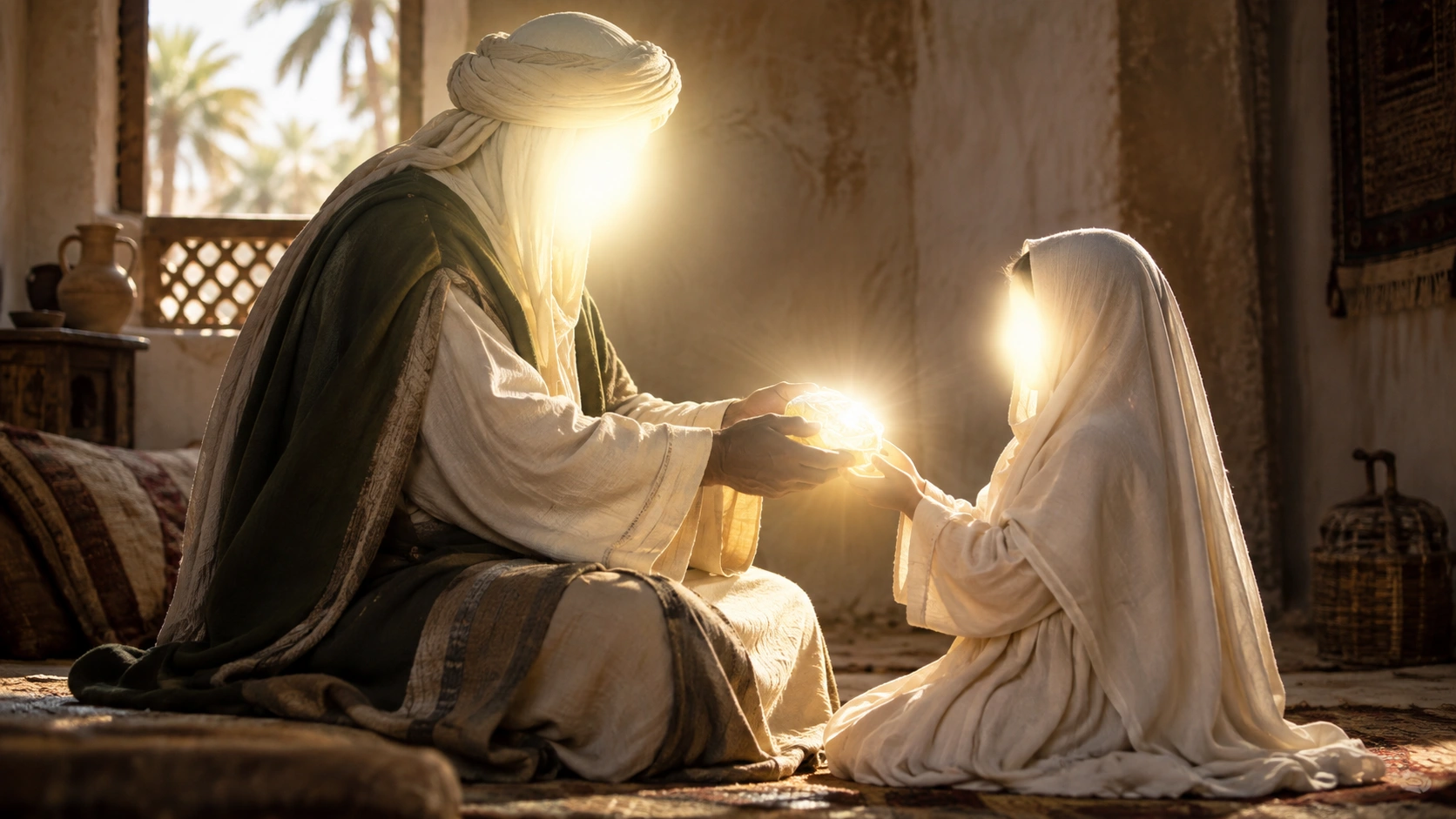
The story of Islam did not end with the passing of Prophet Muhammad ﷺ. His message continued through the Qur’an and through the members of his household, the Ahl al-Bayt, who became central to the religious and spiritual history of the Muslim community.
At the heart of this continuing legacy stands Fatimah al-Zahra سلام الله عليها.
Fatimah was the beloved daughter of the Prophet Muhammad ﷺ, the wife of Imam Ali ibn Abi Talib عليه السلام, and the mother of Imam Hasan and Imam Hussain عليهما السلام. Within Twelver Shi’a Islam, however, her significance reaches far beyond her family relationships. She occupies a unique position in the continuation of the Prophet’s guidance through the Ahl al-Bayt.
Her life and spiritual status are closely connected to one of the central ideas of Islamic tradition: divine guidance does not disappear with the departure of a Prophet. Rather, its light continues through those whom God has chosen to preserve and carry it.
The Prophet Muhammad ﷺ and the Source of Divine Blessings
Prophet Muhammad ﷺ occupies a unique position in Islam. Through him, the Qur’an was revealed, revelation reached humanity, and the final message of God was conveyed to the world.
The Qur’an describes the Prophet as a mercy to the worlds:
“We have not sent you except as a mercy to the worlds.”
— Qur’an 21:107
His mission was therefore not limited to delivering words. He taught, guided, purified, and formed a community around divine revelation.
The Prophet’s departure from this world raised an essential question: how would the guidance he brought continue among later generations?
For Twelver Shi’a Muslims, the answer is found in two inseparable trusts: the Qur’an and the Ahl al-Bayt.
The Qur’an and the Ahl al-Bayt
The Qur’an is the enduring revelation of God. It provides guidance, spiritual light, moral principles, and a path toward God.
But revelation also requires faithful understanding.
The Prophet therefore emphasized the importance of his household and their relationship to the Qur’an. In the well-known Hadith of al-Thaqalayn, he is reported to have said that he was leaving behind two weighty things: the Book of God and his Ahl al-Bayt.
This relationship between the Qur’an and the Ahl al-Bayt became fundamental to Shi’a understanding of Islamic guidance.
The Qur’an is the revealed word of God, while the Ahl al-Bayt are regarded as its authentic guides and interpreters. One represents the revealed source of guidance; the other represents the human path through which that guidance is preserved and explained.
This is where Fatimah al-Zahra assumes an extraordinary position.
Fatimah al-Zahra: A Unique Link in the Chain of Guidance
Fatimah was not simply one member of the Prophet’s family.
She was his daughter, the wife of Ali, the mother of Hasan and Hussain, and the maternal ancestor of the later Imams of the Ahl al-Bayt.
Through her, the Prophet’s family continued generation after generation.
This gives her a unique place in the history of Islamic guidance. The line of the Twelve Imams, according to Twelver Shi’a belief, continued through her descendants.
Her importance can therefore be understood on two interconnected levels.
Historically, she was the central maternal link through which the Prophet’s household continued.
Theologically, she is regarded as possessing a spiritual status far beyond ordinary family lineage.
This distinction is important. Being related to a Prophet does not automatically establish spiritual authority. Fatimah’s significance comes from the combination of her relationship with the Prophet, her place within the Ahl al-Bayt, and the spiritual status attributed to her in Islamic tradition.
Fatimah and Laylat al-Qadr
One of the most profound spiritual descriptions associated with Fatimah al-Zahra connects her with Laylat al-Qadr, the Night of Decree.
Laylat al-Qadr occupies a special position in the Qur’an. It is described as a night better than a thousand months, and as the night in which divine decree is determined.
The Qur’an states:
“The Night of Decree is better than a thousand months.”
— Qur’an 97:3
In Shi’a spiritual tradition, Fatimah has been associated with the mystery of Laylat al-Qadr.
Some narrations use symbolic language in which “the night” is associated with Fatimah and “Qadr” with God. Other traditions emphasize that truly recognizing Fatimah is connected with attaining the spiritual reality of Laylat al-Qadr.
These expressions are not intended to identify Fatimah with God or revelation itself. Rather, they express the extraordinary spiritual status attributed to her and the idea that certain divine realities are manifested and preserved through her.
The symbolism is especially meaningful because a night conceals something within itself while also serving as the vessel through which something profound is revealed.
Fatimah is therefore portrayed as a spiritual vessel of divine light and a place through which the light of the Ahl al-Bayt continues.
The Light of the Imams
Twelver Shi’a tradition gives the Imams a special spiritual position.
They are not viewed merely as political leaders, scholars, or descendants of the Prophet. The Imams are regarded as divinely guided successors responsible for preserving the authentic teachings of Islam and guiding people toward God.
In this understanding, their authority is connected to divine light.
Several narrations attributed to the Imams describe a spiritual relationship between Fatimah and the light of the Imams. One narration attributed to Imam Ja’far al-Sadiq عليه السلام describes Fatimah as having been created from the light of God’s greatness and states that from that light came the lights of the Imams.
This idea places Fatimah at the center of a spiritual lineage.
The Imams are not presented simply as descendants who happened to inherit a family name. Their connection with Fatimah represents, within Shi’a theology, a continuation of a divinely guided spiritual reality.
Her position is therefore both maternal and spiritual.
Al-Kawthar: The Abundance Given to the Prophet
Another important connection is found in the Qur’anic concept of Al-Kawthar.
God says to the Prophet:
“Indeed, We have granted you Al-Kawthar.”
— Qur’an 108:1
The word Kawthar carries the meaning of abundant goodness.
Muslim scholars have offered different interpretations of the verse. In Shi’a tradition, one important interpretation connects Al-Kawthar with Fatimah al-Zahra and the immense continuation of the Prophet’s legacy through her.
This interpretation gives the short Qur’anic chapter a much deeper significance.
The Prophet’s enemies once described him as abtar, a person whose legacy would be cut off. Yet history unfolded differently.
The Prophet’s name and message did not disappear.
His descendants continued through Fatimah.
The Ahl al-Bayt continued through Fatimah.
The line of the Imams continued through Fatimah.
And the spiritual legacy associated with the Prophet’s household continued through her children and descendants.
From this perspective, Al-Kawthar is not merely about biological descendants. It represents an abundance of lasting good and a legacy that cannot be extinguished.
Why Fatimah’s Role Is So Significant
The significance of Fatimah al-Zahra becomes clearer when the different dimensions of her life are considered together.
She was the daughter of the final Prophet.
She was the wife of Imam Ali.
She was the mother of Imam Hasan and Imam Hussain.
She was the maternal ancestor of the later Imams.
She belonged to the Ahl al-Bayt, the household that occupies a central place in Islamic tradition.
And in Shi’a theology, she possesses a spiritual status that cannot be reduced to genealogy.
Her importance therefore does not depend on a single event or title.
It emerges from the convergence of family, history, revelation, spiritual authority, and the continuation of divine guidance.
From Fatimah to the Twelve Imams
The continuation of the Prophet’s household becomes especially significant through the line of the Twelve Imams.
Imam Ali was Fatimah’s husband.
Imam Hasan and Imam Hussain were her sons.
The remaining Imams descended through Imam Hussain.
This means that Fatimah stands at the maternal beginning of the lineage of the Twelve Imams after the first Imam.
Her role is therefore unlike that of an ordinary ancestor.
She stands at a critical point where Prophethood, the household of the Prophet, and the line of Imamate meet.
For believers, this is one reason she is known as Umm al-A’immah — the Mother of the Imams.
The title does not simply celebrate motherhood. It points toward the role she played in the continuation of a religious lineage regarded by Twelver Shi’a Muslims as divinely guided.
The Continuation of the Prophet’s Light
The idea of light provides a powerful way of understanding Fatimah’s place in Shi’a spirituality.
The Prophet brought the light of revelation.
The Qur’an preserved that revelation.
The Ahl al-Bayt preserved and carried its guidance.
Fatimah stands at the center of the family through which the line of Imamate continued.
Her children and descendants became the bearers of a tradition that connected later generations with the Prophet’s household.
In this sense, “the Prophet’s light” does not mean a physical light passed from one person to another. It refers to the continuing presence of guidance, knowledge, faith, and spiritual authority within the Prophet’s family.
Fatimah’s position becomes especially profound because this continuation passes through her.
The Legacy That Reached the Future
The story does not end with Fatimah’s own lifetime.
Her legacy extends through Hasan and Hussain, and through the descendants of Hussain who became the remaining members of the Twelve-Imam tradition.
For Twelver Shi’a Muslims, this lineage eventually reaches Imam Muhammad al-Mahdi, whose awaited return represents the final manifestation of divine justice and guidance.
The connection is therefore not simply a matter of ancestry.
It forms a continuous spiritual narrative:
Prophet Muhammad ﷺ → Fatimah al-Zahra → Imam Ali and her children → the Twelve Imams → the continuing hope of divine guidance.
Fatimah’s place within this chain explains why her name remains central to Shi’a religious thought centuries after her death.
Conclusion
Fatimah al-Zahra سلام الله عليها occupies a unique position in Islamic history and Shi’a theology.
She was the beloved daughter of Prophet Muhammad ﷺ, the wife of Imam Ali, the mother of Imam Hasan and Imam Hussain, and the maternal ancestor of the later Imams.
But her significance goes beyond genealogy.
She is associated with the spiritual mystery of Laylat al-Qadr, the continuation of the Prophet’s household, the lineage of the Twelve Imams, and the abundance symbolized by Al-Kawthar.
Through Fatimah, the Prophet’s family continued.
Through her descendants, the line of the Imams continued.
And through that lineage, millions of believers have understood the Prophet’s guidance as something that did not disappear with his death, but continued through the Qur’an and the Ahl al-Bayt.
Fatimah al-Zahra therefore stands not simply as a figure of the past, but as a central figure in a continuing religious tradition—one in which the light associated with the Prophet Muhammad ﷺ is understood to have continued through his family and the Imams who followed.