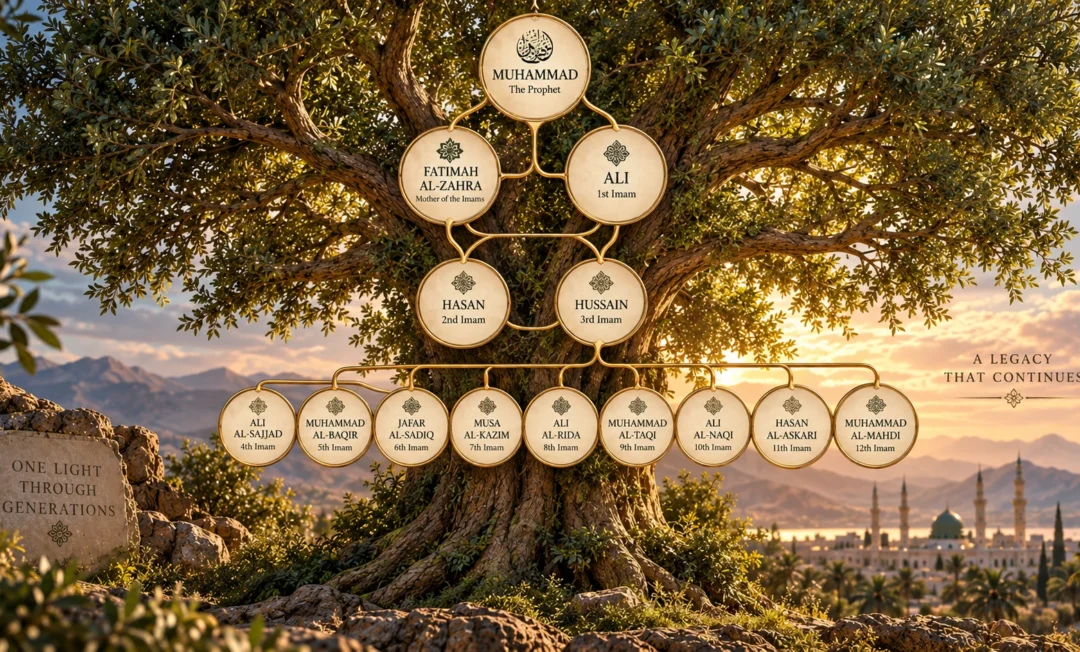

Fadak and Fatimah al-Zahra are closely connected in the history of the events that followed the death of the Prophet Muhammad ﷺ. Fadak was a fertile area near Khaybar that became the subject of an important dispute concerning ownership, inheritance, the rights of Ahl al-Bayt, and the position of the Prophet’s family. According to reports relied upon by Shi’a sources, the Prophet Muhammad ﷺ had transferred Fadak to Fatimah al-Zahra during his lifetime. After his death, Fadak was taken out of her control, leading her to present arguments to establish her right.
The dispute over Fadak was not simply a disagreement about property. In historical and religious accounts, it became connected with questions concerning Fatimah al-Zahra’s ownership, the inheritance of the Prophet, the rights of Ahl al-Bayt, the khums, the Prophet’s endowments, and the position of the Prophet’s family.
According to reports relied upon by Shi’a sources, Fatimah al-Zahra regarded Fadak as her property because the Prophet Muhammad ﷺ had transferred it to her during his lifetime. After the Prophet’s death, Fadak was taken out of her control, and she presented her arguments in an effort to establish her right.
To understand the Fadak dispute, it is first necessary to understand what Fadak was and how it came under the Prophet’s authority.
Where Was Fadak?
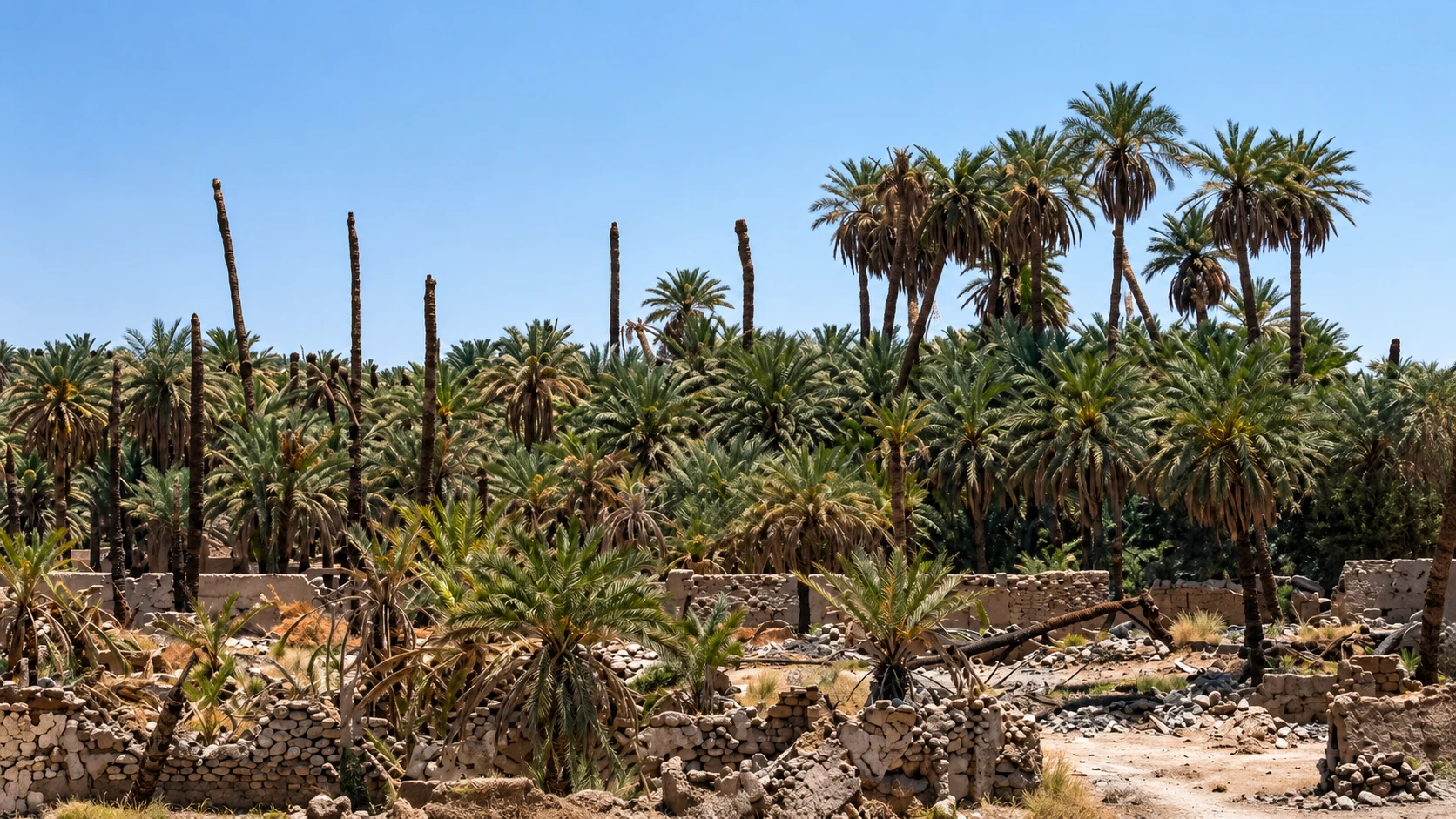
Fadak was a fertile settlement located north of Medina and near Khaybar. Historical reports describe it as being approximately two or three days’ journey from Medina.
The area was known for its fertile land, gardens, and date-palm plantations, giving it considerable economic value. Its inhabitants were predominantly Jewish.
Unlike many territories that came under Muslim control through military campaigns, Fadak was placed under the authority of the Prophet without a battle. After learning of the Muslim victory at Khaybar, the people of Fadak negotiated with the Prophet and chose a peaceful settlement.
This distinction is important because Islamic jurisprudence treated lands acquired through warfare differently from lands obtained through peace.
How Was Fadak Given to Fatimah al-Zahra?
According to narrations found in Shi’a sources and also reported in some Sunni sources, the Prophet Muhammad ﷺ transferred Fadak to his daughter, Fatimah al-Zahra, during his lifetime.
Some of these narrations connect the transfer with Qur’an 17:26:
“And give the relative his right, and the poor and the traveler.”
In Majma’ al-Bayan, a narration attributed to Imam Muhammad al-Baqir, Imam Ja’far al-Sadiq, and Abu Sa’id al-Khudri states that after this verse was revealed, the Prophet gave Fadak to Fatimah.
Al-Suyuti also reports a narration from Abu Sa’id al-Khudri in al-Durr al-Manthur, conveying the same general account of the Prophet giving Fadak to Fatimah after the revelation of the verse.
Accordingly, in the well-known Shi’a account, Fadak was already in Fatimah’s possession during the Prophet’s lifetime. After his death, however, its ownership became disputed.
How Was the Income from Fadak Used?
Another important aspect of the Fadak story concerns the way its income was reportedly used.
Some sources estimate Fadak’s annual income at around 24,000 dirhams, although historical reports differ regarding its exact value.
According to reports relied upon by Shi’a sources, Fatimah al-Zahra did not use the income from Fadak for a luxurious lifestyle or the accumulation of personal wealth.
These accounts state that a significant portion of its income was spent for the sake of God and distributed among the poor, needy, orphans, and members of Banu Hashim. A portion was also used to support her family.
From this perspective, Fadak was not regarded by Fatimah as a means of accumulating wealth. Rather, its income could serve as a means of helping those in need and supporting charitable causes.
This is also presented alongside descriptions of Fatimah’s simple way of life. Despite having access to a valuable source of income, her household remained simple, without the kind of luxury associated with wealthy households.
In this account, therefore, the importance of Fadak was not limited to the value of its land and date plantations. The way its income was used for charitable purposes was also an important part of its historical narrative.
What Happened to Fadak After the Prophet’s Death?
After the death of the Messenger of Allah ﷺ and the political developments that followed, Fadak was removed from Fatimah’s control.
Historical reports cited in discussions of the Fadak dispute state that, shortly after the Prophet’s death, Fatimah’s representatives and workers were removed from Fadak and others were appointed in their place.
Fatimah al-Zahra then sought to establish her right to the property.
Her effort became one of the most significant recorded appeals concerning her rights during the period following the Prophet’s death.
What Arguments Did Fatimah Make About Fadak?
Reports concerning the Fadak dispute describe two principal lines of argument presented by Fatimah al-Zahra.
1. Fadak Had Been Given to Her by the Prophet
The first argument was that the Prophet had already transferred Fadak to Fatimah during his lifetime.
From this perspective, the issue was not initially one of inheritance. Rather, it concerned property that had already been given to her while the Prophet was alive.
Witnesses were also presented in support of this claim.
2. Fadak as Part of the Prophet’s Inheritance
After this argument was not accepted, Fatimah raised the question of inheritance.
She referred to Qur’anic verses concerning the inheritance of prophets, including Qur’an 19:6, concerning Prophet Zakariya, and Qur’an 27:16, concerning Prophet Sulayman and Prophet Dawud.
Qur’an 27:16 states:
“And Solomon inherited David.”
Reference to these verses became an important part of Fatimah’s argument concerning inheritance.
What Was the Government’s Argument About Fadak?
In response, the government at the time relied upon a hadith according to which prophets did not leave material inheritance.
Abu Bakr narrated a statement attributed to the Prophet Muhammad ﷺ:
“We, the community of prophets, do not leave inheritance; what we leave is charity.”
According to this narration, the property left by the Prophet was not to be distributed as personal inheritance among his heirs.
This hadith appears in several hadith collections. However, its interpretation and its relationship to Qur’anic verses concerning inheritance have been subjects of discussion and disagreement among Islamic scholars and schools of thought.
In the well-known Shi’a account, Fatimah al-Zahra did not accept this argument and responded by referring to Qur’anic verses concerning the inheritance of earlier prophets.
Was the Dispute Only About Fadak?
An important point raised in some sources is that the disagreement between Fatimah al-Zahra and the government was not limited to Fadak itself.
According to these reports, several related matters were involved.
1. The Prophet’s Gifts
The first issue concerned properties that, according to these reports, the Prophet had given to Fatimah during his lifetime. These included Fadak and a share of the agricultural produce of Khaybar.
2. The Prophet’s Inheritance
The second issue concerned property left by the Prophet, including personal possessions, certain household properties, and lands whose status is discussed in historical sources.
3. Khums
Another issue mentioned in some reports concerns khums and the share of the Prophet’s relatives, particularly the rights associated with Ahl al-Bayt.
4. The Prophet’s Endowments
Some sources also discuss the endowments and charitable properties associated with the Prophet, and describe their administration as another matter connected with the dispute.
Therefore, the Fadak episode cannot be reduced entirely to a disagreement over one piece of land. In historical and religious reports, it became connected with broader questions concerning the Prophet’s property and the rights of his family.
Fadak: A Property Dispute or a Larger Historical Issue?
Over the centuries, Fadak has remained an important subject in historical and religious discussions concerning the period after the Prophet’s death.
For Shi’a Muslims, Fadak is not simply the name of an economically valuable piece of land. It has become a symbol of Fatimah al-Zahra’s defense of her rights and her appeal to the Qur’an and the Prophet’s teachings.
Sunni historical and hadith sources also record the Fadak episode and the narration concerning the inheritance of prophets, although interpretations of the events and their implications differ.
For this reason, studying Fadak requires distinguishing between several related questions: the ownership of Fadak, the claim that it had been given to Fatimah, the question of the Prophet’s inheritance, the income generated by Fadak, and the status of other properties associated with the Prophet.
Why Did Imam Ali (a) Not Take Fadak Back?
One of the important questions about Fadak is why Imam Ali (a), after becoming caliph, did not return it to the family of the Prophet. According to Shi’a narrations, the answer to this question can be understood by considering the Ahl al-Bayt’s view of the issue of Fadak. For them, Fadak was not merely a piece of property or a source of income; rather, it was connected to the events and disputes that arose after the passing of the Prophet.
In one narration, Abu Basir asked Imam al-Sadiq (a) about this very issue. The Imam replied that both the oppressor and the oppressed will appear before God; God will reward the oppressed and punish the oppressor. Therefore, Imam Ali (a) did not wish to reclaim for himself something that had been taken from the Ahl al-Bayt through injustice.
In another narration from Imam al-Sadiq (a), this conduct is also connected to the example of the Prophet Muhammad ﷺ. The Imam stated that the Ahl al-Bayt do not take back for themselves something that was unjustly taken from them.
It is also narrated from Imam al-Kazim (a) that the Ahl al-Bayt would reclaim people’s rights from oppressors and return them to their rightful owners, but they did not demand their own personal rights for themselves.
Therefore, according to these narrations, Imam Ali’s (a) decision not to return Fadak does not mean that he ignored Lady Fatimah’s (s.a.) claim. Rather, it was a conscious decision in which the issue of Fadak was viewed as something beyond a personal claim, while the final judgment concerning the injustice that had occurred was left to God.
Why Does Fadak Still Matter?
Centuries after the events took place, Fadak continues to receive attention in historical and religious studies.
Its importance can be examined from several perspectives. At one level, the issue concerns the ownership and transfer of an important property. At another, it raises broader questions about the inheritance of prophets and the interpretation of Qur’anic verses concerning inheritance.
The story of Fadak is also closely connected in Shi’a historical memory with Fatimah al-Zahra’s defense of her rights and those of the Prophet’s family.
For this reason, Fadak has remained an important symbol in Shi’a thought and historical memory, particularly in discussions of justice, rights, and the events that followed the death of the Prophet Muhammad ﷺ.