
The Day of Judgment is the moment when worldly distinctions disappear.
Power, wealth, reputation, and social position no longer protect anyone.
Every person stands before God.
Yet the source presents an extraordinary scene in which Fatima Zahra appears before creation with a dignity and honor unlike that of ordinary people.
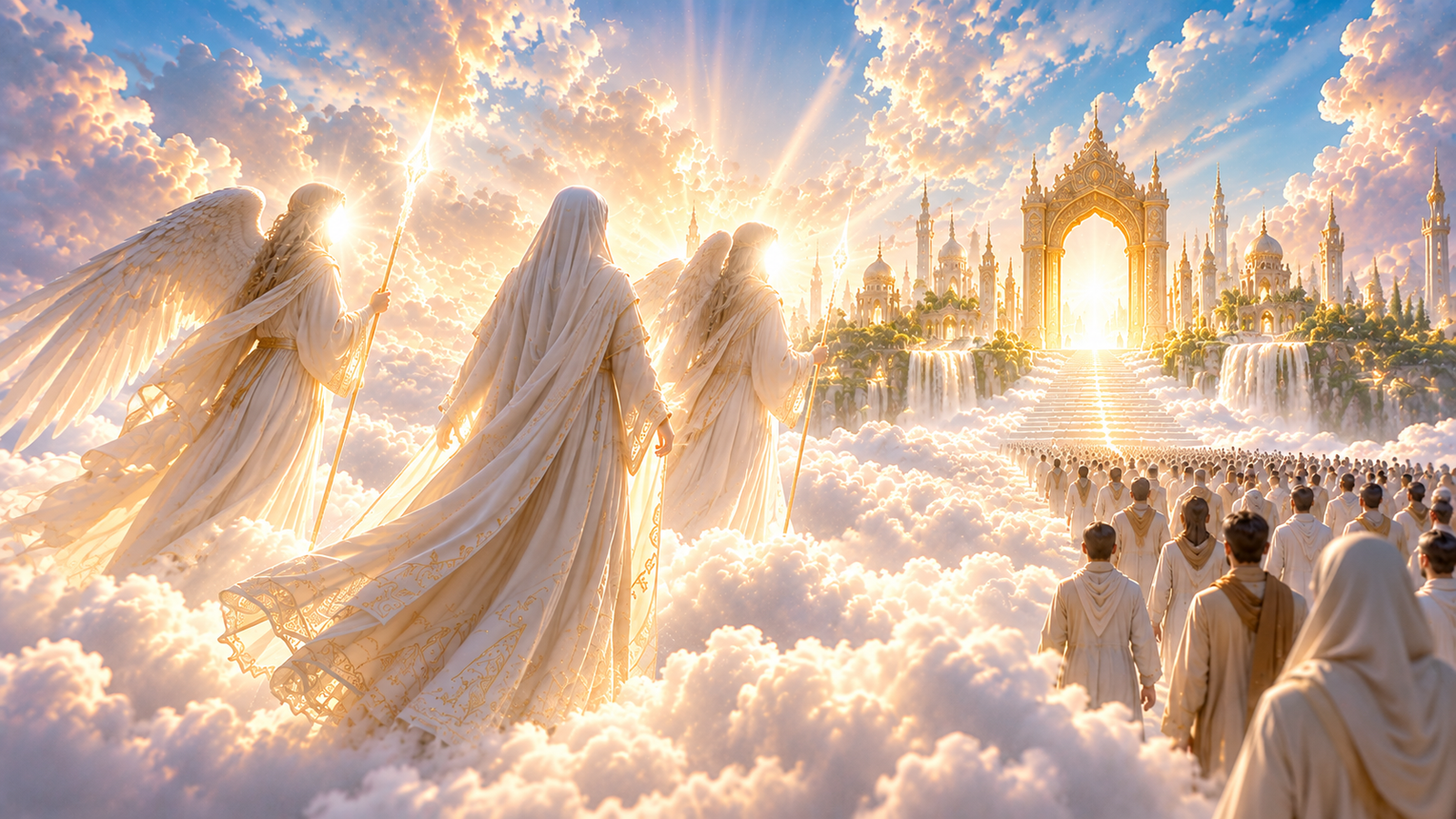
She is described surrounded by angels, accompanied by extraordinary signs of heavenly honor, and moving through the gathering in a way that causes the people of the great assembly to lower their eyes.
But the most important part of the story is not the spectacle.
It is what Fatima does when she reaches the presence of God.
She asks for justice.
And then she asks for mercy.
The Arrival of Fatima
The source describes Fatima arriving on the Day of Judgment on a heavenly mount surrounded by extraordinary imagery.
Her mount, clothing, ornaments, and crown are described in terms of light and precious stones. Seventy thousand angels are said to surround her from each side, while Jibril is described as taking the reins of her mount.
These descriptions are deliberately majestic.
The woman who was honored during her earthly life is now honored before the gathered creation.
Her journey is public.
Her dignity is visible.
Her rank is announced.
“Lower Your Eyes”
One of the most memorable details in the source is the command given to the people of the gathering:
lower your eyes until Fatima has passed.
The source describes the call being made so that people avert their gaze while the daughter of the Prophet crosses the gathering and approaches the Sirat.
The symbolism is powerful.
The Day of Judgment is normally imagined as a moment in which every secret is exposed.
Yet Fatima is granted a dignity that requires even that vast assembly to show restraint.
Her passage is not ordinary.
It resembles a royal procession, but with a spiritual rather than worldly authority.
Why Is She Given Such Honor?
The answer is not supplied in just one statement.
The source connects Fatima’s position with her purity, faith, special creation, relationship with the Prophet, place among Ahl al-Bayt, and ultimate rank among women.
Her heavenly honor therefore reflects a lifetime of spiritual distinction.
The same source that describes her as one of the greatest women also describes her standing in prayer and worship with an extraordinary level of faith and humility.
The Day of Judgment, in this view, reveals rather than creates her rank.
Fatima and the Question of Justice
The most dramatic turn in the story comes when Fatima seeks justice.
The source describes her standing before God and asking for judgment concerning those who wronged her and her family. Another narration specifically connects this with the suffering and killing of her descendants.
This is important because it changes the tone of the story.
Until this point, the emphasis is on glory.
Now the emphasis is on accountability.
Fatima’s honor does not mean injustice disappears.
Instead, the Day of Judgment becomes the place where injustice is finally brought before perfect justice.
The Memory of Her Family
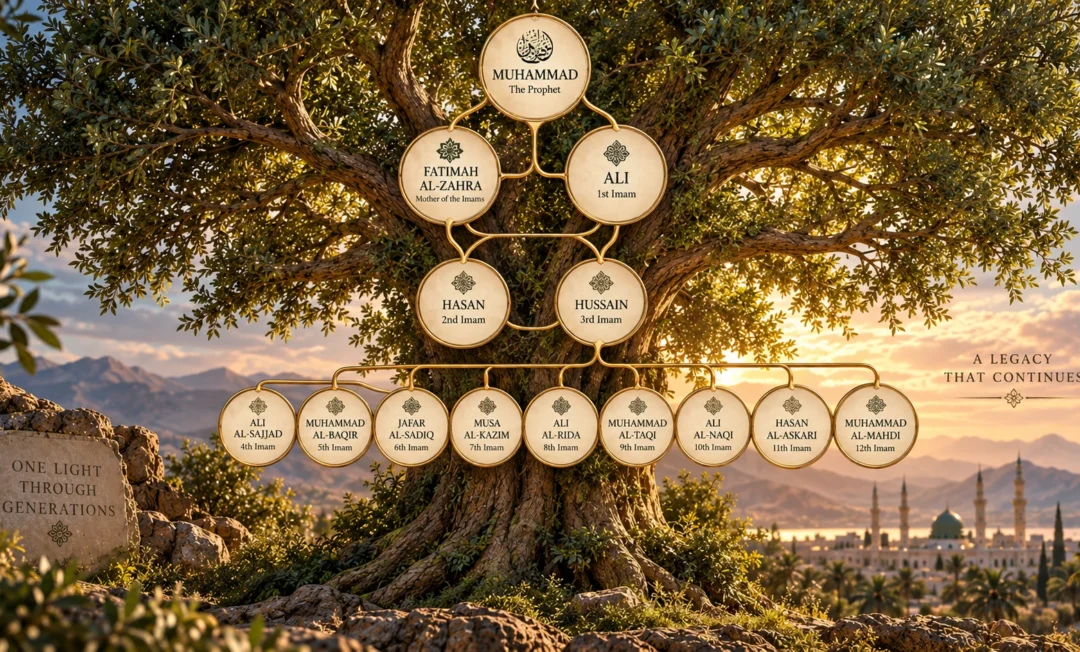
The source connects this appeal for justice with the wider suffering of the Prophet’s family, especially the tragedy associated with Imam Husayn.
Elsewhere, the source explains the importance of Husayn’s birth in relation to the continuation of Imamate and the preservation of the religious legacy of the Prophet.
Fatima’s plea on the Day of Judgment therefore carries a wider historical dimension.
She stands not only for herself.
She stands as a member of a family whose history includes sacrifice, persecution, and martyrdom.
Her demand for justice is presented as the cry of a wronged household.
Then the Story Changes
The extraordinary thing is that Fatima’s story does not remain a story of accusation.
The source describes God calling upon her to ask and to intercede.
And what does she ask for?
Her descendants.
Her followers.
Those who love her.
And those connected with her family.
This produces a striking contrast.
She asks for justice for those who were wronged, but mercy for those who love and follow her.
The woman who stands against oppression is also presented as a source of compassion.
That is one of the most memorable ideas in the entire source.
Fatima as an Intercessor
The source explicitly speaks of Fatima’s intercession.
The Prophet is quoted saying that she will intercede for those who love her and her descendants, and that God will accept her intercession.
This means her role on the Day of Judgment is not limited to her own experience.
Her presence becomes meaningful for others.
The source even presents love for Fatima as beneficial at several stages of the Hereafter, including death, the grave, the gathering, the weighing of deeds, the Sirat, and the final accounting.
Thus the relationship between Fatima and her followers is presented as having consequences beyond earthly life.
A Different Kind of Power
There is an important lesson hidden in these descriptions.
Fatima’s authority is not described in worldly terms.
She is not powerful because of armies.
She does not possess political machinery.
Her authority comes from spiritual rank.
Her dignity comes from purity and faith.
Her influence comes through her relationship with God, the Prophet, and Ahl al-Bayt.
The Day of Judgment reveals this authority before everyone.
In a world obsessed with visible power, this is a radically different definition of greatness.
The Image of Fatima Crossing the Sirat
Another narration describes the gathering being ordered to lower its gaze while Fatima passes over the Sirat.
The wording of the source presents this as a moment of extraordinary honor.
It creates a striking image:
the world waits,
the crowd falls silent,
eyes are lowered,
and Fatima passes through the gathering.
This is not simply a beautiful scene.
It is a theological statement about dignity.
What the Prophet honored during his lifetime remains honored in the Hereafter.
Justice and Mercy Together
One of the reasons this story remains so powerful is that it holds two ideas together that people often separate.
Justice says that wrongdoing matters.
Mercy says that love, loyalty, and goodness matter too.
The source presents Fatima as a figure in whom these two realities meet.
She does not forget injustice.
Yet she does not stop at demanding punishment.
She asks for those who love her.
She seeks a future for them.
She becomes an intercessor.
What Does This Mean for Us?
The Day of Judgment narratives are obviously about the Hereafter.
But they also carry lessons for life now.
The source connects love for Fatima with moral improvement and says that devotion to her can influence a person’s character and behavior.
That matters.
The purpose of these stories is not merely to create wonder.
They invite transformation.
If we admire Fatima’s defense of truth, we should become more truthful.
If we admire her dignity, we should respect the dignity of others.
If we value her patience, we should learn endurance.
If we hope for her intercession, we should ask whether our lives reflect the values associated with her.
A Woman of Justice and Mercy
The source’s portrayal of Fatima on the Day of Judgment is therefore much richer than a description of heavenly beauty.
It is a story about recognition.
The person honored by the Prophet is honored before all creation.
It is a story about justice.
Wrongdoing is not forgotten.
It is a story about mercy.
Fatima asks that those connected with her be granted salvation.
And it is a story about spiritual authority.
Her journey through the Hereafter reveals a rank that worldly life could never fully display.
Perhaps the most moving part is that Fatima’s journey does not end when she reaches her own destination.
She turns back toward others.
And in the source’s account, she asks that those who love her family be brought with her toward Paradise.