
The Marriage of the Prophet’s Daughter
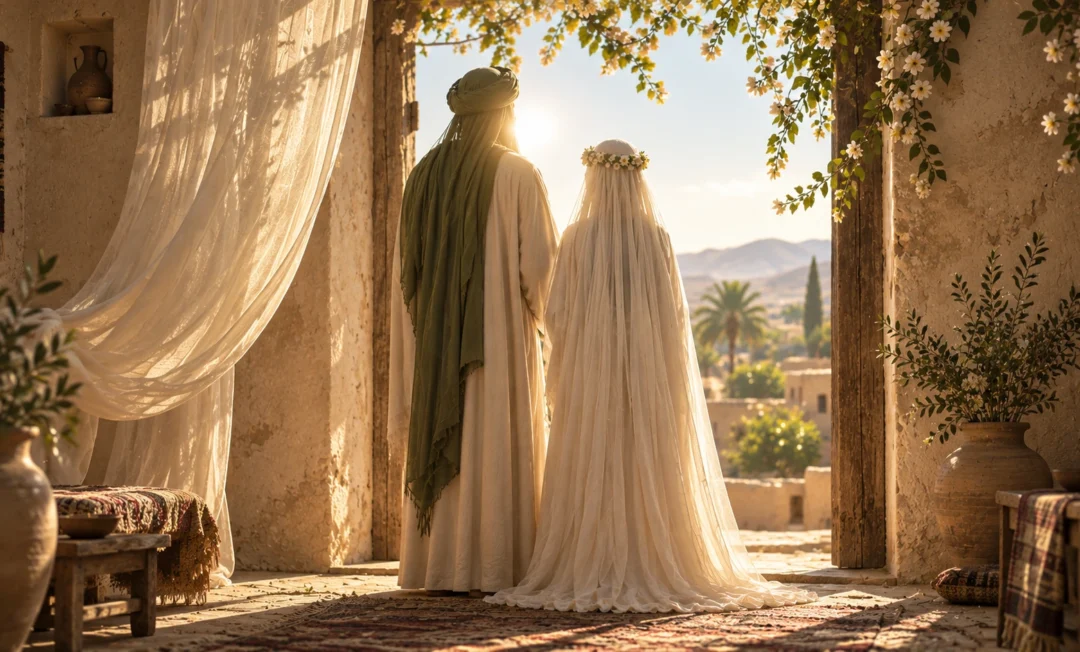
Fatimah al-Zahra (peace be upon her) was the beloved daughter of Prophet Muhammad (peace and blessings be upon him and his family). As she reached the age of marriage, several prominent Muslims were reported to have sought her hand.
Among those mentioned in the traditional accounts are Abu Bakr and Umar. In reports found in both Sunni and Shi’a literature, the Prophet did not accept those proposals and indicated that the matter of Fatimah’s marriage was not simply a decision to be made according to social position or wealth. One Sunni narration in Sunan al-Nasa’i, for example, reports that Abu Bakr and Umar proposed and the Prophet replied that she was still young; later, when Ali proposed, the marriage was accepted.
The source material provided for this article gives another commonly transmitted formulation: the Prophet told those who approached him that he was awaiting the command of God concerning Fatimah’s marriage.
This set the stage for the proposal of Imam Ali (peace be upon him).
Ali’s Hesitation
Ali had known the Prophet more closely than almost anyone outside his immediate household. The Prophet had cared for him from childhood and had played a major role in his upbringing.
Yet when the question of marrying Fatimah arose, Ali was hesitant.
His hesitation was not because he did not desire the marriage. Traditional reports describe him as being conscious of his limited financial means and of the importance of the Prophet’s daughter. He had no great wealth, no elaborate home, and no possessions comparable to those of some of the other men who might have sought Fatimah’s hand.
Eventually, those around Ali encouraged him to go to the Prophet and make the proposal himself.
Ali Comes to the Prophet
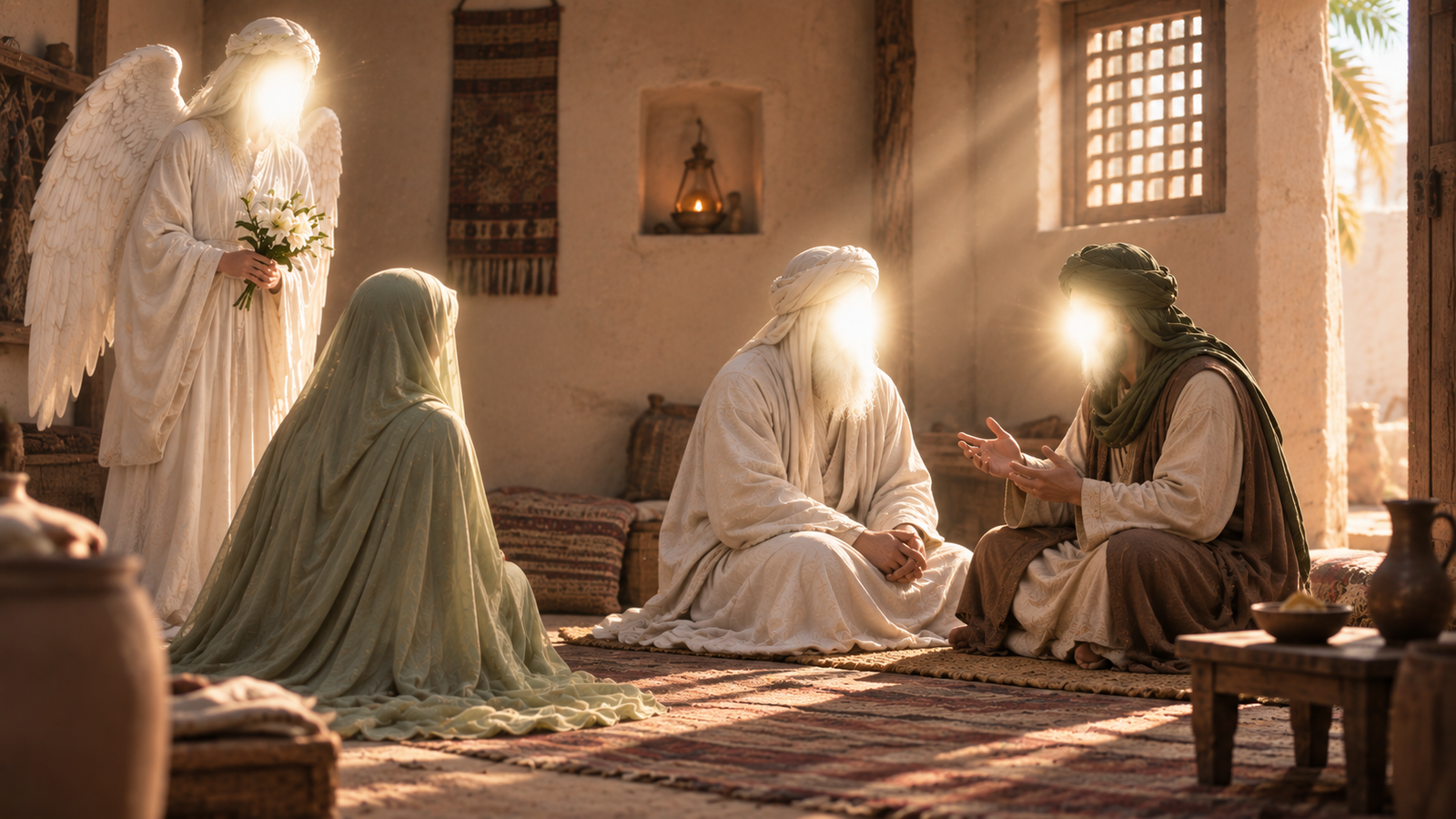
Ali went to the Prophet’s home, but his modesty made it difficult for him to speak.
According to the traditional account preserved in the source material, Ali entered, greeted the Prophet, and sat quietly with his eyes lowered. The Prophet knew Ali well and understood that he had come with an important request.
After asking him what he wanted several times, the Prophet himself asked whether he had come to seek Fatimah’s hand.
Ali replied that he had.
Another version gives Ali’s request in more personal terms. He reminded the Prophet that Muhammad had cared for him from childhood, had shown him a kindness greater than that of a parent, and had guided him throughout his early life. Now that he had grown older, Ali explained, he wished to establish a household of his own and had come to ask for Fatimah in marriage.
The Prophet was pleased by the proposal.
Fatimah’s Consent
The Prophet then went to Fatimah and told her that Ali had proposed.
According to the traditional report, he spoke of Ali’s faith, his early commitment to Islam, and his closeness to the Prophet. Fatimah did not give a long verbal response. Instead, she remained silent.
The Prophet understood her silence as consent and declared “Allahu Akbar.”
This is an important detail in the story.
The marriage was not presented as something imposed upon Fatimah. Her approval was sought, and her response was taken into consideration before the proposal was accepted.
The same broad idea appears in accounts from outside the supplied Shi’a sources: the Prophet presented Ali’s proposal to Fatimah and received her approval before proceeding.
A Suitor With Very Little Wealth
Once the proposal was accepted, the Prophet asked Ali what he could offer as a marriage gift.
Ali explained that his possessions were limited. He had a sword, a camel, and a shield.
The Prophet told him to retain the sword because of his responsibilities in defending Islam. The camel was also useful for work and travel. The shield, however, could be sold and used toward Fatimah’s mahr.
This detail gives the proposal a very human dimension.
Ali was one of the Prophet’s closest companions, yet he was not a wealthy man seeking to establish his suitability through material possessions. His proposal was accepted despite his limited means.
Why Ali?
The traditional literature surrounding the marriage places great emphasis on the suitability of Ali and Fatimah.
The source documents preserve reports in which the Prophet described their union as exceptional and associated it with divine wisdom. One report states that he told people that he had not simply arranged the marriage himself, but that God had brought Fatimah and Ali together. Another traditional saying attributed to the Prophet declares that had Ali not existed, there would have been no suitable match for Fatimah.
Such reports express the high spiritual status attributed to both figures in the tradition of the Ahl al-Bayt.
A Marriage Measured by Character
The story of Fatimah and Ali’s proposal stands in marked contrast to marriage arrangements based primarily on wealth or social status.
Ali did not have a large fortune to offer. Fatimah’s family did not demand an extravagant dowry. The Prophet focused on Ali’s faith, character, history, and suitability.
The source material repeatedly presents this as one of the lessons of the marriage: religious character and moral compatibility mattered more than wealth and status.
This is one reason the proposal continues to attract attention far beyond its historical setting.
When Did Fatimah and Ali Marry?
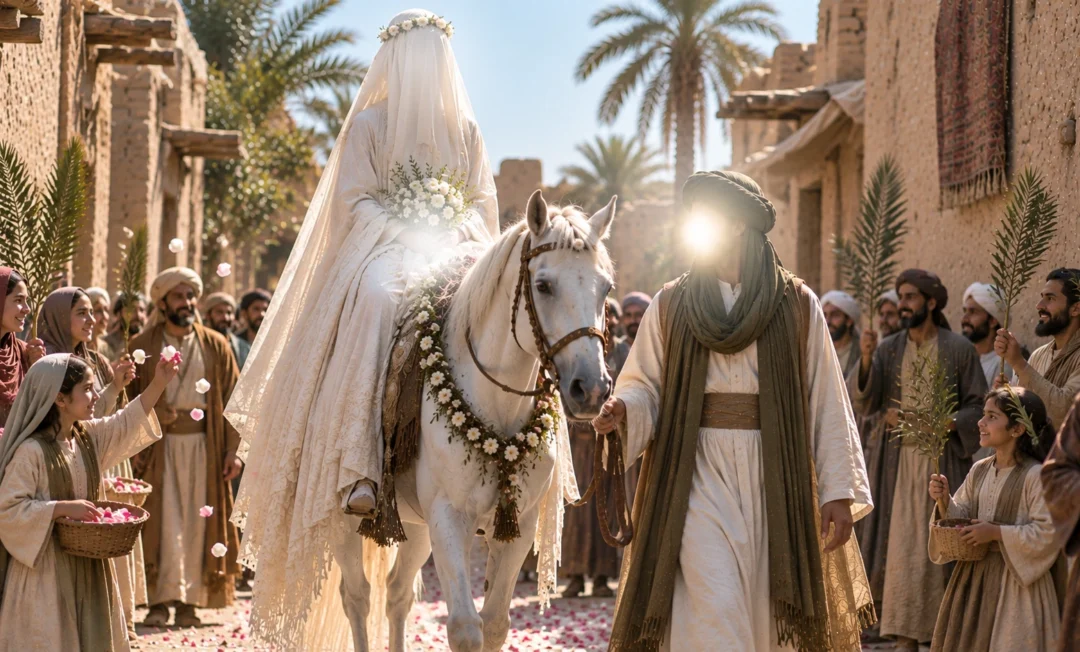
The marriage is generally placed in the early Medinan period, most commonly in 2 AH, although some historical sources place aspects of the marriage in 1 AH or differ about the exact timing. Modern historical references likewise note disagreement over the chronology.
The exact date is less important to the narrative than what followed: a marriage that became the foundation of one of the most important households in Islamic history.
The Beginning of a Remarkable Family
The proposal of Ali to Fatimah was therefore more than the beginning of an ordinary marriage.
It brought together two members of the Prophet’s household whose names would become inseparable from the history of the Ahl al-Bayt.
Their life together would produce Hasan, Husayn, Zaynab, and Umm Kulthum, while the descendants of Imam Husayn would continue the line of the Imams in Shi’a tradition.
The proposal began simply—with a hesitant Ali standing before the Prophet and asking for Fatimah’s hand.
Its consequences would extend across generations.