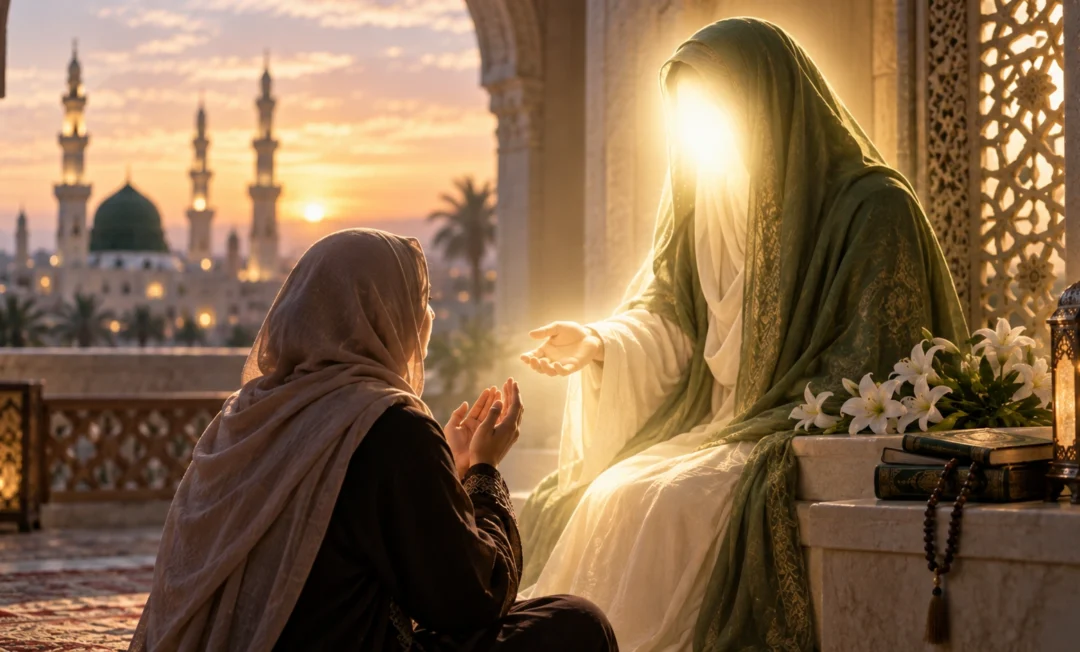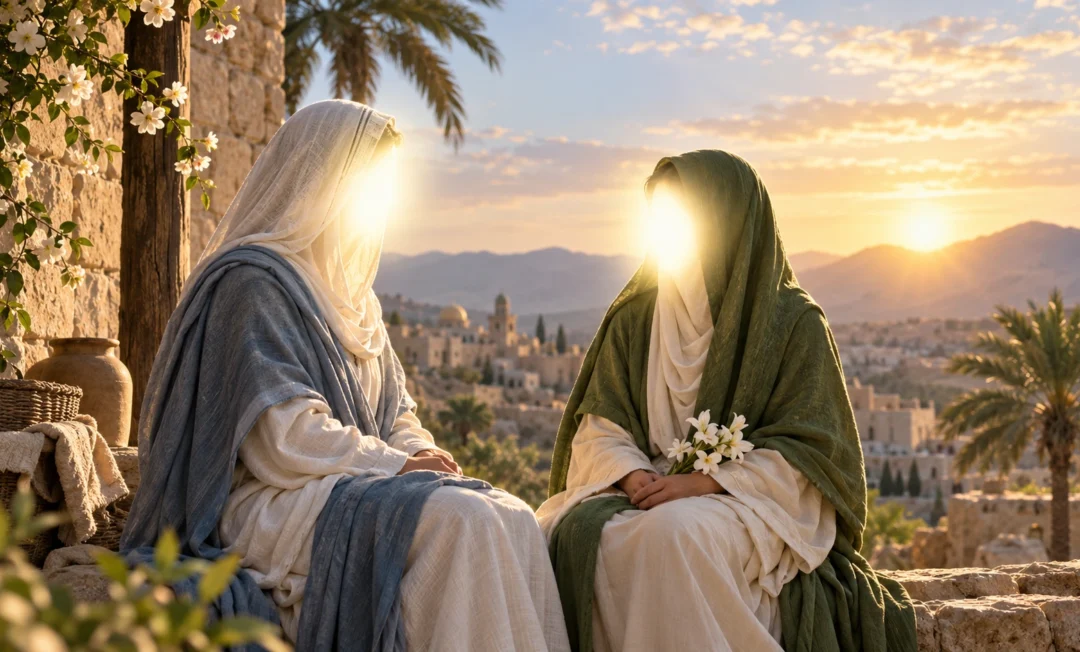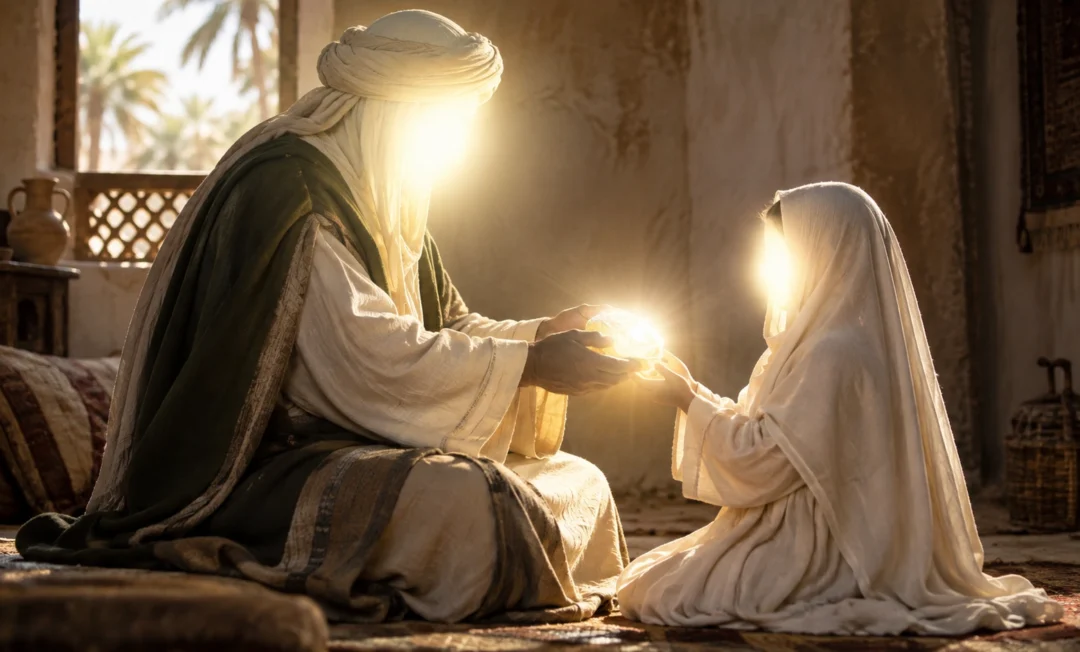


More than fourteen centuries have passed since Fatimah al-Zahra lived.
The world around us now looks almost unrecognizable compared with seventh-century Arabia. We have universities, global communication, modern medicine, professional careers, smartphones, social media, and choices that earlier generations could hardly imagine.
So why should the life of Fatimah al-Zahra still matter?
Because technology changes faster than human nature.
People still search for meaning. They still experience loss, love, family pressure, responsibility, injustice, uncertainty, and the desire to live a life that matters.
Fatimah’s importance is not that people today should simply copy the circumstances of her life.
It is that her life allows us to think again about how faith, family, responsibility, character, and social conscience can shape a human being.
More Than One Role
One reason Fatimah remains interesting is that she cannot easily be placed into a single category.
She was a daughter, wife, mother, worshipper, member of a community, and a woman remembered for expressing her views publicly when she believed something important was at stake.
Each of those roles brought different responsibilities.
Her relationship with her father connected her to the Prophet Muhammad and to the formative years of the Muslim community. Her marriage to Ali opened another chapter of life built around partnership, household responsibilities, and shared hardship. Motherhood brought an entirely different kind of responsibility.
None of these roles erased the others.
That is relevant today because modern conversations sometimes ask women to choose a single identity: career woman, wife, mother, activist, student, or something else.
Human beings have never been that simple.
A meaningful life can contain several responsibilities at once.
Faith Was the Foundation
There is one element that gives the rest of Fatimah’s life its meaning: faith in God.
Without that foundation, her patience can look like endurance for its own sake. Her generosity can look like kindness without a deeper reason. Her courage can look like personality. Her worship can look like ritual separated from ordinary life.
But within her Islamic worldview, these things belonged together.
God was not one part of her life alongside everything else. Faith gave direction to everything else.
That distinction is important in the modern world.
We often ask how to become more confident, productive, successful, or resilient. Fatimah’s example encourages a deeper question:
What is the foundation underneath all of those qualities?
For her, strength did not begin with the self.
It began with God.
The People Around You Matter
Fatimah’s story also challenges the idea that strength means becoming completely self-sufficient.
She grew within a family.
Her mother, Khadijah, played an important role in her early life. Her father was a source of affection, guidance, and spiritual influence. Later, Ali became her husband and partner. Her children became part of her daily responsibilities and continuing legacy.
These relationships were not background details.
They helped form the person she became.
This has an important lesson for modern life. We sometimes speak as though personal growth happens entirely inside the individual.
But people develop through relationships.
A loving parent can give a child confidence. A good spouse can make difficult years more bearable. Children can teach patience and responsibility. Friends and community can provide perspective when a person is struggling.
Needing people is not a failure of character.
The quality of the relationships surrounding you can influence the quality of the person you become.
Family Can Be a Source of Opportunity
When people talk about opportunity today, they usually mean education, employment, money, travel, or technology.
But there is another kind of opportunity: the opportunity to grow through the people God places in your life.
Fatimah inherited a remarkable environment of faith, learning, sacrifice, and responsibility.
Her father’s example exposed her to the realities of a community undergoing enormous change. Her family life gave her opportunities to serve, learn, teach, care, and make decisions.
This does not mean that every person has the same family circumstances.
It means we should recognize that support, guidance, and relationships are resources too.
Sometimes an opportunity is not a job or a degree.
Sometimes it is a person who teaches you something that changes your life.
Marriage Did Not End Her Story
Fatimah’s marriage to Ali is often remembered mainly as the beginning of their family life.
But marriage was not the end of her personal story.
It created a new setting in which she could contribute, make decisions, manage responsibilities, support another person, raise children, and face difficulties.
Her relationship with Ali is traditionally remembered as one involving mutual support rather than a household in which only one person carried every burden.
That idea still matters.
A marriage should not reduce two individuals into a single identity.
It should give each person room to contribute, grow, support the other, and carry responsibility together.
Love becomes meaningful when it can survive ordinary pressures.
Motherhood Added Another Dimension
Fatimah’s role as a mother is another reason her life continues to be studied.
Her children were not simply part of a family tree. Through Hasan, Husayn, Zaynab, and the wider descendants of Ali and Fatimah, her influence became connected to generations of Islamic history.
Motherhood therefore became part of a much larger legacy.
But there is also a more ordinary lesson.
Children do not grow only through instructions.
They absorb what they see.
They notice how adults respond to hardship. They see whether faith is practiced or merely discussed. They learn from how people treat one another.
This makes family life a form of education in itself.
She Was Part of Society, Not Hidden From It
Another reason Fatimah remains relevant is that her life cannot be reduced to the private sphere.
She lived during the formation of the early Muslim community and is remembered in Islamic tradition for addressing matters beyond her immediate household.
That matters because it complicates the idea that a woman must choose between family life and having a voice in society.
Fatimah’s example shows that family responsibility and moral concern for the wider community can exist together.
A woman can care for people at home and still think deeply about what is happening around her.
She can be nurturing without becoming invisible.
She can value family without abandoning her conscience.
A Voice Can Outlive a Lifetime
People are remembered for different reasons.
Some are remembered because they were powerful.
Others because they were wealthy.
Others because they built institutions or conquered territory.
Fatimah’s enduring influence is different.
Her legacy has been carried through faith, family, teachings, memory, and the people who came after her.
That tells us something about influence.
You do not have to control a large institution to affect future generations.
A person can shape history through what they teach their children, how they respond to difficulty, what principles they defend, and how they treat people around them.
Influence does not always look dramatic while it is happening.
Why Her Story Feels New in Every Generation
Every generation discovers its own problems.
Our problems include digital distraction, loneliness, information overload, career uncertainty, changing family structures, and pressure to constantly reinvent ourselves.
Fatimah did not live with these problems, and we should not pretend that seventh-century life and modern life are interchangeable.
But the human questions underneath them are familiar.
What deserves my loyalty?
What gives my life meaning?
Who should I become?
What do I owe my family?
What do I owe society?
What do I do when life becomes painful?
What am I willing to stand for?
And perhaps the deepest question:
What place does God have in all of this?
That is where her story crosses the centuries.
We Have More Choices—But Choices Need Direction
A young woman today may have opportunities that Fatimah could never have imagined.
She may study subjects from around the world, build a profession, start a business, communicate across continents, and decide for herself among countless possible futures.
Those are real possibilities.
But opportunity alone does not provide wisdom.
The more choices a person has, the more important their principles become.
Otherwise, freedom can become confusion.
Fatimah’s example suggests that faith and values can provide direction without requiring a person to reject every new opportunity.
The question is not whether the modern world offers too many possibilities.
The question is what principles will help us choose among them?
Her Legacy Is Larger Than One Era
Fatimah al-Zahra matters today because her life connects several parts of being human that are often separated.
Faith and action.
Family and society.
Love and responsibility.
Private devotion and public conscience.
Receiving support and carrying responsibility.
Being gentle and having convictions.
Her world was different from ours.
Her circumstances were different.
Her opportunities were different.
But human beings still need foundations.
And that may be the reason her story continues to travel from one generation to another.
Why Fatimah al-Zahra Still Matters
Perhaps the best way to understand Fatimah today is not to ask, “How can we recreate her life?”
A better question is:
“What made her life meaningful?”
Faith gave it a foundation.
Family gave it relationships and responsibility.
Marriage created partnership.
Motherhood expanded her responsibilities and legacy.
Her community gave her a place to contribute.
Her convictions gave her a reason to speak.
And hardship tested all of it.
That combination is still worth thinking about.
We live in a world with more choices, more information, and more ways to be heard than ever before. Yet having more of everything does not automatically make a person wiser, calmer, or more fulfilled.
Fatimah al-Zahra reminds us that a meaningful life is built from deeper things.
Know what you believe.
Value the people who help shape you.
Use the opportunities you are given with wisdom.
Accept responsibility.
Contribute beyond yourself.
And above all, keep your relationship with God at the center.
That may be why a woman who lived more than 1,400 years ago can still matter today.
The centuries changed.
The human questions did not.