
A name can be much more than a label.
It can express hope, character, identity, belonging, or even a vision for the future. In Islamic tradition, names have often carried moral and spiritual meanings, reminding a person of the qualities they should seek throughout life.
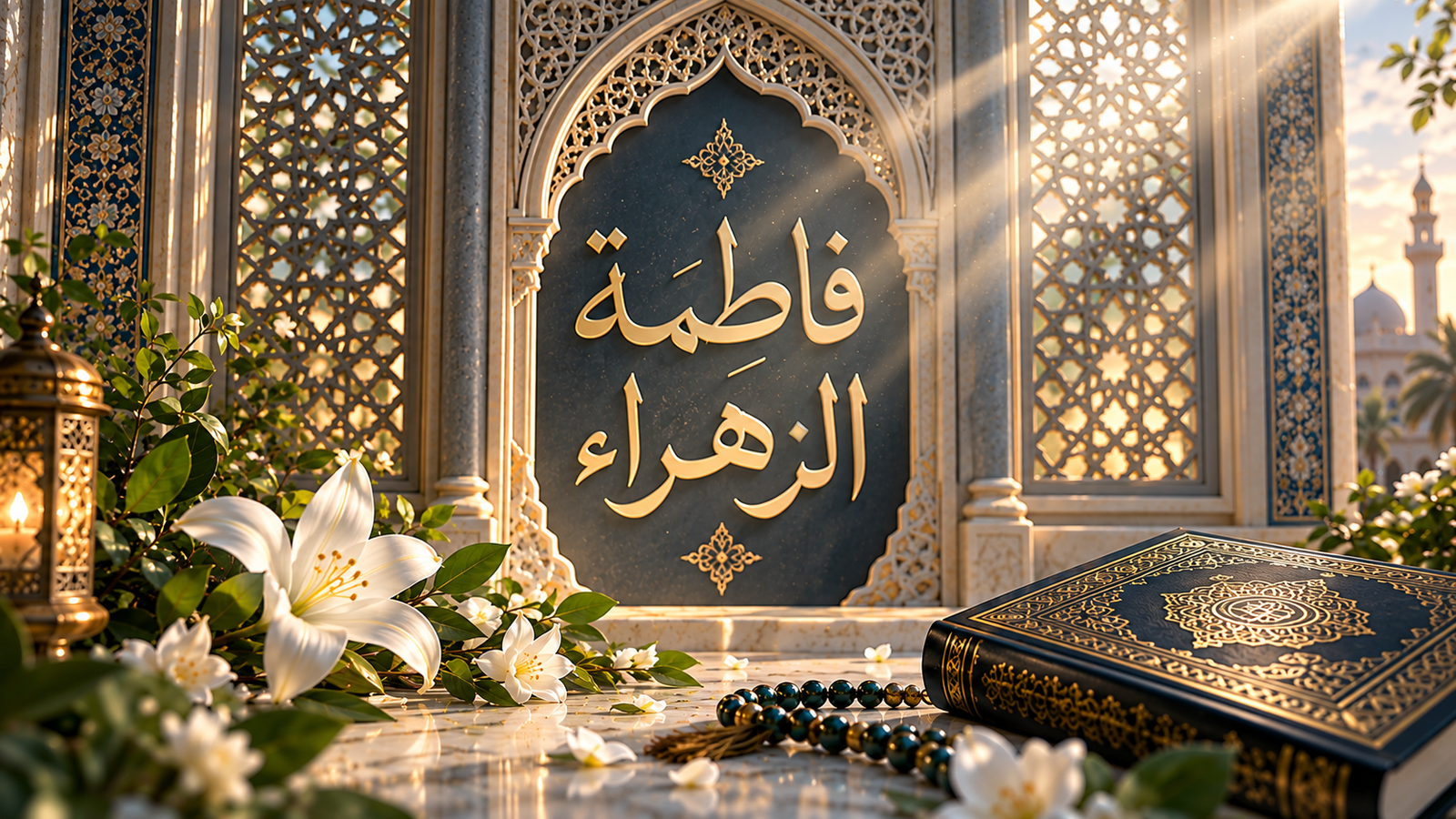
This becomes especially meaningful when we look at Fatima Zahra.
She is known by numerous names, titles, and kunyas—and they are not simply different ways of addressing the same person. Each name highlights a particular quality, relationship, virtue, or spiritual dimension associated with her.
The traditions discussed in the source present Fatima as a woman of extraordinary purity, faith, knowledge, dignity, devotion, and spiritual rank. Her names reflect these different dimensions.
Some describe her relationship with God.
Some describe her relationship with the Prophet Muhammad.
Others refer to her children, her role within Ahl al-Bayt, her character, her purity, or her position in the Hereafter.
Taken together, they form something much more beautiful than a list of titles.
They form a portrait of Fatima Zahra.
Why Did Fatima Zahra Have So Many Names?
The source explains that the Prophet Muhammad used different names and titles for Fatima according to the many dimensions of her personality.
Each title could be used in a particular context, or it could point to a particular quality she possessed.
This is important because it prevents us from thinking of the titles as decorative expressions.
They carry meaning.
For example, a name associated with purity tells us something different from a title associated with divine favor. A title connected with her children tells us something different from one connected with her worship or her position in Paradise.
In that sense, the many names of Fatima are like different windows looking toward the same person.
The more windows we open, the more complete the picture becomes.
The Nine Names Associated With Fatima Before God
One of the most important traditions presented in the source attributes to Imam al-Sadiq the statement that Fatima has nine names with God:
Fatima, al-Siddiqah, al-Mubarakah, al-Zakiyyah, al-Radiyah, al-Mardiyyah, al-Muhaddithah, al-Zahra, and al-Tahirah.
These nine names are particularly important because they do not describe superficial characteristics. They point toward purity, truthfulness, blessing, spiritual growth, contentment, divine approval, communication with the unseen, radiance, and purification.
Let us look at what these names mean.
Fatima — The One Set Apart
The name Fatima is by far the most familiar.
The traditions presented in the source offer several explanations for this name.
Among them is the idea that Fatima was separated from evil and from the Fire, and that those who sincerely love her are likewise associated with being kept away from the Fire.
Other explanations connect the name with being separated from worldly dependence, from impurity, and from everything other than God.
Another tradition connects Fatima with knowledge, describing her as distinguished through a special form of knowledge rather than ordinary learning alone.
The different explanations are striking because they all point toward the idea of separation and distinction.
Fatima is separated from evil.
She is separated from impurity.
She is separated from the Fire.
She is distinguished from others through her spiritual qualities.
The name therefore becomes more than an identifier.
It points toward a life marked by purity, protection, and spiritual distinction.
Al-Tahirah — The Pure One
Al-Tahirah means the Pure One.
This is one of the most natural titles to associate with Fatima because purity appears repeatedly throughout the traditions surrounding her.
Purity here is not limited to outward cleanliness.
It can also describe a person’s beliefs, intentions, character, actions, and inner life.
The source later connects Fatima with the Verse of Purification and presents her among the five members of Ahl al-Bayt associated with that verse, describing her as free from spiritual and moral impurity.
This gives the title al-Tahirah considerable depth.
It suggests that purity was not merely one virtue among many.
It was part of her identity.
Al-Zakiyyah — The One Who Grows in Goodness
Al-Zakiyyah carries the meaning of one who is pure, flourishing, or growing in goodness and perfection.
This title introduces an important idea.
Spiritual excellence is not simply the absence of wrongdoing.
It is also the active growth of goodness.
A person can become more sincere, more knowledgeable, more patient, more generous, and more devoted.
In the description of Fatima, this process reaches an extraordinary level.
Her purity is joined with knowledge.
Her devotion is joined with action.
Her inner faith is reflected in her outward life.
Al-Zakiyyah therefore presents Fatima not merely as someone who avoided evil, but as someone whose life continually expressed growth toward perfection.
Al-Mubarakah — The Blessed One
Another beautiful title is al-Mubarakah, meaning the Blessed One.
The source connects her blessing with knowledge, virtue, excellence, and descendants.
This is particularly significant because Fatima’s legacy did not stop with her own lifetime.
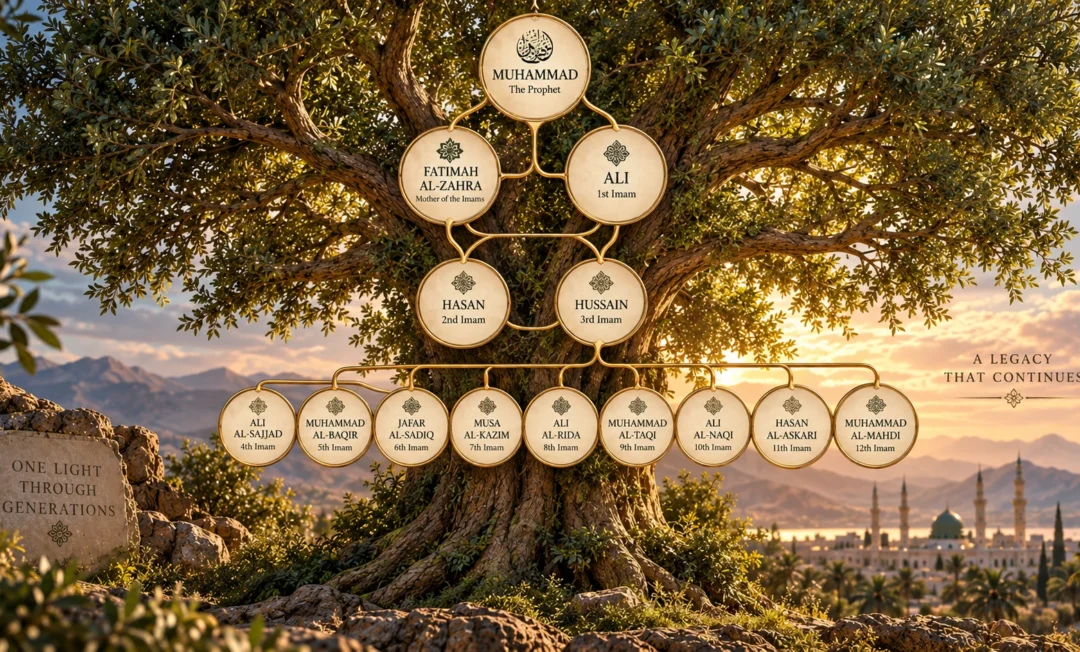
Her children became central figures in the history of Ahl al-Bayt.
Her descendants continued to carry that legacy across generations.
The title therefore has both a personal and generational dimension.
Fatima herself is blessed.
Her knowledge is blessed.
Her character is blessed.
And her family line becomes part of the continuing story of the Prophet’s household.
Al-Siddiqah — The Truthful One
Al-Siddiqah means the profoundly truthful one.
Truthfulness is more than refusing to tell lies.
At its highest level, it means that a person’s words, beliefs, actions, intentions, and inner reality are in harmony.
The truthful person does not live one way publicly and another privately.
What is in the heart is reflected in speech.
What is spoken is reflected in action.
What is believed is reflected in conduct.
The title al-Siddiqah therefore speaks to integrity.
It presents Fatima as a person whose relationship with truth was complete rather than superficial.
Al-Radiyah — The One Content With God
The name al-Radiyah is connected with being content with God’s will.
This is a particularly meaningful title because contentment does not mean that life is always easy.
A person may experience loss, hardship, grief, and disappointment while still remaining devoted to God.
The source presents Fatima as someone who accepted God’s will and remained committed to Him.
This idea becomes especially important when we remember that her life was not free from suffering.
Her strength was not the absence of hardship.
It was the ability to remain faithful through hardship.
That is the deeper meaning behind al-Radiyah.
Al-Mardiyyah — The One Who Is Pleasing to God
If al-Radiyah describes one who is content with God, al-Mardiyyah describes one who is pleasing to God.
This is an extraordinary title.
It shifts the focus from the human being’s relationship with God to God’s approval of the human being.
The source repeatedly connects Fatima’s pleasure and displeasure with divine pleasure and displeasure.
This gives the title an even deeper significance.
Her life is presented as so closely aligned with divine values that her satisfaction and dissatisfaction carry spiritual weight.
Al-Mardiyyah therefore represents the culmination of a life lived in accordance with faith and obedience.
Al-Muhaddithah — The One Who Was Addressed by Angels
One of the more distinctive titles is al-Muhaddithah.
The source explains this as referring to a woman who receives communication from an angel.
This title gives Fatima a unique spiritual dimension.
She is not presented merely as someone who worshipped God with exceptional devotion.
She is also associated with a relationship with the unseen world.
The title reminds us that the spiritual life of Fatima, in the traditions presented here, cannot be reduced to ordinary human experience.
It belongs to a larger sacred narrative surrounding the household of the Prophet.
Al-Zahra — The Radiant One
Of all Fatima’s titles, al-Zahra is perhaps the most widely recognized.
It evokes brightness, radiance, and light.
The source connects her with the imagery of illumination and even describes her within a celestial comparison involving the sun, moon, Venus, and stars.
Fatima is represented as the radiant one.
This also connects naturally with the traditions concerning the light of Fatima, which describe her light as having a special origin before the creation of Adam, in the theological account presented by the source.
The name al-Zahra therefore carries both beauty and theology.
She is not merely “beautiful.”
She is radiant.
Her name becomes associated with the idea that spiritual truth and devotion illuminate the darkness around them.
Other Important Titles of Fatima Zahra
The nine names above form an important foundation, but they are not the end of the story.
The source also presents many other names and descriptions.
Al-Batul — The Devoted and Set-Apart Woman
Al-Batul is traditionally associated with Fatima’s exceptional purity and separation from ordinary worldly concerns.
The source connects the title with physical purity, while also preserving another interpretation: that she was distinguished from the women of her time through virtue, piety, lineage, and her turning away from worldly attachment.
That second meaning is particularly beautiful.
It portrays Fatima as someone whose heart was not controlled by the attractions of the world.
Al-Mansurah — The One Who Is Helped
Al-Mansurah means the one who is helped or supported.
The source associates this title with divine support and with her future role, including the idea of support connected with the justice due to her family.
It is another title that reaches beyond her earthly life.
Fatima is not remembered only for what happened during her lifetime.
Her story continues into the Hereafter.
Al-Ma’sumah — The Protected One
The title al-Ma’sumah conveys the idea of being protected from sin.
This connects naturally with the wider description of Fatima as spiritually purified and free from corruption.
Her greatness, in the source, is not merely a matter of doing many good things.
It includes being protected from the things that corrupt a person from within.
Al-Haniyah — The Caring Wife
Fatima is also described as al-Haniyah, a title associated with her kindness and affection toward her husband.
This reminds us that Fatima’s spiritual status did not remove her from ordinary human relationships.
She was a daughter.
A wife.
A mother.
A member of a family.
Her greatness included the way she fulfilled these relationships.
Al-Shafi’ah — The One Who Intercedes
The title al-Shafi’ah means the intercessor.
This connects directly with the source’s descriptions of Fatima on the Day of Judgment, where she is presented as someone whose intercession is accepted for those who love her and her descendants.
Her title therefore points toward her role in the Hereafter.
It is a fitting transition between her earthly identity and the extraordinary place attributed to her beyond this world.
Her Kunyas: Another Side of Fatima’s Identity
Names and titles are only part of the picture.
Fatima also had numerous kunyas, and these reveal different aspects of her life.
Some are connected with her children:
Umm al-Hasan — Mother of Hasan
Umm al-Husayn — Mother of Husayn
Umm al-Muhsin
Umm al-A’immah — Mother of the Imams
Umm al-Sibtayn — Mother of the Two Grandsons
Others reflect broader social and spiritual associations, such as:
Umm al-Mu’minin
Umm al-Yatama — Mother of the Orphans
Umm al-Nisa
Umm al-Ummah
Others emphasize her virtues:
Umm al-‘Ulum — Mother of Knowledge
Umm al-Khayr — Mother of Goodness
Umm al-Fada’il — Mother of Virtues
And one of the most touching is:
Umm Abiha — Mother of Her Father.
This title captures the unusual closeness between Fatima and the Prophet Muhammad. It suggests not simply that she was his daughter, but that she provided him with care, affection, and emotional support. The Prophet’s special affection for her is also reflected in the many descriptions discussed in the source of her being his joy, his beloved, his “part,” and the light of his eyes.
What These Names Tell Us About Fatima Zahra
When all these names are placed together, a remarkable pattern emerges.
Fatima points toward separation from evil and the Fire.
Al-Tahirah points toward purity.
Al-Zakiyyah points toward growth in goodness.
Al-Mubarakah points toward blessing.
Al-Siddiqah points toward truthfulness.
Al-Radiyah points toward contentment with God.
Al-Mardiyyah points toward divine approval.
Al-Muhaddithah points toward an extraordinary spiritual relationship with the unseen.
Al-Zahra points toward light.
Then come the additional titles:
Al-Batul points toward distinction and devotion.
Al-Mansurah points toward divine support.
Al-Ma’sumah points toward protection from sin.
Al-Haniyah points toward kindness within marriage.
Al-Shafi’ah points toward intercession.
And her kunyas reveal yet another dimension:
daughter, wife, mother, source of knowledge, mother of the Imams, comfort to her father, and member of the wider community of believers.
This is why the titles matter.
They tell us that Fatima Zahra cannot be reduced to one role.
She was not only the Prophet’s daughter.
She was not only the wife of Ali.
She was not only the mother of Hasan and Husayn.
She was remembered as a woman of faith, purity, truth, devotion, knowledge, dignity, blessing, and spiritual authority.
Why Her Names Still Matter Today
There is a modern tendency to think of names as labels that identify us.
The tradition presented here offers a very different idea.
A name can become a reminder of the kind of person we should strive to become.
When we hear al-Siddiqah, we are reminded of truth.
When we hear al-Tahirah, we are reminded of purity.
When we hear al-Radiyah, we are reminded of faith through hardship.
When we hear al-Mubarakah, we are reminded that goodness can benefit generations beyond our own life.
When we hear al-Zahra, we are reminded of light.
And when we hear al-Shafi’ah, we are reminded of compassion and concern for others.
In this sense, the names of Fatima are not simply about the past.
They can still function as lessons today.
They invite parents to think carefully about the names they give their children.
They invite believers to think about the qualities they admire.
And they invite anyone learning about Fatima to look beyond the names themselves and ask what kind of life those names describe.
One Woman, Many Names, One Extraordinary Legacy
Fatima Zahra is remembered by many names because her life is understood through many dimensions.
She was Fatima, associated with separation from evil and the Fire.
She was al-Tahirah, the pure.
She was al-Siddiqah, the truthful.
She was al-Radiyah, content with God.
She was al-Mardiyyah, pleasing to God.
She was al-Muhaddithah, associated with an extraordinary spiritual communication.
She was al-Zahra, the radiant one.
She was al-Mubarakah, the blessed one.
And she was known through many other titles and kunyas that reflected her family, character, worship, knowledge, and role in the Hereafter.
The beauty of these names is that they do not simply tell us what Fatima was called.
They tell us how Fatima was remembered.
Each name preserves one part of that memory.
Together, they reveal a woman whom the traditions describe as deeply truthful, profoundly pure, spiritually radiant, devoted to God, devoted to her family, and extraordinary in both this world and the next.
Perhaps that is why her most familiar name, Fatima Zahra, still carries such power.
It is not merely a name from history.
It has become a summary of a legacy.
A legacy of purity.
A legacy of truth.
A legacy of faith.
A legacy of light.
And that is what makes the names and titles of Fatima Zahra worth remembering.