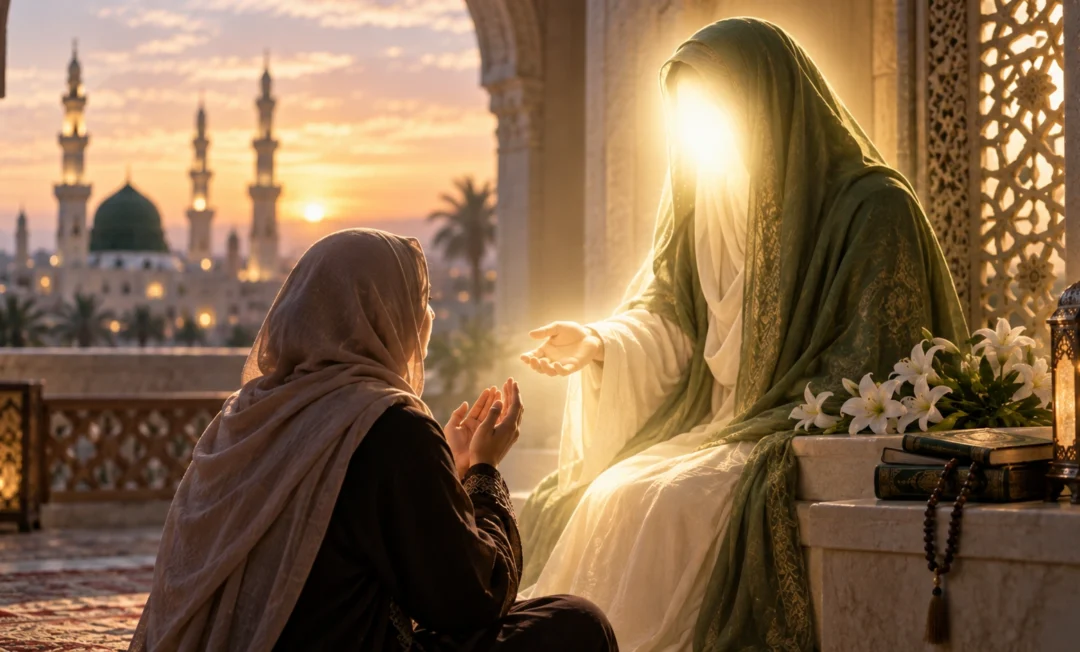

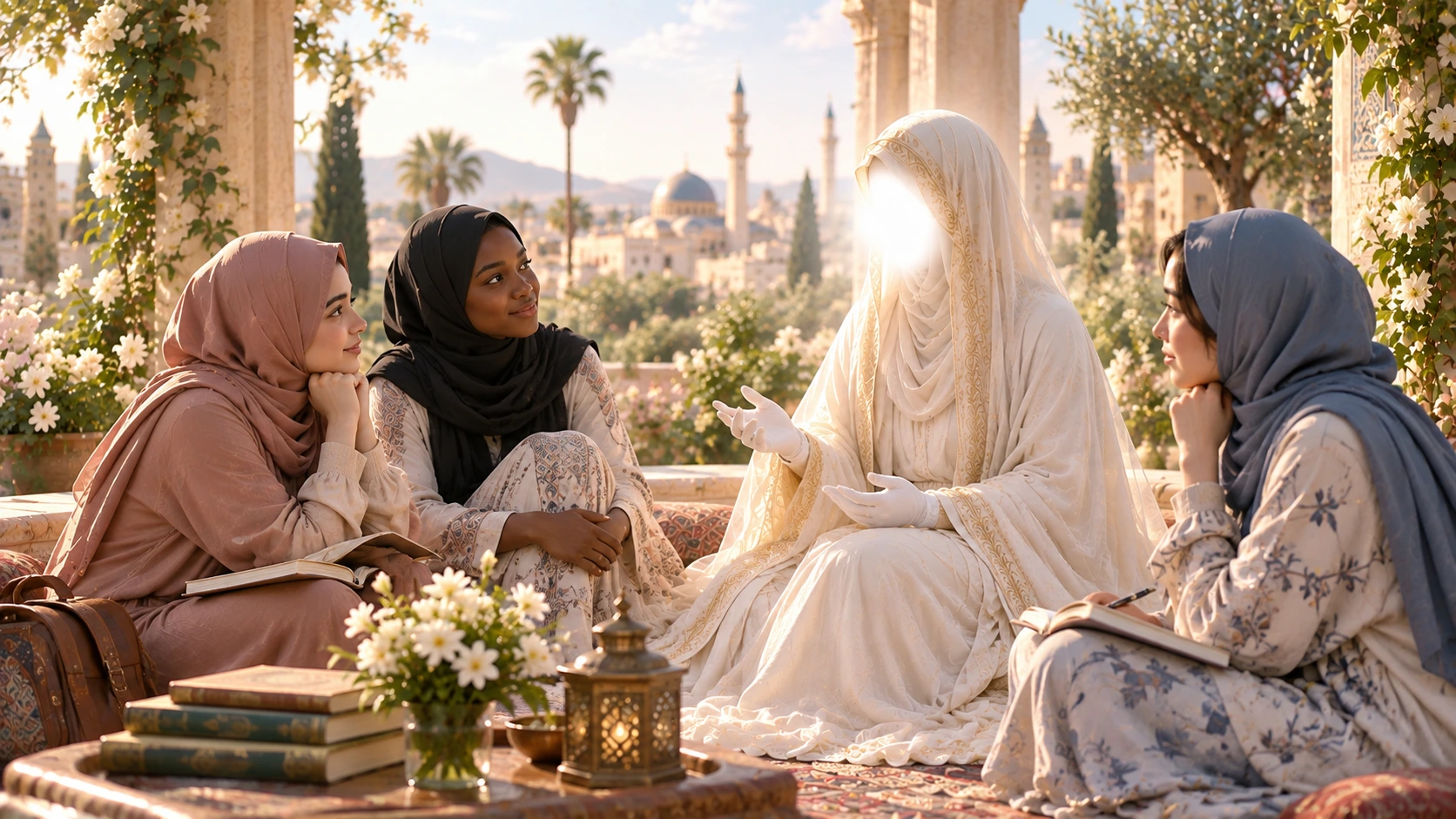
What if you could sit across from Fatimah al-Zahra and tell her everything about your life?
You might tell her about university, work, social media, relationships, family expectations, loneliness, and the pressure to build a successful future.
You might tell her that you have more opportunities than women in her time could have imagined—but also more choices, more comparisons, and more pressure to decide what kind of person you should become.
You might ask her:
“With all these possibilities in front of me, how do I know which path is right?”
Perhaps her answer would begin with something deeper than success or independence.
It would begin with God.
Fatimah’s strength was rooted in faith, but faith was not lived in isolation. Her life was shaped by the people who stood beside her, the responsibilities she accepted, the family she built, and the society in which she spoke and served.
Perhaps that is what makes her example so interesting for a girl today.
01 — Your Worth Begins With God
The modern world offers countless ways to measure yourself.
Your appearance. Your education. Your career. Your income. Your relationship status. Your popularity.
But all of these can change.
Fatimah’s dignity was grounded somewhere deeper: in her relationship with God.
That gave her a foundation that did not depend entirely on how other people saw her.
For a young woman today, this can be liberating. You can care about your education without making grades your identity. You can pursue a career without believing your job determines your value. You can care about your appearance without allowing it to become the measure of your worth.
Faith gives you a place to return when those other things become uncertain.
02 — Faith Does Not Mean Doing Everything Alone
There is another message modern life often gives women:
Be strong enough to handle everything yourself.
Fatimah’s life offers a different picture.
She had faith in God, but she also lived within a network of relationships.
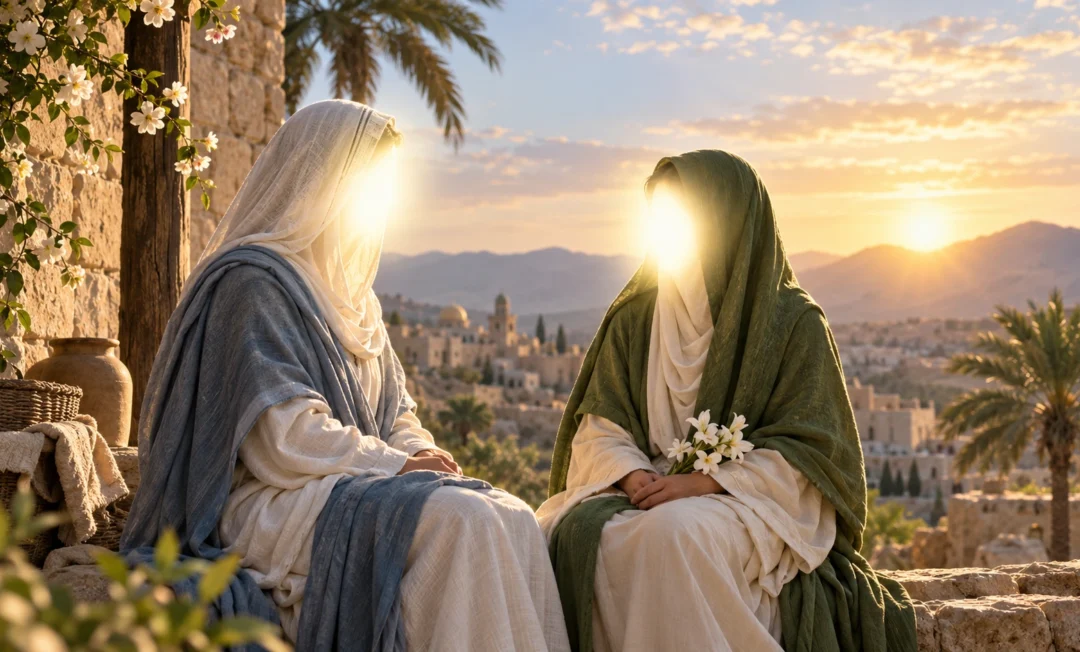
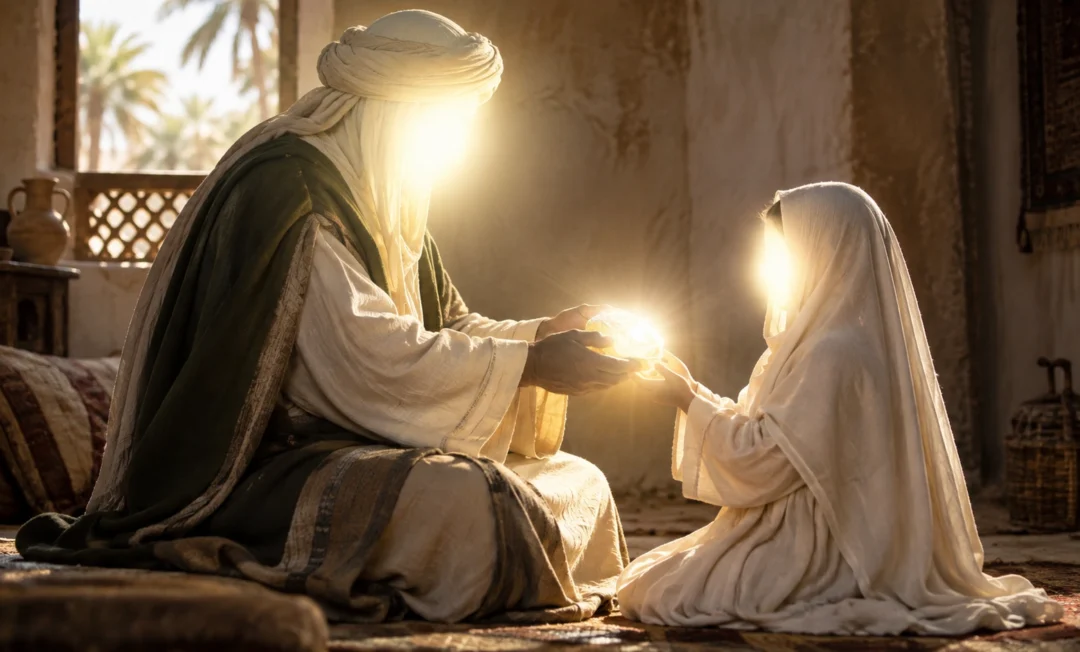
Her mother, Khadijah, was an important source of love and security during her early life. Her father, Prophet Muhammad, remained deeply close to her. After marriage, Ali became her partner in building a household and facing difficult circumstances. Later, her children became part of the purpose and responsibility of her life.
Strength did not mean isolation.
This matters today because accepting help is sometimes treated as weakness.
It is not.
Having people you can trust, learning from your parents, receiving encouragement from your spouse, or depending on family during a difficult period can actually make a person stronger.
A healthy life is not built entirely alone.
03 — She Grew Through Family, Not Outside It
Fatimah did not suddenly become a strong woman when she became an adult.
Her character was formed over time.
Khadijah’s presence during Fatimah’s childhood gave her an example of faith, loyalty, sacrifice, and devotion. Her father taught her through his own life, and their relationship remained unusually close.
That is an important lesson for families today.
Young women do not only need instructions. They need examples.
A daughter watches how her mother handles difficulty. She notices how her father speaks to people. She learns from the way adults treat one another, respond to failure, pray, forgive, and deal with pressure.
Family can become one of the first places where a person learns what strength actually looks like.
04 — Your Opportunities Are Different
Fatimah lived in a world very different from ours.
Today, a girl may have access to education, technology, professional careers, travel, business, communication across borders, and opportunities that previous generations never had.
These opportunities are valuable.
But opportunity also creates responsibility.
Having more choices does not automatically make life easier. Sometimes the difficult question is not “What can I do?” but “What should I do?”
Fatimah’s example suggests that freedom needs direction.
You can pursue education while keeping your values.
You can build a career without allowing work to consume your identity.
You can use technology without allowing it to control your attention.
You can seek independence while remaining connected to the people who love you.
The challenge is not simply having opportunities. It is knowing how to use them wisely.
05 — Your Father Can Be Part of Your Strength
The relationship between Fatimah and her father is one of the most striking parts of her life.
Prophet Muhammad is traditionally described as showing her exceptional affection and respect.
For a daughter, the relationship with a father can have lasting influence.
A father who listens to his daughter, respects her intelligence, protects her dignity, and treats her with affection can give her something that no social-media message can provide: a deep sense that she has value.
And this lesson is not only for daughters.
Parents shape the emotional world their children carry into adulthood.
A girl who grows up knowing she is loved does not have to search quite as desperately for approval everywhere else.
06 — Marriage Can Be a Partnership
Later, Fatimah’s life entered a new stage through her marriage to Ali.
Marriage did not erase her identity or separate her from her larger purpose. It created a new partnership with new responsibilities.
Their household involved shared hardship, mutual support, worship, family responsibilities, and care for one another.
Ali’s support mattered.
Fatimah’s support mattered too.
This is worth emphasizing because modern conversations about women’s strength can sometimes create an unnecessary division: either a woman is independent, or she depends on someone else.
Healthy partnership does not work that way.
Two people can be strong individually and still need each other.
A husband can support his wife.
A wife can support her husband.
Both can contribute differently without one person’s contribution becoming invisible.
07 — Family Responsibilities Can Also Build Strength
Fatimah became a mother, and motherhood brought another dimension to her life.
She was no longer responsible only for herself. There were children to care for, guide, teach, and protect.
This required patience, attention, sacrifice, and emotional presence.
Yet motherhood did not exist separately from faith. Caring for children could itself become an act of worship and responsibility before God.
That idea has relevance today.
Whether a woman becomes a mother or chooses a different path, meaningful responsibility can shape character. Caring for another person teaches patience in a way that theories rarely can.
Sometimes the responsibilities we would most like to escape are the ones that teach us the qualities we most need.
08 — Her Family Was Not Just a Private World
Fatimah’s role was not limited to her home.
She lived within a wider Muslim community during a period of enormous social and religious change. She witnessed events that shaped the earliest Muslim society and is remembered in Islamic tradition for speaking publicly when she believed something important was at stake.
Her family connections did not mean withdrawal from society.
Instead, family became part of the foundation from which she could participate in the wider community.
That distinction matters.
A woman can care deeply about family and still think seriously about society.
She can be a mother, daughter, wife, professional, student, community member, or any combination of these roles.
One role does not automatically cancel another.
09 — You Do Not Have to Choose Between Tenderness and Courage
Fatimah’s example contains an interesting combination.
She was closely associated with family affection, compassion, worship, and care. At the same time, she is remembered for conviction and courage.
Modern culture sometimes tells women to choose.
Be soft or be strong.
Be caring or be ambitious.
Be independent or value relationships.
But human beings are more complicated than that.
You can care deeply and still have boundaries.
You can love your family and still have your own convictions.
You can receive help and still be capable.
You can be gentle without becoming passive.
Strength does not require you to erase the softer parts of yourself.
10 — Do Not Let Comparison Steal Your Life
Imagine Fatimah seeing today’s social media.
She might see millions of carefully edited lives competing for attention.
Someone is more beautiful.
Someone is richer.
Someone got married earlier.
Someone graduated sooner.
Someone has a better career.
Someone seems happier.
Comparison can turn opportunity into anxiety.
Faith offers another measure.
Instead of asking, “Why am I not like her?”, you can ask:
“What has God asked me to do with the life I have been given?”
That question brings you back to your own path.
Your circumstances are not identical to anyone else’s. Neither are your responsibilities.
11 — Stand for Something
There are moments when a girl must decide what she believes.
Sometimes the pressure comes from friends.
Sometimes from family.
Sometimes from society.
Sometimes from the desire to be accepted.
Fatimah is remembered for speaking when she believed something important needed to be said. Her example shows that conviction matters.
You do not need to argue about everything.
You do not need to turn every disagreement into a battle.
But you should know what you believe—and why.
Faith gives conviction a deeper foundation than popularity.
When your values come from God, the crowd does not have the final authority over you.
12 — Make Room for God in a Busy Life
Perhaps the greatest difference between Fatimah’s world and ours is not technology.
It is noise.
Today, there is always something demanding attention.
Messages.
Videos.
News.
Work.
Notifications.
Opinions.
The mind rarely gets a chance to become quiet.
Fatimah’s life was deeply connected with prayer, worship, and remembrance of God.
That practice gave faith a place in everyday life.
A modern woman can have extraordinary opportunities, but without an inner connection to God, those opportunities can become overwhelming.
Faith gives direction to ambition and meaning to responsibility.
It reminds you that your life is more than what appears on a screen.
13 — Accept Help Without Losing Yourself
There is a valuable lesson hidden in Fatimah’s relationships with the people around her.
Being supported does not mean being controlled.
Being loved does not mean losing yourself.
Being part of a family does not mean having no voice.
The right relationships should help a person grow.
Parents can offer wisdom.
A spouse can offer companionship.
Children can awaken responsibility and patience.
Friends can provide perspective.
A community can provide support.
And above all, faith provides the deepest foundation.
The goal is not to need nobody.
The goal is to build relationships in which people help one another become better.
14 — What Would Fatima Say to a Girl Today?
Perhaps she would not tell you to reject modern opportunities.
She might tell you to use them wisely.
Study.
Learn.
Build useful skills.
Work.
Create.
Serve.
Ask questions.
Become capable.
But do not allow achievement to replace faith.
Do not allow independence to become isolation.
Do not allow beauty to become your identity.
Do not allow relationships to become the source of your entire worth.
And do not forget the people who helped you become who you are.
Your mother may have given you patience.
Your father may have given you confidence.
Your husband may become your partner in difficulty.
Your children may teach you a form of love you had never experienced.
Your community may open doors you could not open alone.
And through all of it, God remains the ultimate source of strength.
A Strength Built on Relationships and Faith
Perhaps that is the deeper lesson in Fatimah al-Zahra’s life.
She was not strong because she lived without difficulty.
She was not strong because she never needed anyone.
And she was not strong because she stood completely alone.
Her strength grew within a web of faith, family, responsibility, love, hardship, and service.
Her mother shaped her early life.
Her father gave her love, guidance, and a place of honor.
Her husband became her partner in building a household.
Her children became part of her continuing responsibility and legacy.
Her wider community gave her a place in the history of a growing faith.
But beneath all of these relationships was the foundation that held everything together:
God.
That may be the message a girl today needs most.
You can use the opportunities available to you without letting the world define you.
You can build a career and value family.
You can be independent and still accept help.
You can be gentle and courageous.
You can love others without losing your convictions.
And through every stage of life, you can return to God for the strength that no person and no achievement can permanently provide.
What If Fatima Really Spoke to You?
Perhaps she would not tell you to become a copy of her.
She lived in another century, under circumstances very different from ours.
Instead, she might leave you with a question:
What will you do with the life, opportunities, relationships, and faith that God has given you?
That is a question worth carrying into university, work, marriage, motherhood, friendship, and every difficult season that follows.
Because real strength is not the ability to carry life alone.
It is knowing where your strength comes from, allowing good people to stand beside you, using your opportunities wisely, accepting responsibility, and keeping your heart connected to God.