
There are many ways to learn about a historical figure. We can study where she was born, who her family was, what she accomplished, and how later generations remembered her.
But when the person is Fatima Zahra, there is another question that carries special weight:
What did the Prophet Muhammad say about her?
The answer is unusually rich.
The source presents the Prophet as repeatedly describing Fatima with expressions of profound love, honor, closeness, purity, and spiritual distinction. He called her a part of himself, the light of his eyes, the fruit of his heart, and one of the most beloved members of his family. He also connected his own happiness and sorrow to hers and emphasized that honoring her was inseparable from honoring him.
These statements create a picture that is much larger than that of a loving father and daughter.
They invite us to ask what made Fatima’s position so exceptional.
A Daughter Who Held a Unique Place
The Prophet Muhammad loved his family, but the source repeatedly emphasizes Fatima’s unique place within that family.
He is quoted as saying that Fatima was his most beloved family member. Another narration presents him describing her as the dearest and most cherished person to him.
This distinction matters because Fatima’s place was not described simply in terms of family affection.
The source says that the Prophet would honor her position, elevate her status, and give her a place within his affection that others could not equal. He even used the title Umm Abiha, “Mother of Her Father,” reflecting the care and concern she showed toward him.
The title itself tells a story.
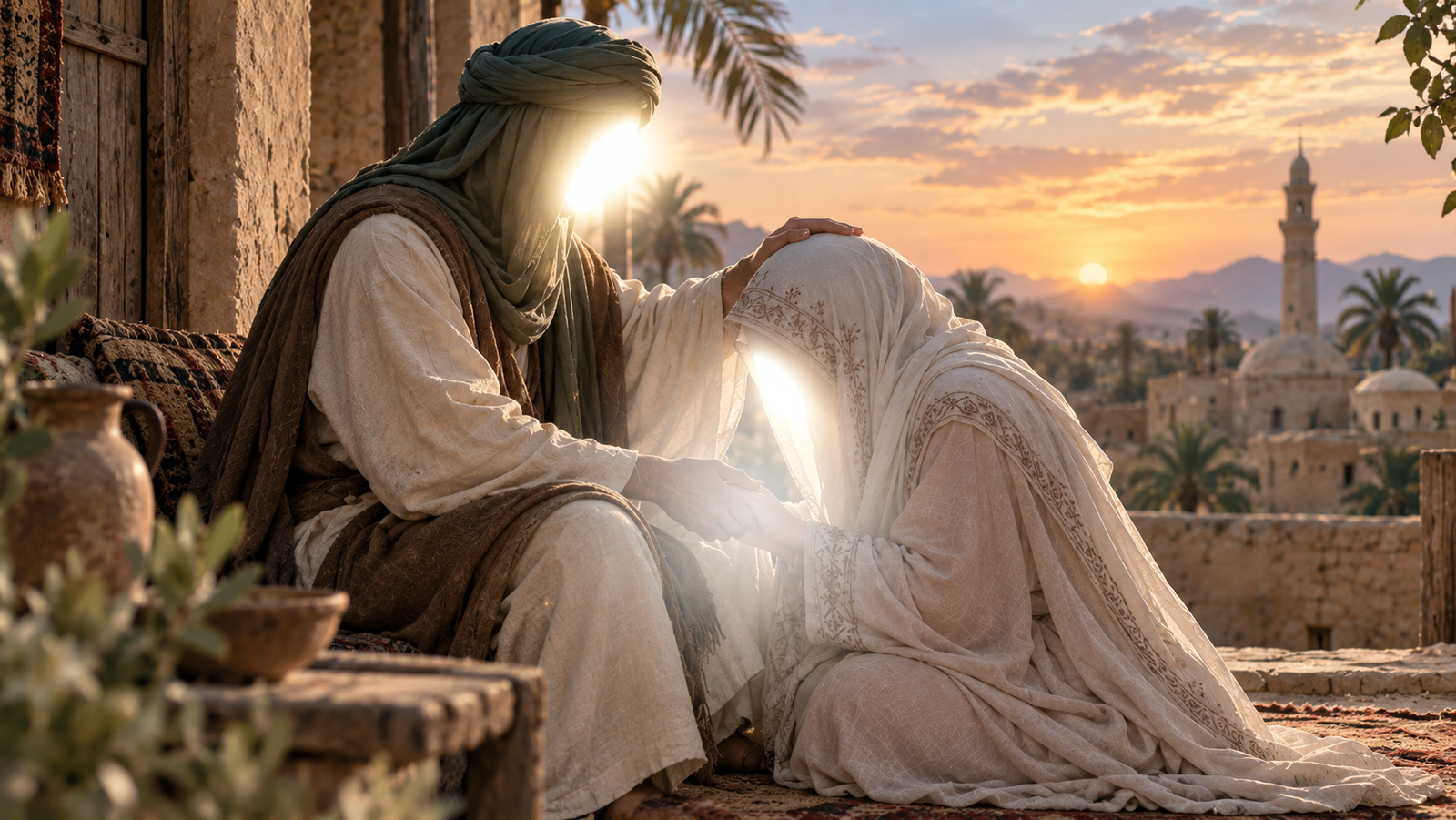
Fatima was his daughter, yet she could also become a source of care, comfort, strength, and emotional support for the Messenger of God.
In that sense, their relationship carried a remarkable reciprocity.
“Fatima Is a Part of Me”
One of the best-known descriptions in the source is the Prophet’s statement that Fatima was a part of him.
He is also quoted describing her as the light of his eyes and the fruit of his heart.
These are not ordinary expressions.
To call someone the “light of my eyes” is to describe a person whose presence brings joy simply by being seen. To call someone the “fruit of my heart” suggests a bond that reaches into the deepest part of a person’s emotional and spiritual life.
The source goes further by interpreting “a part of me” in spiritual terms. It explains that the connection should not be understood only as biological kinship, but also as a closeness of religious and spiritual identity. What made Fatima happy could make the Prophet happy; what caused her pain could cause him pain.
This is one of the central ideas of the article.
The Prophet’s love for Fatima was presented as a window into her character.
When Fatima Was Happy, the Prophet Was Happy
The source records a direct connection between Fatima’s happiness and the Prophet’s own happiness:
what pleased her pleased him, and what saddened her saddened him.
That statement becomes even more significant alongside the Prophet’s warning that harming Fatima was equivalent to harming him.
In one narration, he says that Fatima is a part of him and that whoever harms her harms him.
The source repeatedly returns to the same idea through different expressions.
Fatima is described as:
a part of him,
a branch from him,
the light of his eyes,
the fruit of his heart,
and the source of his joy.
The repetition is meaningful.
It shows that her place was not expressed through one isolated compliment. It was a recurring feature of the Prophet’s speech about her.
Respecting Fatima Meant Respecting the Prophet
Perhaps one of the strongest statements in the document comes when the Prophet addresses Ali and says that Fatima is his daughter, and that whoever honors her has honored him, while whoever insults her has insulted him.
This transforms respect for Fatima from a private family matter into a public religious principle.
The Prophet was teaching the community how to treat a member of his household.
Her dignity was not to be treated as ordinary.
Her honor was not a matter of personal preference.
And her mistreatment was not something to be dismissed as a private disagreement.
This theme also appears in the source’s descriptions of anger, pleasure, and justice. Fatima’s emotional response is repeatedly connected with that of the Prophet.
“You Are From Me, and I Am From You”
Another particularly striking statement attributed to the Prophet is:
“You are from me, and I am from you.”
At first glance, the first half seems self-evident. Fatima was his daughter.
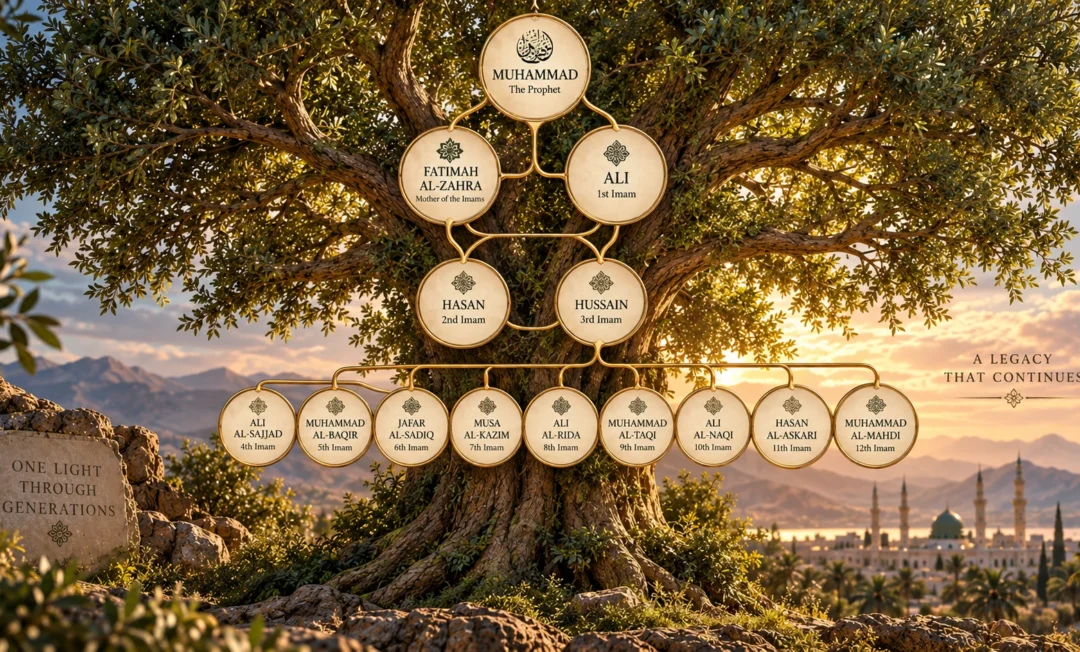
But the source spends considerable time reflecting on the deeper meaning of the second half. It argues that the significance of Fatima’s connection with the Prophet extends beyond biological descent. Her descendants, especially the line of Ahl al-Bayt, became part of the continuation of the Prophet’s religious legacy.
This makes Fatima a bridge between generations.
Through her, the Prophet’s household continued.
Through her children, the memory of his family continued.
And within the worldview expressed in the source, her role was connected with the continuation of the message itself.
That is a remarkable position for someone whose earthly life was relatively brief.
Why Did the Prophet Show Such Extraordinary Affection?
The source does not explain the Prophet’s affection as merely emotional.
It connects Fatima with exceptional virtues and repeatedly presents her as chosen, purified, spiritually distinguished, and among the greatest women of creation.
The source also describes her as one whose faith filled her entire being. It portrays her worship as so sincere that her devotion became visible in heavenly imagery, with her standing in prayer described as a light for the angels.
This gives another way of understanding the Prophet’s love.
He was not merely praising someone because she was his daughter.
He was recognizing spiritual greatness.
The Prophet’s Affection Was Also a Lesson for Society
One of the most valuable aspects of the story is what it teaches beyond Fatima herself.
The Prophet did not conceal his affection.
He did not treat emotional tenderness toward a daughter as weakness.
He publicly honored her.
He welcomed her.
He showed affection.
And he made her dignity visible to those around him.
The source even describes him saying, “Your father be sacrificed for you, O Fatima,” as an expression of extraordinary affection and tenderness.
This gives the story a timeless human dimension.
A powerful and respected man could openly express deep love for his daughter.
He could honor her rather than diminish her.
He could make affection part of dignity.
For modern readers, that is worth remembering.
A Bond That Extended Beyond This World
The Prophet’s relationship with Fatima was not presented as ending with earthly life.
He is quoted as saying that she would be the first of his household to join him. The source describes how Fatima reacted with happiness when she heard this promise.
This becomes an important transition to the wider picture of her role in the Hereafter.
The same woman who was so deeply loved on earth is later described as entering Paradise with extraordinary honor, being welcomed by angels, and interceding for those who love her.
The earthly relationship and the heavenly status are therefore connected.
What the Prophet’s Words Tell Us About Fatima
The most important lesson is that the Prophet’s descriptions do not give us only a portrait of affection.
They give us a portrait of significance.
Fatima is presented as a daughter, but not merely a daughter.
She is beloved, but her importance is not reduced to emotional closeness.
She is honored, but that honor is connected with spiritual excellence.
She is part of the Prophet’s family, but the source presents her as playing a role in the continuation of that household and its legacy.
Perhaps that is why the Prophet’s words continue to resonate.
When he called Fatima the light of his eyes, he was giving future generations a way to understand her.
When he called her a part of himself, he was teaching people that her dignity was not ordinary.
When he linked her happiness with his own, he showed that her inner life mattered.
And when he insisted that harming her was harming him, he established the seriousness of her honor.
A Legacy Written in the Prophet’s Own Words
Historical memory can change with time.
Names can become distant.
Stories can lose their emotional force.
But the words attributed to the Prophet about Fatima remain striking because they speak through the language of love, honor, faith, and spiritual significance.
They show a father who loved his daughter deeply.
But they also present a woman whom he regarded as extraordinary.
To understand Fatima Zahra, therefore, one of the best places to begin is not with later commentary.
It is with the way the Prophet himself described her.
His words present Fatima not simply as the daughter of Muhammad, but as a woman whose character, dignity, and spiritual place became inseparable from the memory of the Prophetic household.