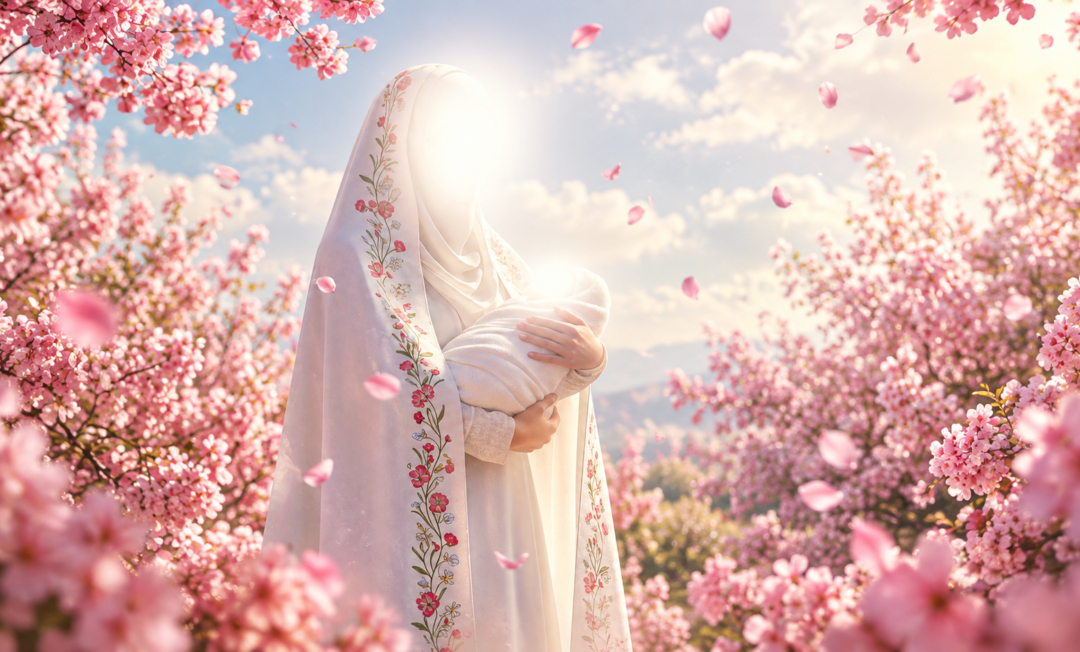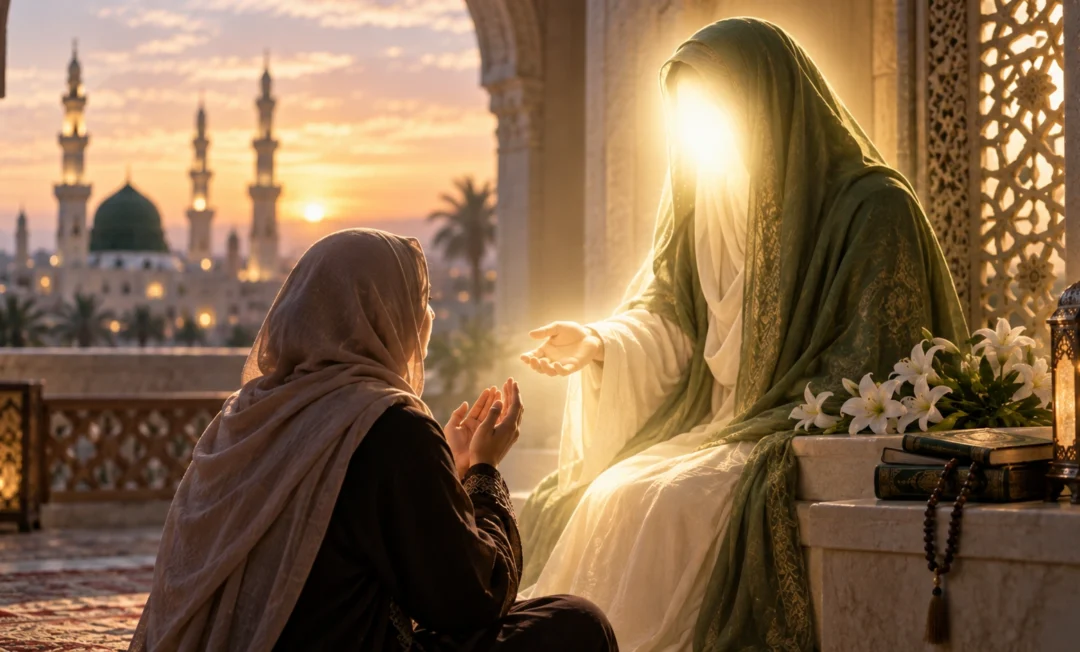

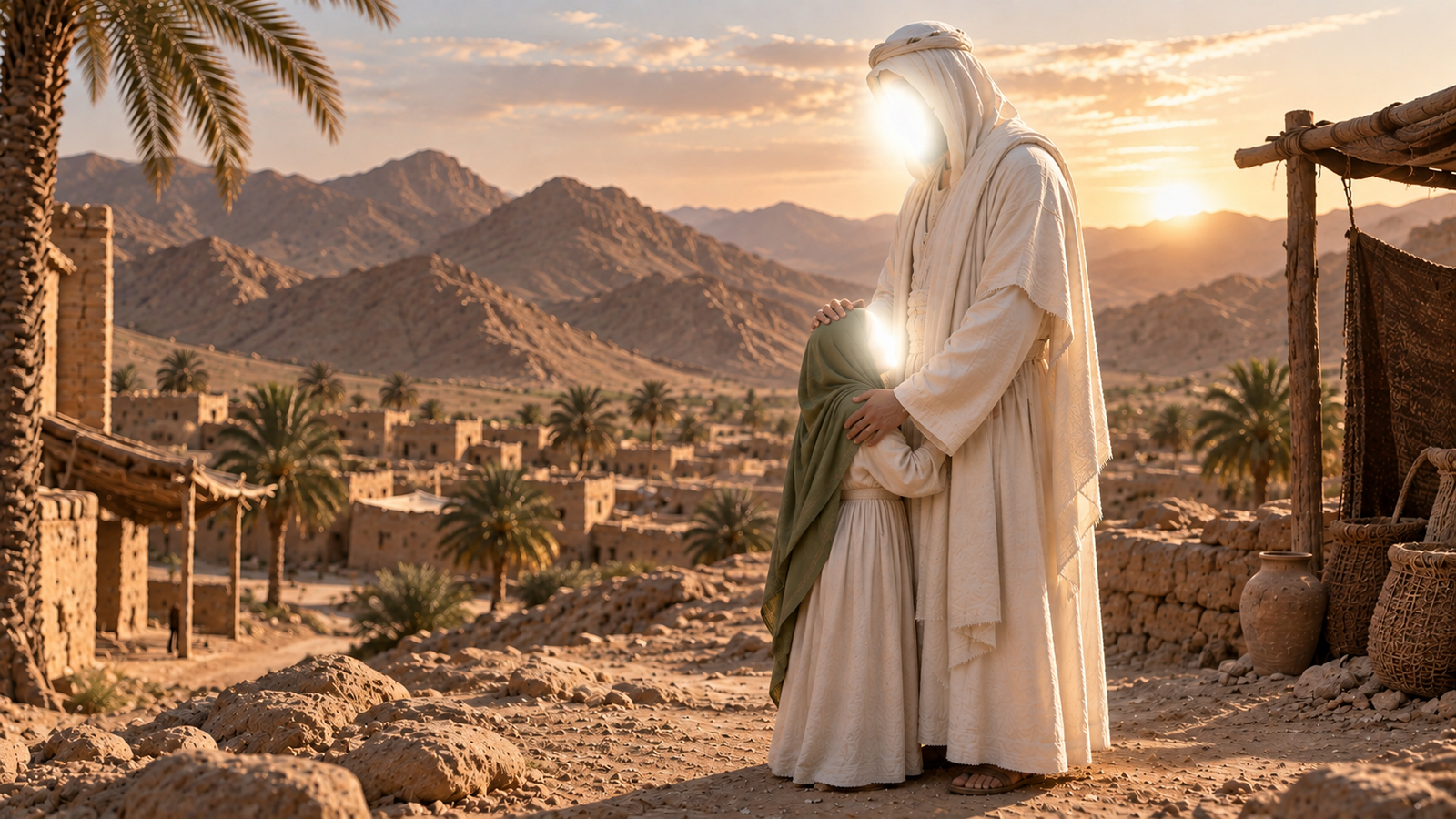
Fatimah al-Zahra’s childhood was shaped by some of the most difficult years in the early history of Islam. She spent her early years in Makkah under the loving care of her father, Prophet Muhammad (peace and blessings be upon him and his family), and her revered mother, Khadijah al-Kubra (peace be upon her).
Her early years unfolded during one of the most difficult and dangerous periods in the history of Islam. The new Muslim community was facing intense persecution, social pressure, economic hardship, and threats against the life of the Prophet. These extraordinary circumstances undoubtedly shaped the character and spiritual development of Fatimah al-Zahra from an early age.
Islam was still in its earliest stages and had to endure severe trials before becoming firmly established. The polytheists of Makkah created an atmosphere of fear and hostility for the early Muslims. Believers were subjected to persecution and torture in an attempt to force them to abandon their faith, while various plots were made against the Prophet Muhammad.
It was in this challenging environment that Fatimah al-Zahra was born and raised.
The Boycott of Shi’b Abi Talib
The remarkable resistance of the Muslims against the persecution of the Makkans, together with the growing acceptance of Islam among different sections of society—particularly among the poor, oppressed, and disadvantaged—caused the leaders of Makkah to intensify their opposition to the Prophet.
As the influence of Islam continued to grow, the Quraysh once again considered eliminating Prophet Muhammad. Abu Talib, however, firmly stood in his defense. The members of Banu Hashim and Banu Abd al-Muttalib also supported the Prophet, with the notable exception of Abu Lahab.
Unable to achieve their objective directly, the leaders of Makkah adopted another strategy: economic and social pressure.
The Quraysh established a formal boycott against Banu Hashim. Under the terms of the agreement, trade, marriage, and social relations with the Prophet’s clan were prohibited unless Banu Hashim surrendered Muhammad to the people of Makkah.
As the pressure increased and the danger to the Prophet became more serious, the Prophet Muhammad, together with Banu Hashim and Banu Abd al-Muttalib, moved to Shi’b Abi Talib during the early years of his mission.
According to historical reports, the community remained there for several years. While accounts differ regarding the exact duration, the commonly cited period is approximately three years.
Fatimah’s Childhood in Shi’b Abi Talib
Part of Fatimah al-Zahra’s infancy and early childhood was spent in Shi’b Abi Talib. It was there, amid severe hardship and deprivation, that she experienced some of the most formative years of her childhood.
The children and families living in the valley endured hunger and scarcity. Food was extremely limited, and the community had to survive under harsh conditions while remaining steadfast in its support of the Prophet and the message of Islam.
Fatimah was born into the household of Khadijah, one of the wealthiest and most respected women of Arabia. Yet during the boycott, she experienced a life of simplicity and deprivation alongside the other members of Banu Hashim.
The contrast was profound. The daughter of a woman whose wealth and commercial caravans were well known throughout Arabia was now growing up in an environment where even basic food could be difficult to obtain.
This experience became an important part of her early life.
She Too Experienced Hunger
From childhood, Fatimah witnessed people who were willing to endure hunger and hardship rather than abandon their faith.
She saw people survive on whatever little food was available and endure extreme deprivation rather than surrender to the demands of the Quraysh. After she was weaned, she too lived on simple and limited food, sometimes experiencing hunger just as the others did.
She also witnessed the extraordinary sacrifice of her mother, Khadijah.
Khadijah had once possessed considerable wealth and was renowned for her successful commercial enterprises. Yet she devoted her wealth to supporting the Prophet and the cause of Islam. During the difficult years in Shi’b Abi Talib, she stood beside her husband and endured the same hardships in defense of the faith.
Fatimah also watched her father remain steadfast through hunger, persecution, and hardship. Despite everything he endured, Prophet Muhammad never abandoned his trust in Allah.
In this difficult environment, Fatimah al-Zahra’s character began to take shape.
Her childhood was not defined by luxury or comfort. Instead, it was marked by faith, sacrifice, patience, devotion, and an intimate understanding of what it meant to remain steadfast for the sake of God.
In many ways, these were the years in which she began to embody the qualities for which she would later become renowned.
Fatimah al-Zahra’s Childhood and the Death of Khadijah
The end of the boycott did not bring lasting relief to Fatimah’s family.
According to the traditional accounts cited in Islamic sources, Fatimah was still a young child when the Prophet and Banu Hashim emerged from the economic and social siege of Shi’b Abi Talib. They returned to their homes after years of severe hardship.
For Fatimah, life outside the valley was a new experience. Yet this period of relief was tragically short-lived.
Not long afterward, she lost her beloved mother, Khadijah.
Khadijah died in the tenth year after the beginning of the Prophet’s mission. Abu Talib, the Prophet’s great protector and supporter, also died around the same period. The Prophet Muhammad referred to this deeply painful period as the Year of Sorrow (ʿĀm al-Ḥuzn).
For the young Fatimah, the loss of her mother was devastating.
She had already witnessed hunger, persecution, and hardship. Now she faced the loss of one of the most important people in her life.
Fatimah’s Grief After Khadijah’s Death
Traditional accounts describe Fatimah as deeply attached to her mother. After Khadijah’s death, the young Fatimah would ask her father about her mother and grieve over her absence.
Some narrations relate that the Angel Gabriel brought the Prophet words of reassurance concerning Khadijah’s reward and her honored place with Allah.
After losing her mother, the Prophet Muhammad became Fatimah’s primary source of comfort and support.
The bond between father and daughter consequently became extraordinarily strong.
“May Her Father Be Sacrificed for Her”
Numerous narrations in both Shi’a and Sunni sources describe the exceptional love and respect that Prophet Muhammad showed toward Fatimah al-Zahra.
When the Prophet was unwell, he would welcome her presence. Her arrival brought him comfort and happiness. Whenever Fatimah entered his presence, the Prophet would rise to greet her, take her by the hand, embrace her, kiss her, and seat her beside him.
One of the expressions associated with his affection for her is:
“May her father be sacrificed for her.”
~Prophet Mohammad
The Prophet’s treatment of Fatimah was remarkable within the social customs of seventh-century Arabia. At a time when daughters were often undervalued and social attitudes toward women could be harsh, the Prophet publicly demonstrated profound love, dignity, and respect toward his daughter.
He also famously said regarding Fatimah:
“Fatimah is part of me.”
~ Prophet Mohammad
The meaning conveyed by this statement is that whoever harms Fatimah harms the Prophet, while whoever pleases her pleases him. In the religious understanding of these narrations, Fatimah’s special status was not merely a matter of ordinary parental affection but reflected her exceptional spiritual position.
The Prophet’s Special Care in Fatimah’s Upbringing
According to Islamic tradition, Fatimah al-Zahra was raised under the direct spiritual guidance and care of the Prophet Muhammad.
Just as Maryam (Mary), according to the Qur’anic account, was placed under the care of Zakariyya, her spiritual upbringing was part of God’s divine plan, Islamic tradition views Fatimah’s upbringing as having a special significance.
Fatimah would become the beloved daughter of the Prophet, the wife of Imam Ali, and the mother of the Prophet’s descendants through Hasan and Husayn. In Shi’a Islamic tradition, she is also regarded as the mother of the eleven Imams who descended from Imam Husayn.
For this reason, her upbringing is understood as having carried an extraordinary spiritual significance.
The Prophet cultivated in Fatimah qualities such as faith, patience, humility, devotion, generosity, and detachment from worldly excess. Rather than teaching her to seek comfort and wealth, he prepared her to face the responsibilities and trials that would accompany her extraordinary life.
A Remarkable Testimony from Umm Salamah
One traditional report highlights the exceptional character of Fatimah even during her childhood.
According to the narration, after the Prophet’s marriage to Umm Salamah, Fatimah was placed under her care and supervision. Umm Salamah later testified that although she had undertaken the responsibility of caring for and educating Fatimah, Fatimah was more respectful and knowledgeable than she herself was.
This testimony is significant because it reflects how Fatimah’s character was already distinguished by exceptional manners, knowledge, and spiritual refinement from a young age.
A Childhood Shaped by Faith and Sacrifice
The childhood of Fatimah al-Zahra was unlike that of an ordinary child.
She grew up in the home of Prophet Muhammad during the earliest and most difficult years of Islam. She witnessed the persecution of believers, endured the hardships of Shi’b Abi Talib, experienced hunger and deprivation, and lost her beloved mother while still very young.
At the same time, she was raised in an environment of profound faith.
She saw her father remain steadfast despite persecution. She saw her mother sacrifice her wealth and comfort for the sake of Islam. She witnessed members of the Prophet’s family endure hardship rather than abandon their faith.
These experiences helped shape the extraordinary character that Fatimah al-Zahra would later display throughout her life.
Her childhood in Makkah was therefore not simply a period of growing up. It was a formative chapter in the life of one of the most revered women in Islamic history—a childhood shaped by faith, patience, sacrifice, knowledge, and unwavering devotion to Allah.
For those who study the life of Fatimah al-Zahra, understanding these early years provides an important foundation for appreciating her later role in the history and spiritual tradition of Islam.