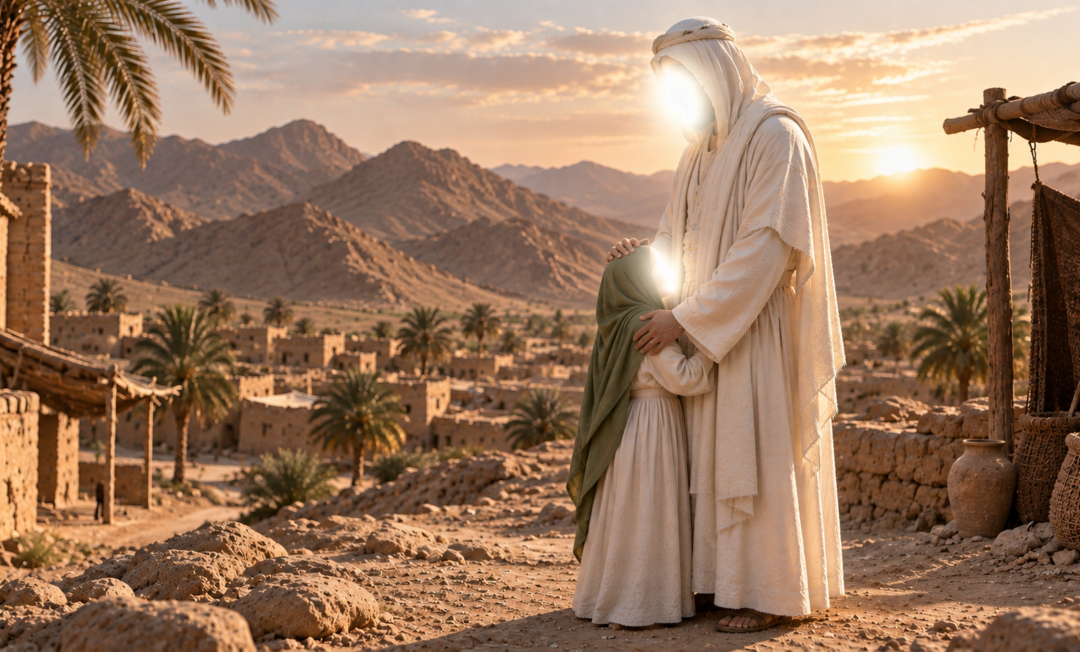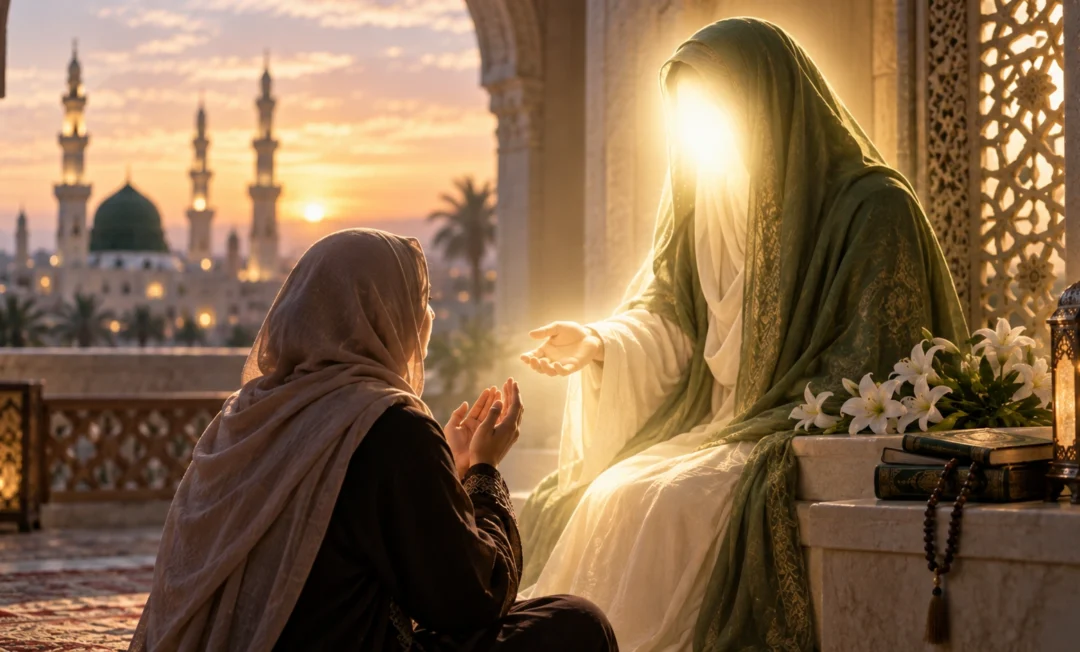

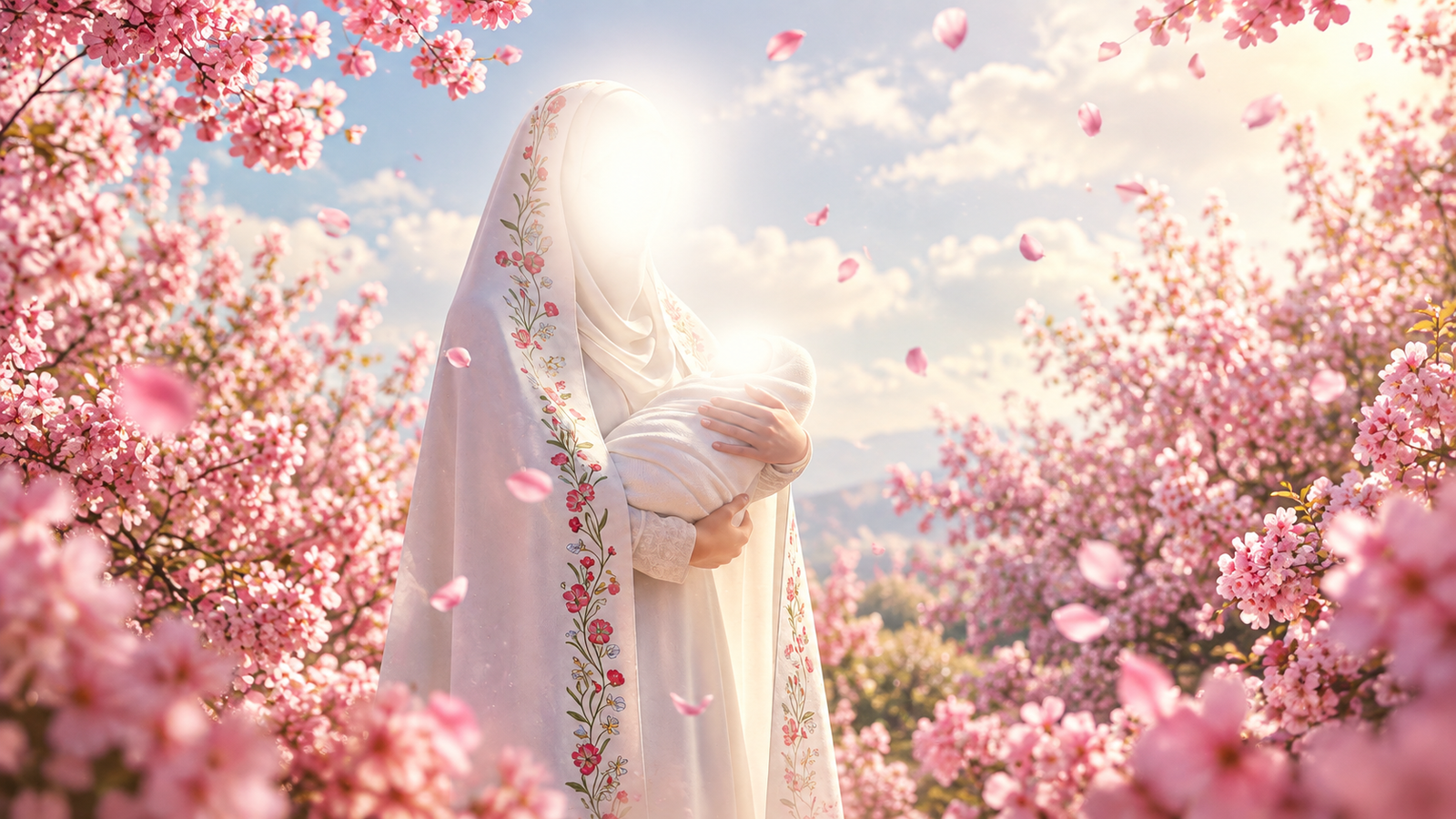
Khadijah, mother of Fatima al-Zahra (peace be upon them), holds a unique and honored position in Islamic history. She was the beloved wife of Prophet Muhammad (peace and blessings be upon him and his family) and one of the greatest women of Islam.
To speak of Khadijah is to speak of faith, sacrifice, dignity, generosity, and unwavering devotion to the Messenger of Allah. She stood beside the Prophet during the earliest and most difficult years of his mission and devoted her wealth and position to the cause of Islam.
Khadijah’s Family and Early Life
Khadijah was born approximately 68 years before the Hijrah into a distinguished family of Quraysh. Her father was Khuwaylid ibn Asad al-Qurashi, and her mother was Fatimah bint Za’id ibn al-Asamm.
She came from a respected and influential family, but her own character and conduct made her particularly distinguished among the women of Makkah. She was known for her generosity, wisdom, dignity, and excellent moral character.
Even before Islam, Khadijah was renowned for her purity and honorable character. She was known by the title al-Tahirah, meaning the Pure One.
How Khadijah Met Prophet Muhammad
Khadijah’s wealth and reputation made her one of the most respected women in Makkah. She was also involved in trade, and her commercial activities were well known.
When Muhammad undertook a commercial journey on her behalf, those who accompanied him reported to Khadijah about his honesty, character, and remarkable conduct.
Khadijah became deeply impressed by his moral and spiritual qualities. She had also heard accounts from learned people concerning the coming of the final Prophet. These circumstances contributed to her decision to marry Muhammad.
The Marriage of Khadijah and Prophet Muhammad
According to the traditional account provided in the source, Khadijah married Prophet Muhammad after his return from a commercial journey to Syria.
At that time, Muhammad was approximately 25 years old. The commonly transmitted account gives Khadijah’s age as 40, although other historical reports give a different age, including a report attributed to Ibn Abbas that places her at 28.
Their marriage became one of the most significant marriages in Islamic history.
Khadijah was drawn not simply to Muhammad’s worldly qualities but to his honesty, moral excellence, and spiritual character. After their marriage, she devoted her wealth, position, and resources to supporting him and the cause that would become the foundation of Islam.
Khadijah’s Faith and Virtues
Khadijah is remembered as one of the greatest women of Islam.
According to Islamic tradition, she was the first woman to accept Islam, just as Imam Ali (peace be upon him) is traditionally regarded as the first male to accept the Prophet’s message.
She was among the first people to pray with the Prophet and was known for her wisdom, foresight, generosity, dignity, and deep faith.
Her wealth and business success were remarkable, but her greatest distinction was the way she used what she possessed for the sake of God and the Messenger of Allah.
The source also describes her as knowledgeable about earlier scriptures and says that she was known by titles such as al-Tahirah (the Pure) and al-Mubarakah (the Blessed).
Khadijah’s Love for the Prophet
Khadijah’s devotion to Prophet Muhammad was not merely that of a wife toward her husband. She became his closest companion and one of his greatest sources of support.
Traditional accounts describe how she stood beside him when others rejected him, believed him when others denied him, and supported him when others abandoned him.
The source attributes to Khadijah a beautiful expression of devotion in which she describes worldly wealth as having little value compared with being able to see the Prophet.
This reflects the depth of her love and respect for Muhammad.
The Prophet also held Khadijah in extraordinary esteem.
Historical reports describe how, whenever the Prophet was saddened by the rejection and persecution of Quraysh, remembering Khadijah brought him comfort. Her presence had been a source of peace and reassurance during the earliest years of his mission.
Khadijah’s Status Among the Greatest Women
Islamic tradition places Khadijah among the greatest women of humanity.
A well-known narration names four women among the greatest women of Paradise: Khadijah bint Khuwaylid, Fatimah bint Muhammad, Maryam bint ‘Imran, and Asiyah bint Muzahim.
Khadijah’s greatness was reflected in her intelligence, dignity, religious commitment, purity, generosity, and steadfastness.
She was not simply the wealthy wife of the Prophet. She became one of the principal supporters of the earliest Muslim community.
Allah’s Greeting to Khadijah
Khadijah’s spiritual rank is further emphasized in traditional narrations describing greetings from Allah.
According to one narration attributed to Imam Muhammad al-Baqir, after the Prophet returned from the Mi’raj, the Angel Gabriel asked him to convey greetings from Allah and from Gabriel to Khadijah.
Another traditional report describes an encounter in which Khadijah was searching for the Prophet. Gabriel appeared to her in the form of a man and asked about Muhammad. Khadijah, concerned that the stranger might intend harm to the Prophet, did not reveal where he was.
When she later told Muhammad what had happened, he informed her that the man had been Gabriel and that he had come with greetings from Allah.
These narrations illustrate the special honor traditionally associated with Khadijah in Islamic sources.
Khadijah’s Role in the Rise of Islam
Khadijah, mother of Fatima, played a crucial role in supporting Prophet Muhammad and the early Muslim community. One of the greatest contributions of Khadijah was her financial and personal support for the Prophet during the earliest years of Islam.
When she accepted the truth of Muhammad’s mission, she placed her wealth at his disposal. Her considerable resources were used to support the Prophet and the early Muslim community.
According to the source, Khadijah eventually gave away her wealth in support of the Prophet and the spread of Islam. By the end of her life, she had sacrificed the comforts and possessions that she once possessed.
Ibn Ishaq is cited as describing Khadijah as a faithful and sincere supporter of the Messenger of Allah.
Her support became especially important during the years when the Prophet and his followers faced severe persecution and hardship.
It is therefore understandable why Islamic tradition places such emphasis on her contribution. Her wealth became a means through which the Prophet and the early Muslims were able to endure some of the most difficult years of the Makkan period.
Khadijah, the Mother of Fatimah
One of the greatest honors of Khadijah was that she was the mother of Fatimah al-Zahra (peace be upon her).
Fatimah would later become the wife of Imam Ali and the mother of Imam Hasan and Imam Husayn. Through her, the lineage of Prophet Muhammad continued.
The source gives several accounts concerning the children of Khadijah, with historians differing over the exact number. The commonly cited account lists six children: Qasim, Abdullah, Zaynab, Umm Kulthum, Ruqayyah, and Fatimah.
The sons mentioned in these reports died during the Prophet’s lifetime, while the daughters lived into the period of his prophethood.
Fatimah therefore held a uniquely important position as the daughter through whom the Prophet’s family line continued.
Khadijah and the Birth of Fatimah
Traditional narrations describe extraordinary circumstances surrounding the birth of Fatimah al-Zahra.
According to one account, when Khadijah became pregnant with Fatimah, she experienced comfort and companionship from the unborn child. The narration says that Fatimah spoke to her mother from within the womb and consoled her during a difficult period.
When the time of childbirth approached, Khadijah asked the women of Quraysh to assist her, but they refused because of their opposition to her marriage to Muhammad.
According to the traditional account, four women then appeared and reassured Khadijah, telling her that they had been sent to assist her. They were identified as Sarah, Asiyah, Maryam, and another righteous woman in the narration. Fatimah was then born in what the account describes as a blessed and extraordinary birth.
A Mother’s Concern for Fatimah
Khadijah’s love for her daughter remained evident until the final days of her life.
As her illness became severe, traditional accounts describe her concern for the future of young Fatimah. She asked the Prophet to take special care of her daughter after her death, knowing that Fatimah would soon be without her mother.
This moving account reflects the deep bond between Khadijah and Fatimah and the love of a mother concerned about her child’s future.
The Death of Khadijah
Khadijah died in Ramadan of the tenth year after the beginning of the Prophet’s mission, according to the source tradition. She was approximately 65 years old.
Her death came during one of the most difficult periods in the Prophet’s life. Abu Talib, who had also been one of the Prophet’s greatest supporters, died around the same period.
The loss of Khadijah and Abu Talib was so painful that the period became known as the Year of Sorrow (ʿAm al-Huzn).
Khadijah was buried at al-Hajun in Makkah, and the Prophet personally took part in her burial.
The Prophet Never Forgot Khadijah
Even after Khadijah’s death, Prophet Muhammad continued to remember her with great love and respect.
Traditional reports describe how he frequently praised her and remembered the support she had given him. He recalled that she believed in him when others rejected him, supported him when others abandoned him, and assisted him with her wealth when others refused to do so.
Her memory remained deeply important to the Prophet throughout his life.
Khadijah’s Place in the Heart of Fatimah
The death of Khadijah was especially painful for her young daughter, Fatimah.
According to a narration attributed to Imam Ja’far al-Sadiq, after Khadijah died, Fatimah came to her father and asked where her mother was.
The narration describes the Angel Gabriel bringing a message of reassurance from Allah, telling the Prophet that Khadijah had an honored place in Paradise, in a dwelling prepared for her among righteous women.
For Fatimah, the loss of her mother became one of the deepest sorrows of her childhood.
The Legacy of Khadijah
Khadijah al-Kubra was far more than the wife of Prophet Muhammad. She was one of the earliest believers, a devoted companion, a woman of remarkable character, and a major supporter of the Prophet and the early Muslim community.
She sacrificed her wealth and comfort for Islam and remained steadfast when the Prophet faced rejection and persecution.
She was also the mother of Fatimah al-Zahra, through whom the lineage of the Prophet continued.
For Muslims, Khadijah’s life remains an enduring example of faith, loyalty, sacrifice, generosity, courage, and devotion to Allah.
Her story is inseparable from the story of Fatimah al-Zahra and from the history of the Ahl al-Bayt. Her legacy continues to inspire generations of Muslims, particularly those seeking to understand the important role of women in the earliest history of Islam.