
Fatimah al-Zahra (peace be upon her) is remembered not only as the daughter of Prophet Muhammad and the wife of Imam Ali, but also as a mother whose tenderness, patience, worship, and sense of responsibility shaped one of the most influential families in Islamic history.
Her life as a mother was not separated from her faith. Love for her children was part of a larger purpose: to raise them with faith, character, courage, compassion, and a strong awareness of Allah.
The traditional accounts preserved in the sources describe a mother who could be deeply affectionate without becoming careless, who could teach without making childhood joy disappear, and who could place her children’s needs before her own comfort.
A Mother Who Put Her Children First
One of the most revealing reports describes Fatimah while she was grinding grain. Her young son Husayn began to cry. Someone offered to either grind the grain for her or calm the child.
Fatimah chose the child.
She said, in meaning, that she was the one who should calm her son while the other person should turn the hand mill. The story is simple, but it shows where her priorities lay: household work could wait for assistance, but the emotional need of a child deserved her immediate attention.
This same spirit appears throughout the reports about her motherhood. Her children were not an interruption to her life; caring for them was one of her central responsibilities.
Love Was Part of Her Method
The sources describe Fatimah as affectionate and gentle with her children. She did not want them to grow up feeling deprived of their mother’s attention.
One account says that she would sometimes remain hungry herself while making sure that her children were fed.
Her affection also appeared in the way she spoke to them. In the account of the Event of the Cloak, her greetings to Hasan and Husayn are described in warm terms such as “the light of my eyes” and “the fruit of my heart.”
Such language is more than ornament. It shows that love was expressed openly.
A Mother Who Played With Her Children
Fatimah did not treat play as a waste of time.
The reports say that she played with Hasan, lifted him, moved him playfully, and recited poetry for him. She understood that a child learns from the words, gestures, and emotional atmosphere surrounding play.
This is one of the most appealing dimensions of her character as a mother. She combined affection and education naturally rather than separating the two.
Her poetry for Hasan was not empty entertainment. In one traditional verse, she encouraged him to resemble his father, stand with truth, worship the generous Lord, and avoid friendship with hateful people.
Another report preserves a playful verse for Hussain in which she compared him to his grandfather, the Prophet.
The lesson is striking: even a lullaby or a game could become a place where values were planted.
Teaching Through Example
Fatimah’s children were raised not only through instructions but through what they saw their mother doing.
They witnessed worship, generosity, patience, service to others, and concern for people in need. The sources specifically say that Fatimah helped others in front of her children and that her children therefore grew up seeing compassion practiced rather than merely discussed.
This is one of the strongest themes in the source material: children learn from the atmosphere of the home.
A mother who wants her children to value generosity must show generosity. A mother who wants them to love prayer must make prayer visible in her own life.
Fatimah’s example brought those principles together.
A Mother Who Taught Her Children to Know God
Fatimah also placed religious education at the heart of family life.
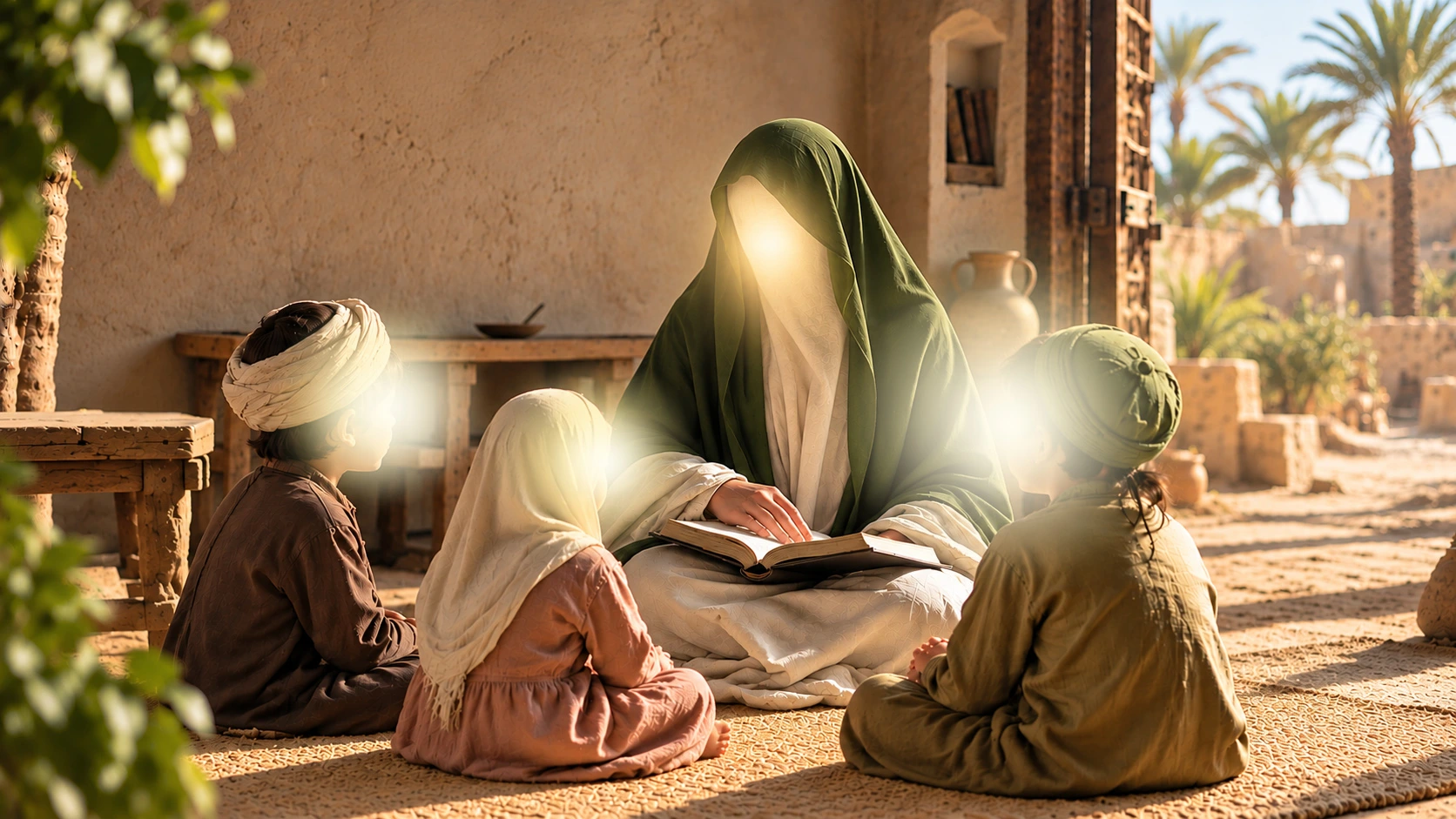
The sources describe her encouraging Hasan to go to the mosque, listen carefully to what the Prophet taught, and then return and tell her what he had learned.
She also encouraged her children to become familiar with worship from an early age.
During the final nights of Ramadan, traditional accounts say that she prepared the children physically during the day so they could remain awake for worship at night. One report specifically mentions the twenty-third night and her desire that the children should not miss the blessings of Laylat al-Qadr.
Her approach was not simply to demand religious duties. The emphasis in the source is that the children should be prepared according to their abilities so that worship could become something welcomed with enthusiasm rather than experienced only as a burden.
Teaching Kindness Between Siblings
A strong family is not created only by the relationship between parents and children. Children must also learn how to live with one another.
The source material says that Fatimah raised her children in a way that encouraged compassion and respect among siblings. It describes Hussain’s special respect for Hasan and the deep affection between Hussain and Zaynab.
The ideal was not rivalry without limits, but a household in which different personalities and roles could coexist with affection and dignity.
Her Children Learned Charity by Watching Her
Fatimah’s generosity became part of her children’s education.
The sources describe her giving to the poor, sacrificing possessions, and sometimes remaining hungry so that others could eat. They mention the giving of her necklace and the use of its value to help people without adequate clothing.
One of the most famous themes in the traditions about the family of Fatimah and Ali is their willingness to give food to others even when they themselves had little.
For children, such acts made charity concrete. Compassion was not merely a concept discussed by adults; it was part of everyday life in the home.
The Mother Who Prayed for Others
Imam Hasan is reported to have seen his mother spending a night in prayer while repeatedly praying for believing men and women. When he asked why she did not first pray for herself, she answered, in meaning:
“First the neighbor, then ourselves.”
That brief statement contains a complete lesson in selflessness.
Her children saw that devotion to Allah was inseparable from concern for other people.
A Mother’s Concern at the End of Her Life
Even near the end of her life, Fatimah’s thoughts turned toward her children.
The source material describes her concern that they would lose the particular love and care of a mother after her death. According to the account, she asked Ali to consider choosing a wife who could provide maternal care for the children after she was gone.
Whether read as a historical report or as part of the devotional memory surrounding Fatimah, the scene captures the intensity of her maternal concern: even while facing her own final hardship, she was thinking about the lives her children would have to continue without her.
A Mother’s Legacy
Fatimah al-Zahra’s motherhood cannot be separated from the children she raised.
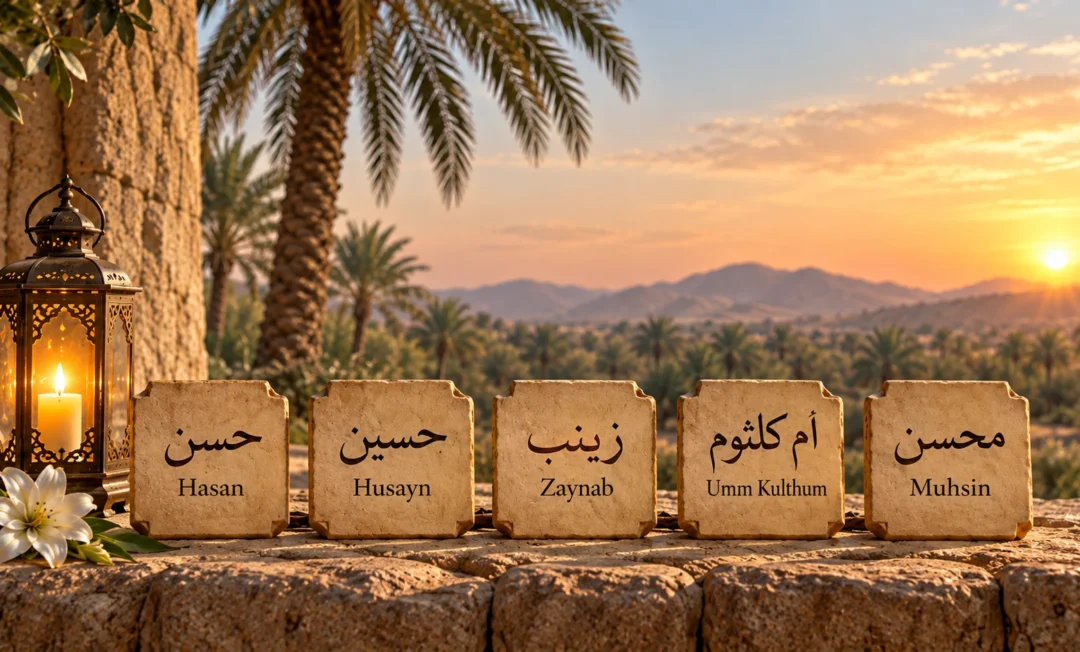
Hasan, Hussain, Zaynab, and Umm Kulthum became major figures in the religious memory of Islam, while the descendants of Hussain became central to Shi’a understanding of the Imamate. The traditional literature therefore views the family not simply as a household but as a lineage with an enduring religious legacy.
The lasting impression of Fatimah’s motherhood is therefore not only that she loved her children deeply. It is that she turned ordinary moments—feeding, playing, teaching, comforting, praying, and serving—into opportunities to shape character.
For readers today, that may be the most enduring part of her example.