
The final days of the life of Fatimah al-Zahra سلاماللهعلیها are among the most sorrowful chapters in the history of the Ahl al-Bayt. Only a short time after the death of her beloved father, the Messenger of Allah ﷺ, the young Fatimah became seriously ill and endured great suffering. According to Shi’a sources, the grief of losing her father, together with the painful events that followed his death and the suffering experienced by the family of the Prophet, placed an enormous burden on both her body and soul.
Reports describe the intensity of her grief as so great that Fatimah سلاماللهعلیها would ask Allah to bring her separation and suffering to an end and hasten her death. Her illness also became progressively more severe. During these days, her young children—Hasan, Husayn, Zaynab and Umm Kulthum عليهمالسلام—witnessed their mother’s suffering. Despite her physical weakness, Fatimah continued to care for her family and, even on the final day of her life, remained concerned about the comfort of her children.
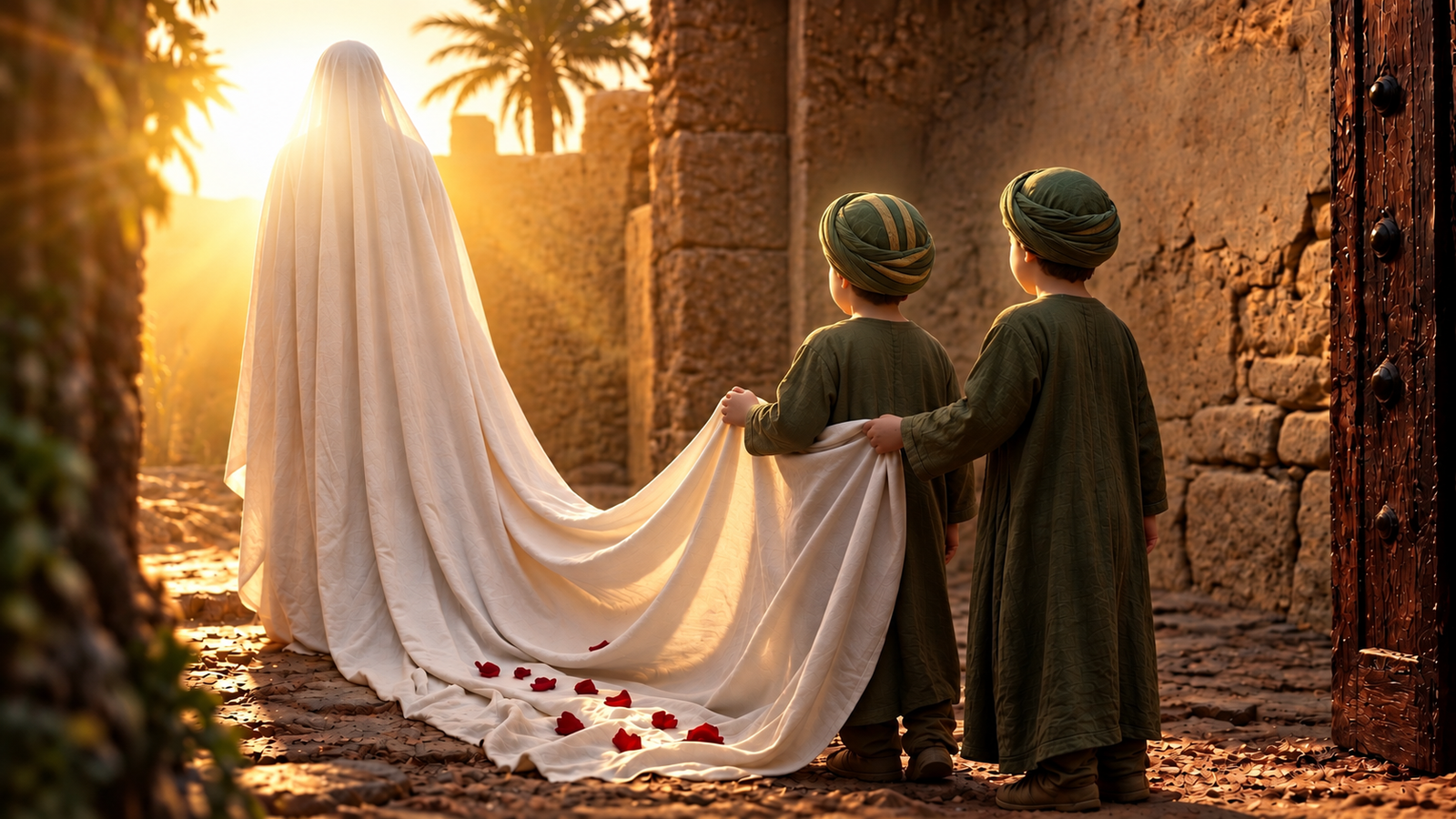
In one account concerning the final day of her life, Imam Ali عليهالسلام entered the house and saw that Fatimah سلاماللهعلیها, after a period during which her illness had prevented her from doing household work, was preparing dough and arranging water to wash the hair and clothes of Hasan and Husayn. When Ali عليهالسلام asked her about this, Fatimah, with tears on her face, told him about a dream she had seen the previous night. In the dream, she had seen her father, the Messenger of Allah ﷺ, and he had told her that the time of their reunion was near.
Based on that dream, Fatimah was preparing herself for her final separation and wanted to put her children’s affairs in order as much as possible before she died. She had prepared the dough for that day’s food and arranged the water so that her children’s hair and clothes would be clean, because she knew that after her death, Ali عليهالسلام would be occupied with her washing, shrouding and burial and that the children might be left without their mother. This narration offers a deeply human picture of the final hours of Fatimah’s life: even as death approached, her thoughts remained focused on her young children.
Fatimah’s Protest and Her Visit From the Women of Medina
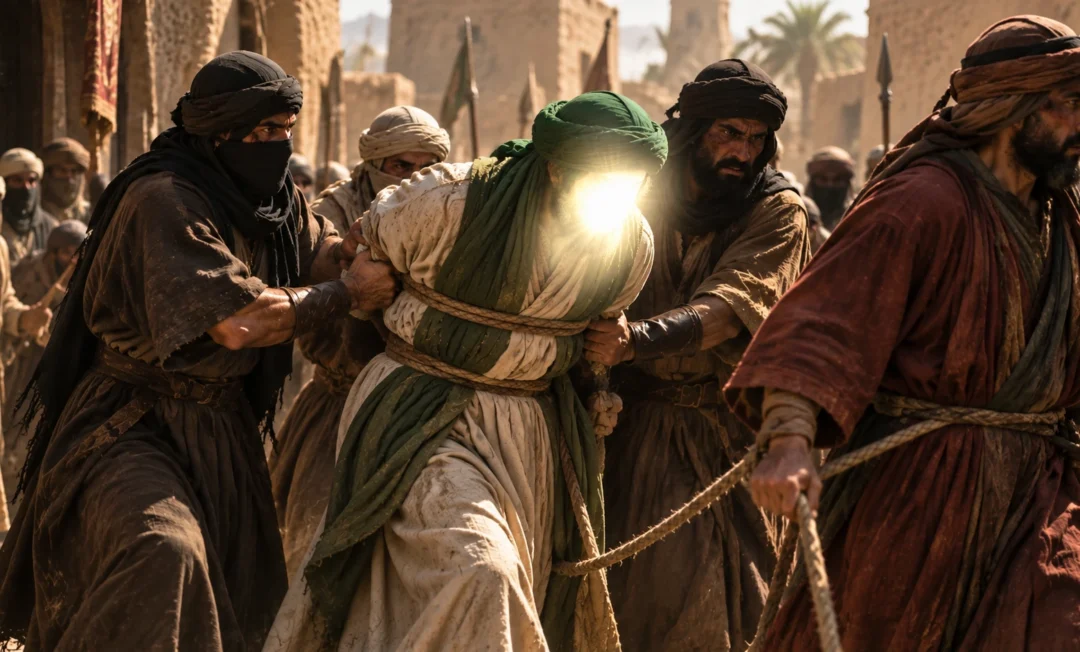
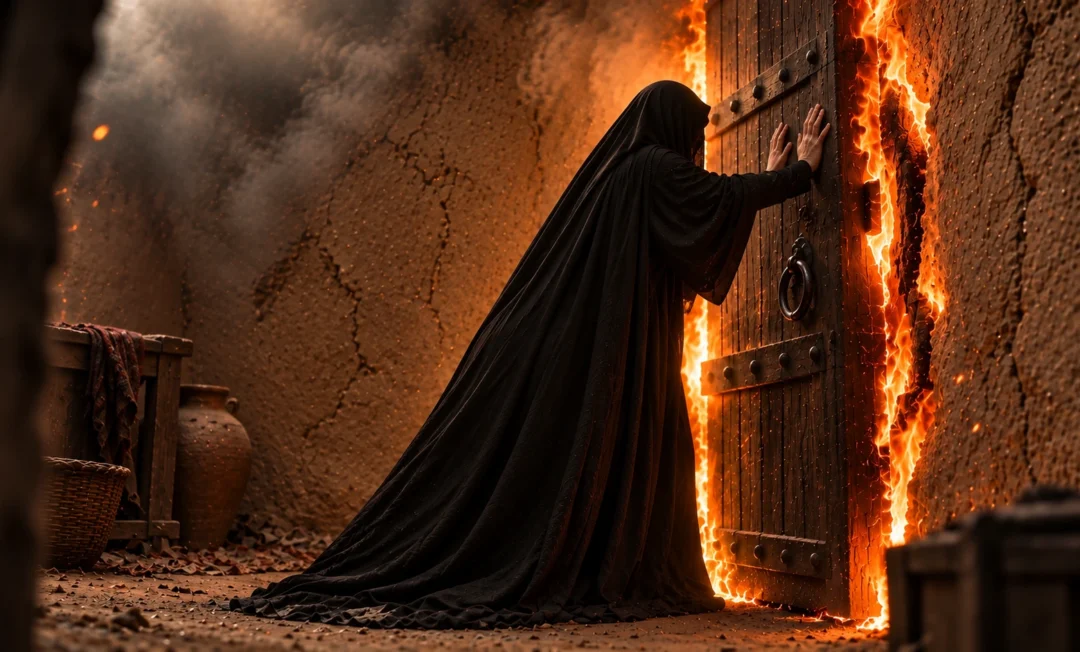
As her illness became more severe, Fatimah سلاماللهعلیها remained at home, and some of the women of the Muhajirun and Ansar came to visit her. This was not simply an ordinary visit to a sick woman. Fatimah used the opportunity to once again express her position regarding the events that had taken place after the death of the Prophet ﷺ and to criticize those who, in her view, had failed in their duty in relation to the command of the Messenger of Allah concerning the position and authority of Imam Ali عليهالسلام.
Her words were not limited to a political complaint. She also expressed concern about the future direction of the Muslim community. She warned about the consequences of departing from what she believed was the proper path after the Prophet and drew attention to the effects that such a change could have on the future of the Muslim Ummah.
For this reason, the final days of Fatimah’s life should not be understood simply as a period of illness and silence. According to the Shi’a tradition, they were also a time when she expressed her final objections, clarified her position and conveyed her concerns to those who visited her.
During this period, Abu Bakr and Umar also came to visit Fatimah سلاماللهعلیها. At first, she did not allow them to visit her, but eventually they appeared before her. During this meeting, Fatimah reminded them of the words of the Prophet ﷺ concerning her satisfaction and anger and asked whether they accepted the statement that whoever pleased Fatimah pleased the Messenger of Allah and whoever harmed her harmed him. They acknowledged the statement attributed to the Prophet.
Fatimah then called upon Allah and the angels as witnesses and declared that they had angered her and had never satisfied her, and that she would take her complaint against them to the Messenger of Allah ﷺ.
This conversation, as reported in these sources, was among Fatimah’s final explicit positions toward those whom she regarded as responsible for the events that followed the Prophet’s death. Thus, her final days were not spent only in physical suffering; they were also marked by protest and the communication of her final position.
Fatimah’s Will and Her Final Preparations
As the time of her death approached, Fatimah سلاماللهعلیها began making her final preparations. One of the most important things she did during this period was to make her will to Imam Ali عليهالسلام.
She appointed Ali as her executor and instructed him that after her death, she should be washed and shrouded at night and that her funeral and burial should also take place at night and away from public attention. She further instructed that those whom she believed had wronged her should not be present at her funeral or participate in the prayer over her body.
This was not merely an instruction concerning funeral arrangements. It also carried a clear message. Fatimah سلاماللهعلیها did not want a public ceremony in which those with whom she was displeased would stand beside her body and pray over her. For this reason, her burial was also carried out quietly and at night, in accordance with her wishes.
Another account describes Fatimah speaking with Asma bint Umays about the covering of the body. She did not want the shape of a woman’s body to be visible beneath a cloth during the funeral. Asma described a method she had seen in Abyssinia involving bent branches covered with cloth to form a structure resembling a bier. Fatimah was pleased with the idea, and according to this narration, it was the first such bier to be made in Islam.
These details show that Fatimah carefully planned even the manner in which her body would be covered and how her funeral would be conducted, ensuring that her wishes would be respected.
During her final hours, Fatimah asked for water, washed herself, performed her final purification, put on fresh clothes and asked that her bed be prepared in the room. She then lay facing the qiblah and asked Asma to wait for a while before calling her. Fatimah told her that if she did not answer, she should know that she had gone to meet her father, the Messenger of Allah ﷺ.
After waiting for some time, Asma called her but received no answer. She called again, and when she lifted the covering, she realized that Fatimah had passed away.
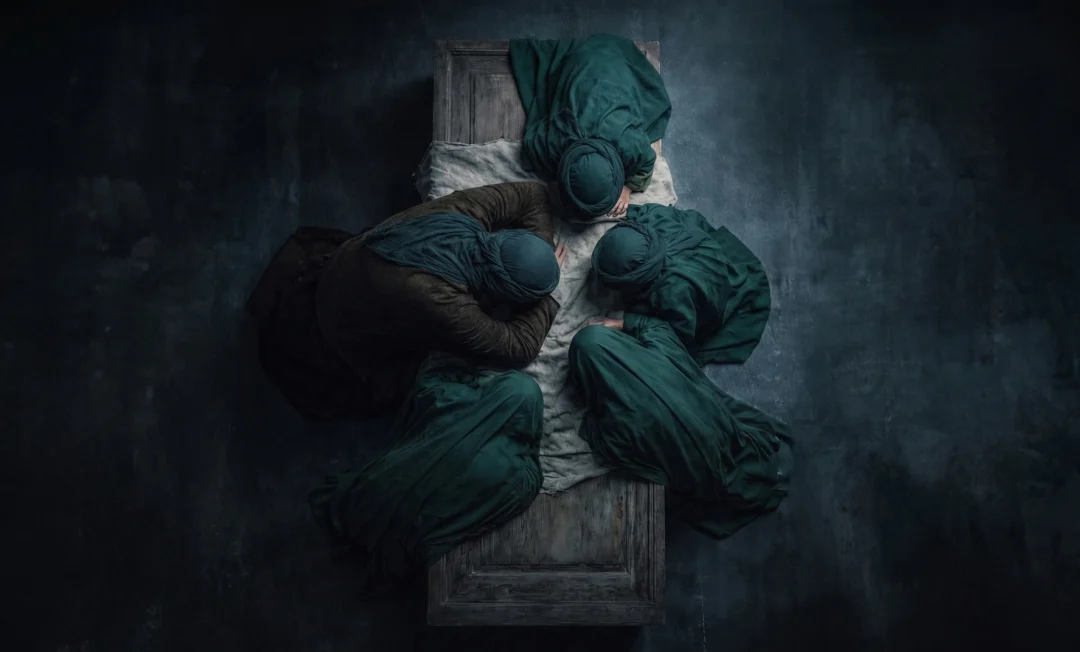
Her children then entered the house and, seeing their mother in that condition, threw themselves upon her body and cried, asking her to speak to them. Hasan عليهالسلام asked his mother to speak to him before her soul departed, while Husayn عليهالسلام called out to her and identified himself as her son. They then went to the mosque to inform their father.
When Imam Ali عليهالسلام received the news of Fatimah’s death, his grief was so overwhelming that he fell to the ground. After regaining consciousness, he uttered words filled with sorrow: “Fatimah! While you were alive, I comforted myself with you in the tragedy of the Prophet. But after your death, how can I endure?” This statement reflects the depth of the bond between Ali and Fatimah and the tremendous weight of his loss.
The Night Burial of Fatimah al-Zahra
After Fatimah سلاماللهعلیها passed away, the people of Medina learned of her death and gathered around her home, waiting for her body to be brought out for the funeral. However, they were informed that the ceremony had been delayed, and the people eventually dispersed. When night came, Imam Ali عليهالسلام, in accordance with Fatimah’s will, washed and shrouded her body during the night, with only trusted individuals and those who were regarded as approved by her taking part.
According to some reports, Asma bint Umays also assisted Ali during the washing. Afterward, a small group of close companions of the Ahl al-Bayt attended the funeral prayer. Among those mentioned are Salman al-Farsi, al-Miqdad, Abu Dharr, Ammar, Hudhayfah, Abdullah ibn Mas’ud, al-Abbas and Aqil.
Fatimah was then buried that same night, and Imam Ali did not allow Abu Bakr to attend the funeral. Some reports also state that after the burial, the location of the grave was concealed so that people would not know where she had been buried. There are also reports that several different grave markers were created to make the actual location difficult to identify.
The hidden grave of Fatimah became one of the enduring questions of Islamic history. Why was the only daughter of the Prophet ﷺ buried secretly, only a short time after her father’s death, with the location of her grave not publicly identified?
According to Shi’a sources, the answer is connected with Fatimah’s own will and the circumstances surrounding her final days. The concealment of her grave continued the same protest that she had expressed through her words while she was ill. Even the hidden grave became part of the message that was passed down to later generations.
Imam Ali’s Words Beside Fatimah’s Grave
After completing the burial, Imam Ali عليهالسلام turned toward the grave of the Messenger of Allah ﷺ and spoke to him with a heart filled with grief. His words express both the pain of losing Fatimah and his sorrow over what had happened to her after the Prophet’s death.
Imam Ali said:
“Peace be upon you, O Messenger of Allah, from me and from your daughter who has come to meet you and now lies buried beside you. Allah has willed that she should join you sooner than the others.”
He then spoke of the intensity of his grief and said that his patience had reached its limit because of the loss of the beloved woman of the Messenger of Allah. He compared this suffering with the pain of losing the Prophet himself and said that just as he had endured the separation from the Messenger of Allah, he would now have to endure another great loss.
In the continuation of his words, Imam Ali complained about what had happened after the Prophet and how the Ummah had gathered against his daughter and taken away what he regarded as her right. According to this report, Fatimah had not been given the opportunity in this world to fully explain all the pain and suffering she had endured, and Imam Ali therefore expressed these grievances before the grave of the Prophet.
He also spoke of the grief that had now overshadowed his life, the sleepless nights and the sorrow that would remain within his heart.
These words were not merely those of a grieving husband. They also reveal the place Fatimah held in Imam Ali’s life. After the death of the Prophet, Fatimah had been a source of comfort and support for him, and now he had suffered another profound loss.
For this reason, the separation from Fatimah was especially painful for Imam Ali, and this grief is also reflected in poems and elegies attributed to him. Some sources preserve verses attributed to the Commander of the Faithful in which he expresses the idea that every friendship eventually comes to an end through separation and that the repeated loss of one beloved person after another shows that no earthly companionship lasts forever.
Where Is Fatimah’s Grave?
One of the enduring mysteries in Islamic history is the exact location of the grave of Fatimah al-Zahra سلاماللهعلیها. Unlike many other important figures in Islamic history, the location of her burial was not publicly and definitively identified, which has led to different views concerning its exact location.
According to the sources discussed on this subject, four principal possibilities have been mentioned: al-Baqi’, the house of Aqil, the Rawdah of the Prophet ﷺ, and Fatimah’s own house. Among these views, a number of Shi’a scholars have preferred the possibility that she was buried in her own house or in the area adjacent to the Prophet’s resting place, based on various narrations and historical indications.
There are also narrations attributed to Imam al-Sadiq عليهالسلام, Imam al-Rida عليهالسلام and Imam Ali al-Hadi عليهالسلام that identify Fatimah’s place of burial as her own house, beside the Prophet. Scholars such as Shaykh al-Saduq, Allamah al-Hilli, Allamah al-Majlisi and Shaykh al-Tusi are also reported to have held views concerning her burial in this area.
Some reports connect this issue with the later expansion of the Prophet’s Mosque, suggesting that Fatimah was buried in her house and that, when the mosque was later expanded, the location of her burial became part of the mosque complex. A report attributed to a historian of Medina likewise places her grave in her house and states that the house was later incorporated into the mosque.
What remains especially significant in these accounts is the concealment of her grave. According to these reports, the hidden burial was connected to Fatimah’s own will and to the special circumstances surrounding the period in which she died. For this reason, the hidden grave of Fatimah has remained in Shi’a memory as one of the signs associated with her suffering and oppression.
The Date of Fatimah’s Martyrdom
There is also disagreement among scholars and historians concerning the exact date of Fatimah’s martyrdom. Two dates are more commonly mentioned in the different reports: 75 days after the death of the Messenger of Allah ﷺ and 95 days after his death.
One explanation offered for this difference concerns the style of early Kufic writing. At that time, letters and numbers were not marked with dots in the way they are today, and it is therefore suggested that mistakes could occur when numbers were copied or read. On this basis, some scholars have suggested that the difference between 75 and 95 days may have resulted from such a variation in transmission.
Among Shi’a sources, the 95-day position has received significant attention, and on this basis the third of Jumada al-Thani is widely observed as the date of Fatimah’s martyrdom.
The final days of Fatimah al-Zahra سلاماللهعلیها, taken as a whole, present the picture of a young woman who, despite her age and the responsibility of caring for young children, was overcome by profound grief and severe illness after the death of her father. Yet even during her final moments, she remained concerned about her children, carefully made her will and specified how she wished her washing, shrouding, funeral and burial to be carried out. After her death, Imam Ali عليهالسلام buried her at night in accordance with her wishes, and her grave remained hidden from the wider public.
That hidden grave has remained for centuries as a reminder of the painful final days of Fatimah, while her name and memory have continued to live among Muslims. The question of where she was buried also remains one of the enduring questions surrounding the history of the early Islamic period.