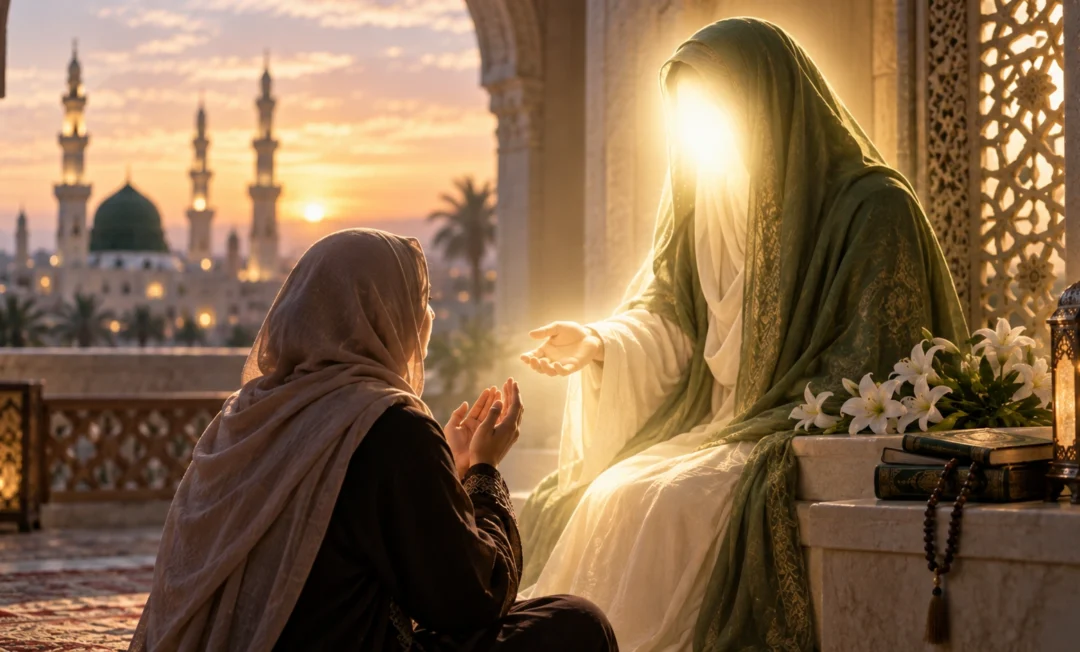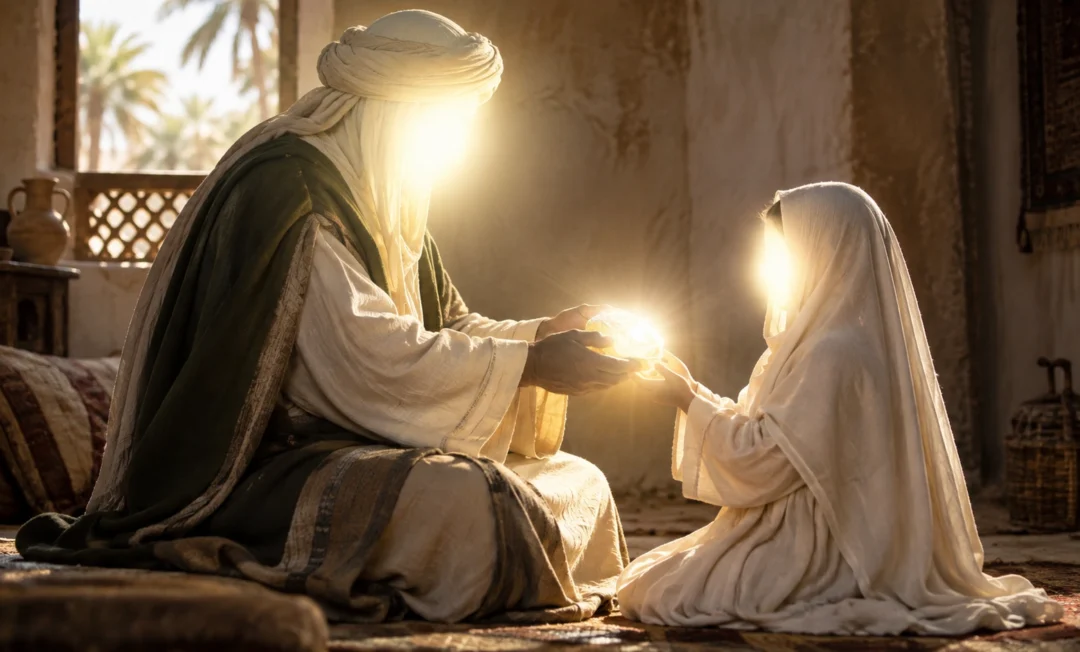

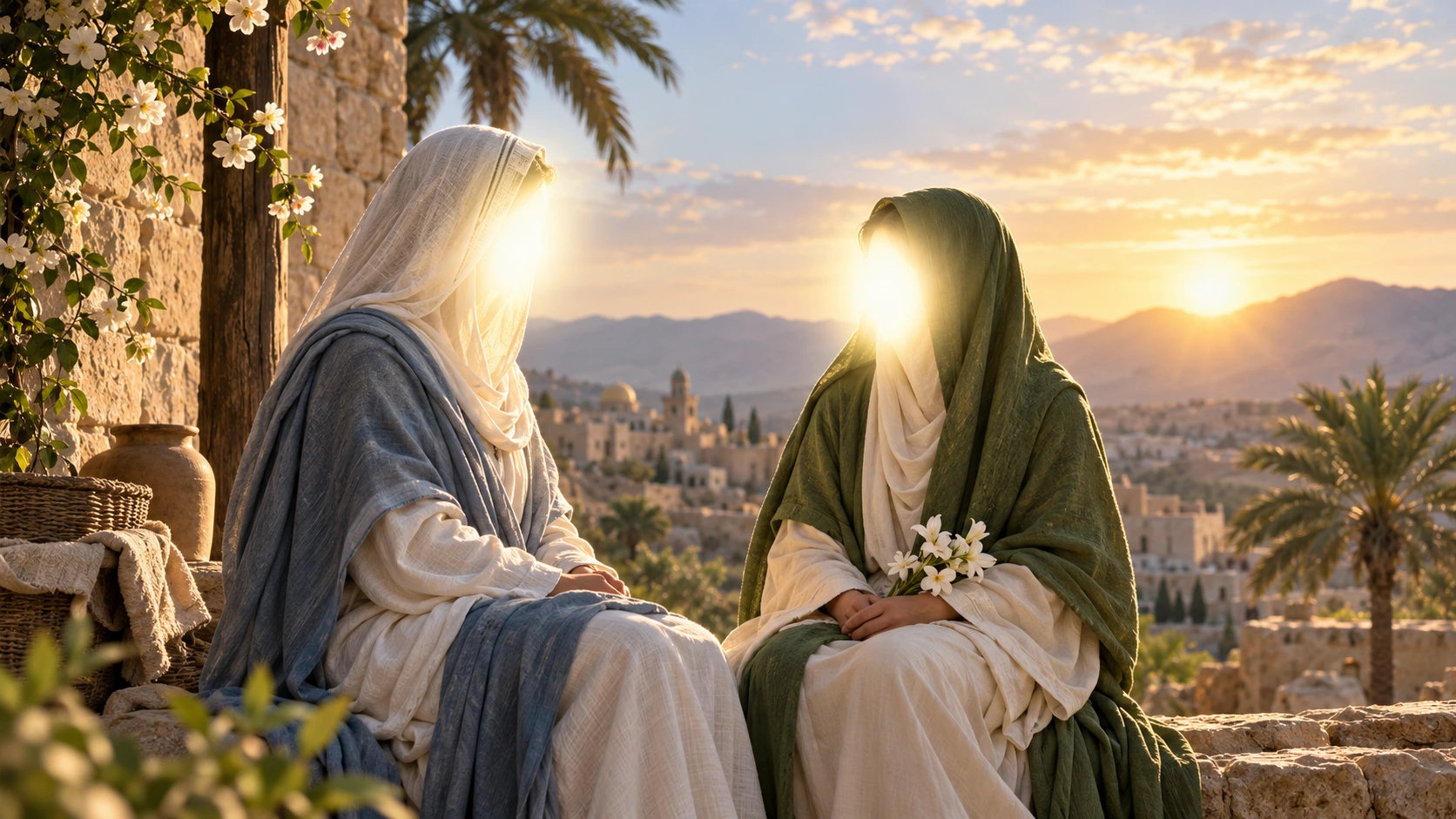
Mary and Fatimah are two of the most honored women discussed in the Qur’an and Islamic tradition. Mary, peace be upon her, is remembered for her purity, devotion, faith, and unique place in the story of Jesus, peace be upon him. The Qur’an speaks of her with exceptional honor, describing her as a woman chosen and purified by God.
On the other hand, Fatimah al-Zahra, peace be upon her, holds an extraordinary position in the Islamic tradition. She was the daughter of the Prophet Muhammad, peace and blessings be upon him and his family, the wife of Imam Ali, peace be upon him, and the mother of Imam Hasan and Imam Husayn, peace be upon them. Islamic sources likewise preserve a vast body of material concerning her faith, purity, worship, knowledge, modesty, patience, and spiritual virtues.
Placing these two great women side by side is not an attempt to diminish the status of Mary, nor to overlook the greatness of Fatimah. This comparison itself has a precedent in Islamic tradition, where the virtues of both women have been discussed alongside one another.
But there is an important distinction to make:
Recognizing the virtues of two great figures is not the same as imposing a conclusion upon the reader.
This article first presents the virtues of Mary as described in the Qur’an and Islamic traditions. It then turns to the virtues attributed to Fatimah al-Zahra and finally examines some of the comparisons found in Islamic sources.
The final judgment is left to the reader.
Mary: A Woman Chosen and Purified by God
Mary holds a remarkable position in the Qur’an. God says:
“Indeed, Allah chose you, purified you, and chose you above the women of the worlds.”
In this verse, Mary is described through two profound qualities: divine selection and purification. The Qur’an also speaks of her truthfulness, devotion, prayer, purity, and obedience to God.
Mary was also the mother of Jesus, peace be upon him, whom she brought into the world without a husband, through the power and will of God. This event is presented in the Qur’an as one of the great signs of divine power and forever connects Mary’s name with one of the most extraordinary events in sacred history.
The Qur’an also recounts her encounter with society, the suspicion directed toward her, her solitude, and the immense pressure she endured during her pregnancy. She was placed in one of the most difficult situations imaginable, yet her story ultimately became one of divine support and mercy.
For this reason, Mary is not merely the mother of Jesus in Islamic thought. She is also a profound example of faith, chastity, worship, and surrender to God.
Mary and the Sanctuary of Worship
One of Mary’s most prominent qualities is her deep devotion to worship.
The Qur’an speaks of Mary’s place of worship, where she devoted herself to God. Whenever Zechariah entered her sanctuary, he found provision with her and asked where it had come from.
In this Qur’anic portrait, worship is not simply one part of Mary’s life. It is a central part of her identity.
The Chastity of Mary
Another of Mary’s clearest virtues is her chastity.
The Qur’an describes her as:
“the one who guarded her chastity.”
This virtue becomes even more significant when we remember that Mary faced intense suspicion and accusations after her pregnancy. Yet the Qur’an ultimately established her innocence and purity.
Mary’s Divine Selection and the Angels Who Spoke to Her
The Qur’an records that angels spoke to Mary and gave her glad tidings, informing her of her special selection and purity.
In Islamic tradition, this communication with the angels is understood as another indication of her extraordinary spiritual position.
For this reason, Mary is honored in Islamic tradition not only as the mother of Jesus, but as one of the greatest women in the history of faith.
Fatimah al-Zahra: A Woman Raised in the House of Prophethood
Fatimah al-Zahra, peace be upon her, was born into an extraordinary family.
Her father was Muhammad, peace and blessings be upon him and his family, the Prophet of Islam and the final messenger of God. Her mother was Khadijah, peace be upon her, the first woman to believe in the Prophet’s mission and one of the most honored women of early Islam.
Fatimah was raised in the household of the Prophet, a home which Islamic sources connect with the verses concerning the Prophet’s household.
This environment is an important part of understanding her character. She spent her childhood and youth beside the Prophet and later established her own household with Imam Ali, peace be upon him.
The Faith and Certainty of Fatimah
Islamic traditions describe Fatimah’s faith in remarkably elevated terms.
The source examined here quotes a tradition from the Prophet describing Fatimah’s heart and entire being as filled with faith and obedience to God. Her famous sermon in Medina is also presented as evidence of her profound knowledge, faith, and awareness.
That sermon, delivered in the context of defending what she regarded as a rightful claim and explaining fundamental religious principles, is among the most important historical materials used in Islamic sources to understand her thought and character.
Fatimah’s Worship: A Sanctuary Filled with Light
A place of worship is also associated with Fatimah in Islamic traditions.
Imam Hasan, peace be upon him, described his mother’s worship on a Friday night and her continued bowing and prostration until dawn. Imam al-Sadiq, peace be upon him, likewise spoke of the radiance associated with her worship in her prayer sanctuary.
Thus, just as the sanctuary of worship is one of the defining images associated with Mary in the Qur’an, Islamic traditions likewise present Fatimah’s place of worship as a symbol of her profound devotion.
The Purity of Fatimah
In Islamic traditions, Fatimah is known by names and titles such as al-Siddiqah, al-Tahirah, al-Zakiyyah, al-Mubarakah, al-Radiyah, and al-Mardiyyah.
When discussing purification, the source also refers to the Verse of Purification and its connection with the Prophet’s household, identifying Fatimah as one of those included within its meaning.
Islamic traditions also explicitly emphasize her chastity and purity.
Fatimah’s Knowledge and Awareness
One of the notable features of the traditions concerning Fatimah is the strong emphasis placed upon her knowledge and spiritual awareness.
She is known by the title al-Muhaddathah, and traditions speak of angels communicating with her. The source also discusses the Mushaf Fatimah in this context.
Her sermon and her responses to questions from women are likewise presented as evidence of her intellectual and religious knowledge.
Al-Siddiqah: A Shared Title of Two Great Women
One interesting point of comparison is that both women are associated with the title al-Siddiqah, meaning one distinguished by profound truthfulness.
The Qur’an describes Mary as siddiqah, while Islamic traditions include al-Siddiqah among the names of Fatimah. The sources examined here also speak of Fatimah’s exceptional truthfulness.
This shared description places truthfulness and sincerity among the qualities associated with both women in Islamic tradition.
Divine Provision: A Striking Similarity
The Qur’an tells of the special provision given to Mary in her sanctuary. Whenever Zechariah entered, he found food with her, and she replied:
“It is from Allah.”
Islamic traditions likewise contain accounts of special food being brought to Fatimah, and in one of these reports the Prophet Muhammad, peace and blessings be upon him and his family, compares the event with the story of Mary.
This is one of the examples that helps explain why Muslim scholars have historically discussed these two women together.
Suffering, Patience, and Trial
Neither Mary nor Fatimah lived a life free from hardship.
Mary faced loneliness, pregnancy, accusations, and intense social pressure.
Fatimah also witnessed hardship from an early age. She experienced the difficulties endured by the Prophet and his family, including the hardships of the persecution in Mecca, and later faced profound grief and painful events following the death of her father. The source presents these experiences as an important part of her life.
Two different historical paths, yet both marked by extraordinary trials.
A Comparison Already Found in Islamic Sources
The comparison between Mary and Fatimah is not something created by modern writers.
Islamic sources report statements attributed to the Prophet Muhammad, peace and blessings be upon him and his family, in which Fatimah is discussed alongside Mary. One tradition also records Fatimah asking her father about her position in comparison with Mary, to which the Prophet distinguished the position of each within her own community and nation.
Thus, the comparison itself has a precedent in the Islamic tradition.
Traditions attributed to Imam al-Baqir and Imam al-Sadiq, peace be upon them, likewise contain comparisons between these two great women. Figures such as Umm Salamah and Muslim poets are also cited in the source as having spoken of their shared virtues and similarities.
The reader is therefore not being introduced to a newly invented comparison, but to a subject that has been discussed within the Islamic intellectual and devotional tradition.
Does Fatimah Hold a Higher Rank Than Mary?
This is where an important distinction must be made between what the sources report and the judgment of the writer.
Some Islamic traditions and works describe Fatimah as the most distinguished of women, while Mary is likewise described in the Qur’an as a woman specially chosen and elevated among the women of her time. The source examined here presents several traditions in support of Fatimah’s higher rank.
At the same time, Islamic sources also describe Mary and Fatimah together among the specially honored women destined for Paradise.
Other traditions emphasize distinctive virtues of Fatimah, including her relationship to the Prophet’s family, her position among the Ahl al-Bayt, her knowledge, worship, chastity, and her role in the continuation of the Prophet’s descendants.
But how these different qualities should ultimately be evaluated together is a question we leave to the reader.
The purpose of this article is not to make that judgment on the reader’s behalf. Its purpose is to present a fuller picture of what the Qur’an and Islamic traditions say about these two great women.
Two Great Women Beyond the Language of Competition
Perhaps the greatest mistake in a discussion like this would be to assume that honoring one person requires diminishing another.
Mary holds a clear and remarkable position in the Qur’an. She is a chosen and purified woman, a model of chastity and devotion, and the mother of Jesus, peace be upon him.
Fatimah likewise occupies an exceptional place in Islamic sources: she is the daughter of the Prophet, the wife of Ali, the mother of Hasan and Husayn, and a woman described as deeply devoted, knowledgeable, truthful, pure, and among the most honored women.
But after considering these virtues, another question remains:
Do the qualities and testimonies found in Islamic sources about Fatimah indicate only a resemblance to Mary, or do they point to a position that Islamic tradition considers even more exceptional?
Different Islamic sources have given their own answers to this question.
This article chooses instead to place the evidence before the reader.
Conclusion
Mary and Fatimah are two great names in the history of faith.
One is presented in the Qur’an through the extraordinary birth of Jesus, her purity, worship, and divine selection. The other is presented in Islamic tradition through her relationship with the Prophet, the Ahl al-Bayt, her worship, knowledge, purity, chastity, and her historical role.
Islamic sources record many similarities between them, while also preserving traditions that assign Fatimah a particularly elevated position.
We do not need to diminish Mary in order to recognize Fatimah, nor do we need to overlook Fatimah’s distinctive virtues in order to honor Mary.
The virtues of both women can be presented honestly, the relevant sources can be placed before the reader, and the final judgment can be left to those who read them with an open mind.
Perhaps that is the most respectful way to speak about two women whose names have remained connected, across centuries, with purity, faith, devotion, and divine favor.